
Reviewed · TITO & YUGOSLAVIA TOURS
NATO Bombing of Belgrade Historical Tour
NATO memories, told street by street. This 2-hour Belgrade tour connects some of the city’s best-known landmarks to the NATO bombing story, with a clear Serbian point of view and an English-speaking guide. I especially like how the route uses real places rather than textbook talking.
I also like the practical setup: pickup, a comfortable air-conditioned vehicle, and WiFi on board for the ride between stops. The church ticket at Crkva Svetog Marka is included, while the rest of the route is built around free entry sites, which helps the $69.99 feel more like value than a fee just to see a sign. The main drawback to consider is pacing, some stops are very short, so if you want slow and detailed explanations at each stop, this one can feel a bit fast.
In This Review
- Key things to know before you go
- Why this Belgrade NATO bombing tour feels different
- Price and Logistics: what $69.99 really buys you
- Entering the route at Crkva Svetog Marka (and why one ticket matters)
- Tasmajdan Park: the children’s memorial stops the story from becoming abstract
- Serbian Parliament and the fast pass at House of the National Assembly
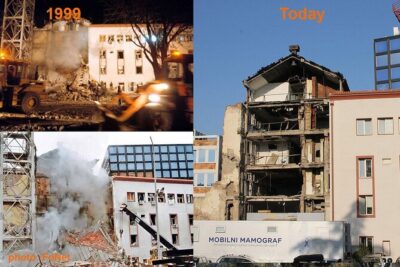
- Generalštab: when the bombing symbolism is the point
- The Railway Museum and the Old King Palace: everyday city history, compressed
- Monument to Tsar Nicholas II Romanov: a brief pause with a bigger meaning
- The pacing reality: how to handle a 2-hour, short-stop format
- Who should book this tour, and who should think twice
- Value check: admissions, time, and why the guide matters
- Should you book the NATO Bombing of Belgrade Historical Tour?
- FAQ
- How long is the NATO Bombing of Belgrade Historical Tour?
- What is the price per person?
- Does the tour include pickup?
- Is the tour private or shared?
- What language is the tour guide?
- Is there WiFi and is transportation provided?
- What is the start time?
- Which stops have admission included or free?
- Is lunch included?
- What is the cancellation policy?
- Is the meeting point near public transportation?
Key things to know before you go
- A Serbian point of view on the Yugoslav wars, focused on the places tied to the NATO bombing
- Tight 2-hour route with short stops, so you cover more ground than you linger
- Crkva Svetog Marka included admission (one of the few paid elements on the itinerary)
- A children’s memorial in Tasmajdan Park, linked directly to the NATO bombing memory
- Belgrade landmarks with meaning, including Serbian Parliament and Generalštab as a bombing symbol
- Private, just your group, with pickup and air-conditioned comfort
Why this Belgrade NATO bombing tour feels different
Most Belgrade history tours give you chronology. This one leans into interpretation, and that matters. You’re guided through the city’s core institutions and memorial spaces, built around how the conflict is understood from the Serbian side.
What I like most is the mix of types of stops. You get religion at Crkva Svetog Marka, politics at the National Assembly, and memorial thinking at Tasmajdan Park. That variety keeps the story from feeling one-note, even when time is tight.
Also, because it’s a private tour for your group, you can ask follow-up questions when something clicks or doesn’t. With this kind of subject, that flexibility helps you get your own answers instead of just collecting facts.
More Tito and Yugoslav-era tours:
- Red Belgrade Communist Tour★ 5.0 · 78 reviews
- Architecture of New Belgrade – Brutalism Decoded★ 4.5 · 24 reviews
- Communist Tour in Belgrade★ 4.5 · 19 reviews
Price and Logistics: what $69.99 really buys you
At $69.99 per person for about 2 hours, you’re paying for three things: transportation, guiding time, and access to the one paid admission stop. The rest of the route is free to enter, which is a smart way to keep the cost focused on the guided experience.
You get pickup, private transportation, and an air-conditioned vehicle, which is not nothing in Belgrade. WiFi on board is a small bonus, especially if you’re checking directions or translating as you go. You also get a mobile ticket, which keeps things smooth on arrival.
Logistically, the route is near public transportation, so the meeting area should be easy to reach. The tour also calls for moderate physical fitness, which, in practical terms, means you should be comfortable with walking between multiple short stops without long downtime.
Entering the route at Crkva Svetog Marka (and why one ticket matters)
You start with Crkva Svetog Marka, one of Belgrade’s most important churches. The stop is about 20 minutes, and the admission ticket is included, so you’re not left doing math on the spot.
This church stop is a strong opener because it sets tone. Before you get into wartime symbolism and institutions, you first get a sense of the city’s religious identity and what Belgrade locals value in landmark form. It’s also a practical choice: an indoor or protected stop can help you reset your pace early in the tour.
If you’re the type who likes to understand context before moving into heavy topics, this is a good first move. If you prefer battlefield history only, this might feel slightly off-theme at first, but it pays off once you connect it to the rest of the story.
Tasmajdan Park: the children’s memorial stops the story from becoming abstract
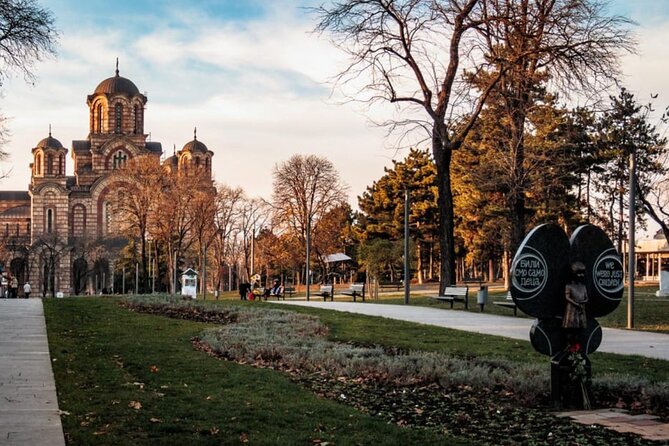
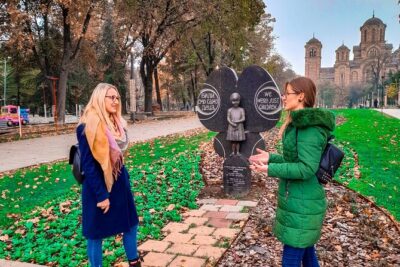
Next is Tasmajdan Park, a place you can actually feel as part of daily life. You spend about 20 minutes there, and the highlight is the statue honoring children who died during the NATO bombing.
This is the emotional hinge of the tour. Memorials like this work differently than buildings or institutions. In a park setting, the message hits as something human-sized, not just something official and distant.
It also helps you read the rest of the route. After seeing the memorial, the later stops tied to government and symbolism land with more weight. Even if you keep your questions respectful and general, the park gives you a clear anchor for what the tour is trying to communicate.
Serbian Parliament and the fast pass at House of the National Assembly
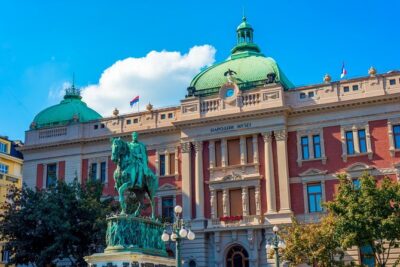
The House of the National Assembly of the Republic of Serbia is next, with about 10 minutes on site and no admission required. Think of this as a quick, guided orientation rather than a slow museum experience.
This stop matters because it puts the story in the realm of governance and national identity. The building becomes part of the narrative, not just background architecture. You’ll want to listen closely here, since the time is short and a lot depends on how your guide frames what you’re seeing.
If you’re hoping for a deep interior tour, this itinerary doesn’t promise that. You’re there to connect location to theme. That can be great if you like efficient story-telling. It can be frustrating if you want a long, detailed look inside every stop.
More of the past on foot in Belgrade:
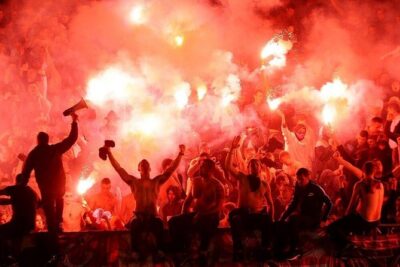
Generalštab: when the bombing symbolism is the point
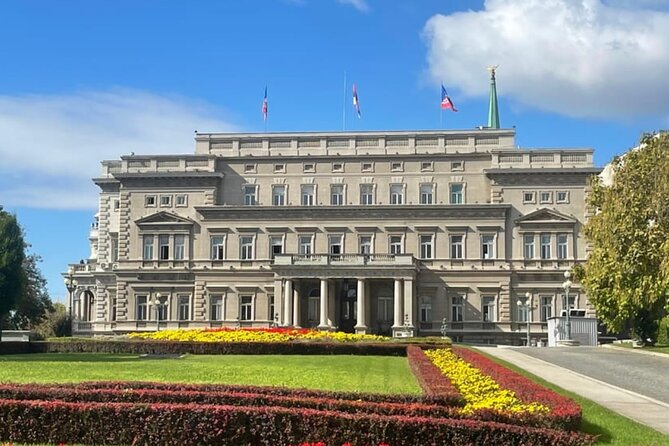
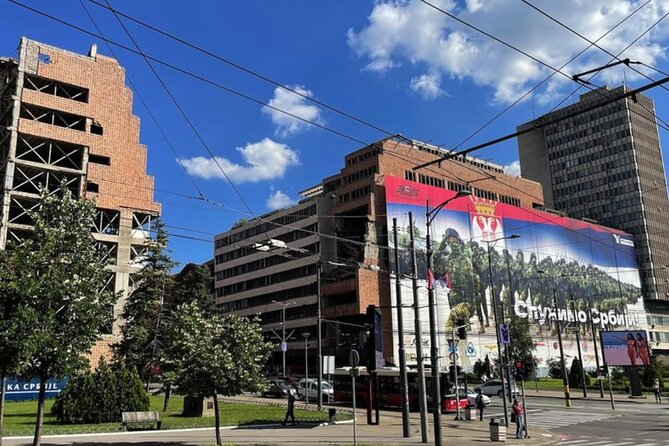
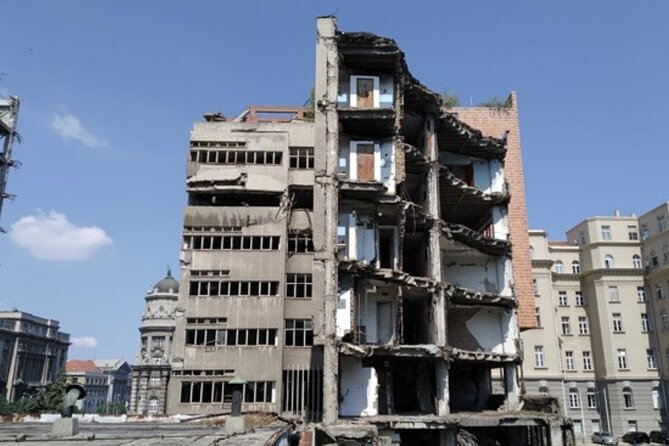
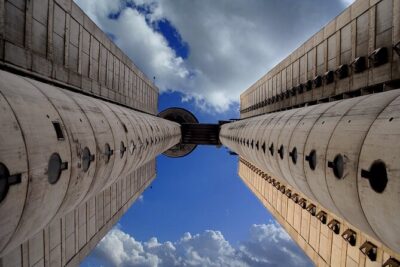
Then you move to Generalštab, listed as one of the symbols of the bombing. The stop is about 10 minutes, admission free.
This is where the tour’s central theme gets its clearest form. You’re not just hearing about war in the abstract, you’re standing in a place that the tour treats as a key symbol. Even with limited time, the guide’s framing is the difference between seeing a building and understanding why it’s used as meaning.
One practical consideration: because the visit is short, your best strategy is to ask one or two questions right at the start of the stop. That way you’re not left trying to catch up while time runs down.
The Railway Museum and the Old King Palace: everyday city history, compressed
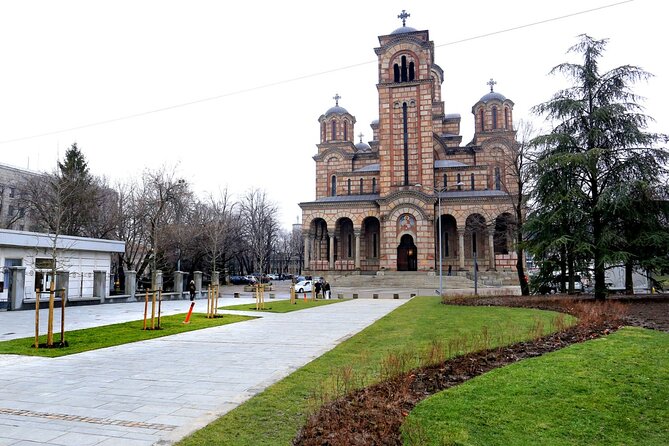
The Railway Museum is a stop built around the old railway station, about 10 minutes and free. Right after that, the itinerary includes the old king palace area, but the exact timing and details aren’t fully spelled out in your tour info.
That’s common on compact walking-and-driving routes. You’re meant to cover several landmarks without overloading one place. Still, the Railway Museum stop can be valuable because it shifts the story toward infrastructure, movement, and how city life is shaped by big events.
For the Old King Palace, you’ll likely get the tour’s quick interpretive take, not a full deep-dive. If that kind of compression is your preference, you’ll probably like the flow. If you hate being rushed, consider planning to ask your guide for recommended next steps after the tour ends.
Monument to Tsar Nicholas II Romanov: a brief pause with a bigger meaning
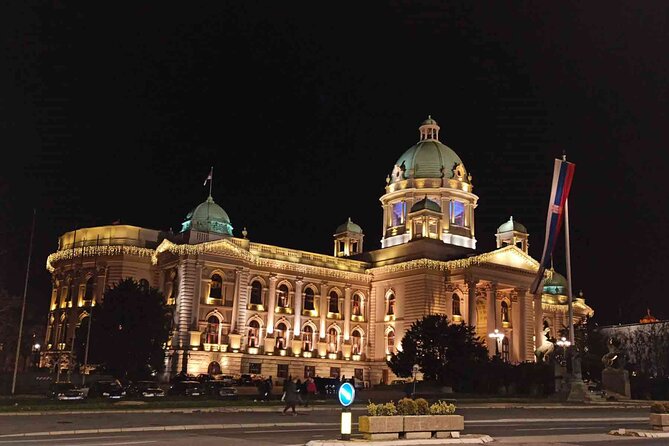
The route finishes with the Monument to Tsar Nicholas II Romanov for about 5 minutes, free entry. At this point, you’re typically catching your breath and letting the tour’s themes settle.
This short stop still fits the overall structure. The tour isn’t only about the NATO bombing. It uses monuments and political-religious anchors to show how Belgrade layers identity over time, not as one single story but as overlapping memories.
Since it’s only 5 minutes, the best use of this stop is to notice what you can, then get clarity from your guide if anything feels confusing. A lot can be packed into a monument, and you won’t want to guess.
The pacing reality: how to handle a 2-hour, short-stop format
The tour is about 2 hours with several stops, many at 5 to 20 minutes. That means you cover a lot, but you won’t linger long enough for slow reading, long photography sessions, or extended Q and A at every place.
This is exactly why some people find it fast. The upside is you get a “starter route” that helps you understand the geography of Belgrade as it relates to the bombing narrative. The downside is that if your goal is to absorb deeply on-site, you may feel rushed.
My advice: go in with a plan for what you want to learn. If you want the Serbian point of view on the Yugoslav wars and how the tour ties it to the bombing story, focus on listening and taking notes. If you want slow history, you can treat this tour as orientation and then pick one or two places to explore on another day.
Also, one review note you should take seriously is that clarity can vary with guides. If you have a hard time catching English, your best move is simple: ask for clarification early. A friendly guide will usually adjust and repeat in clearer terms when you ask.
Who should book this tour, and who should think twice
You’ll likely enjoy this tour if you:
- Want a compact route that gives you a Serbian point of view on the Yugoslav wars tied to the NATO bombing story
- Prefer a guided walkthrough over reading on your own
- Appreciate a mix of memorial, religious landmark, and political symbolism
- Like the comfort of a private vehicle with pickup and WiFi
You might think twice if you:
- Want lots of time inside buildings, museums, or memorial spaces
- Get frustrated when stops are only 5 to 10 minutes
- Need very slow, ultra-detailed explanations at every stop
It also fits well for first-time Belgrade visitors who want to understand central landmarks quickly. If you’re a repeat visitor, you may still like it for the specific framing, but check your tolerance for a compressed schedule.
Value check: admissions, time, and why the guide matters
One of the smartest value points is that Crkva Svetog Marka has included admission. For the other stops, you’re not paying entry fees during the route, which makes the cost easier to justify.
But the bigger value is the guide. This tour is built around explanation, and the places only become meaningful through context. That’s also where your experience can swing, since the subject is complex and the guide’s communication style matters.
Because the rating is high and most travelers recommend it, the overall execution seems to land well for many groups. The few caution flags are about speed and comprehension, not about safety or overall quality. In plain terms, this tour is a strong choice if you’re flexible and open to a guided overview rather than an extended site-by-site visit.
Should you book the NATO Bombing of Belgrade Historical Tour?
Book it if you want a short, private, guided way to connect Belgrade landmarks to the NATO bombing story from the Serbian angle. The mix of Crkva Svetog Marka, Tasmajdan Park’s children’s memorial, Serbian Parliament, and bombing symbolism sites makes the route feel purposeful, not random.
Skip it or plan differently if you hate time pressure. This is not a slow museum day. It’s a two-hour orientation tour with quick stops, so come prepared to listen and then follow up on your own if you want more.
If you’re considering it for your schedule, booking earlier can help. The tour is typically booked about 17 days in advance, so you’ll likely have better chances picking the timing that fits your day.
FAQ
How long is the NATO Bombing of Belgrade Historical Tour?
It lasts about 2 hours.
What is the price per person?
The price is $69.99 per person.
Does the tour include pickup?
Yes, pickup is offered.
Is the tour private or shared?
It is a private tour/activity, and only your group will participate.
What language is the tour guide?
The tour is offered in English.
Is there WiFi and is transportation provided?
Yes. It includes WiFi on board and private transportation in an air-conditioned vehicle.
What is the start time?
The start time is 11:00 am.
Which stops have admission included or free?
Crkva Svetog Marka includes an admission ticket. The other listed stops are free: Tasmajdan Park, the House of the National Assembly of the Republic of Serbia, Generalštab, the Railway Museum, the Old King Palace stop, and the Monument to Tsar Nicholas II Romanov.
Is lunch included?
No, lunch is not included.
What is the cancellation policy?
You can cancel for a full refund up to 24 hours before the experience’s start time.
Is the meeting point near public transportation?
Yes, the meeting point is near public transportation.
Newly written up in Belgrade
- Private Belgrade Street Art Tour
★ 5.0 · 1 review - The best of Novi Sad walking tour
★ 5.0 · 1 review - Tara National Park, Mokra Gora and Zlatibor
★ 5.0 · 1 review - Discover Belgrade’s most Photogenic Spots with a Local
★ 5.0 · 1 review - Zasavica Bike Tour
★ 5.0 · 1 review - Private Serbian Food Cooking Experience in Belgrade with Meal
★ 5.0 · 1 review - Topola: Royal Dynasty Half Day Tour from Belgrade
★ 5.0 · 1 review
Tito & Yugoslavia Tours, compared.
Architecture of New Belgrade – Brutalism Decoded
Read our review →

More Serbia tours of this kind