
Reviewed · TITO & YUGOSLAVIA TOURS
NATO Bombing of Belgrade Private Tour
Belgrade has a scar you can touch. This private tour links the 1999 NATO bombing to real buildings, real memorials, and a guide who keeps the story clear and human. I especially love the site-by-site pacing and the way each stop connects to what happened during those nights. I also like that you get hotel pickup and drop-off, so you can focus on the places rather than transit stress.
One thing to consider, though: this is a serious, emotional route. You are looking at sites tied to deaths of civilians and military personnel, so it is not a casual sightseeing loop.
In This Review
- Key highlights you will care about
- A focused, private way to understand Belgrade’s 1999 bombing map
- Price and logistics: what you are actually paying for
- Stop 1: RTS Radio Television of Serbia and the Zašto? memorial
- Stop 2: Ministry of Defence, the bombing site many people recognize
- Stop 3: Ušće Business Center and the missile-proof Central Committee story
- Stop 4: Chinese Cultural Center, the contested embassy bombing
- Stop 5: Air Force Command Building and the pilots who fought back
- How the guide makes the story stick (and why pictures help)
- Getting the most from it: questions to ask your guide
- Who this tour suits best
- What to bring, and how to stay comfortable
- Should you book the NATO Bombing of Belgrade private tour?
- FAQ
- What is the duration of the NATO Bombing of Belgrade private tour?
- What time does the tour start?
- How much does the tour cost?
- Is this a private tour?
- Is pickup available?
- Is the tour offered in English?
- Are there admission tickets you need to pay for the stops?
- What is included in the price?
- Is food included?
- What is the cancellation policy?
Key highlights you will care about
- Private group format so you can ask questions and set your own pace within the 3 to 4 hour window.
- Hotel pickup and drop-off plus bottled water, which makes it easy to fit into a busy day.
- Five meaningful stops connected by one narrative, so the bombardment becomes easier to understand.
- Free admissions at each stop, so your money stays focused on the guide, not ticket fees.
- English guided storytelling that uses the visual impact of being at the actual sites.
A focused, private way to understand Belgrade’s 1999 bombing map
This tour is built for people who want more than a couple of photos and a caption. You get a structured route through five high-impact locations tied to the NATO air campaign in 1999, with short time at each stop and a guide who explains what the buildings represent today.
The best part is how quickly everything starts to make sense. When you stand at the RTS building, you are not just hearing about a tragedy, you are seeing an original structure that still looks damaged. When you move on to the Ministry of Defence and the Air Force Command building, the conversation naturally shifts from civilian suffering to military targets and the strategy behind them. That flow is exactly what makes a short 3 to 4 hour tour feel worthwhile instead of rushed.
More Tito and Yugoslav-era tours:
- Red Belgrade Communist Tour★ 5.0 · 78 reviews
- Architecture of New Belgrade – Brutalism Decoded★ 4.5 · 24 reviews
- Communist Tour in Belgrade★ 4.5 · 19 reviews
Price and logistics: what you are actually paying for
At $145.10 per person for a private 3 to 4 hour tour, you are mostly paying for three things: a dedicated guide, door-to-door pickup, and time saved from figuring out which sites to hit and in what order.
Here is what you do get:
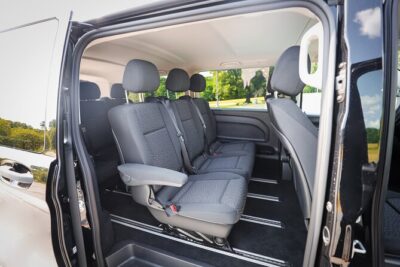
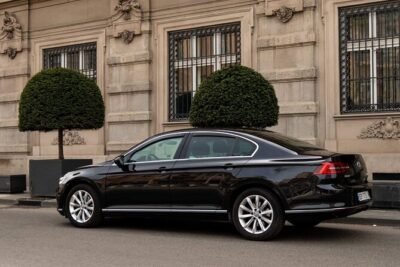
- Private guide/driver
- Hotel pickup and drop-off
- Bottled water
- Private tour, meaning only your group participates
- Mobile ticket
- English-speaking guide
- Group discounts are offered (so if you are traveling with friends, ask about the best way to combine groups)
And here is what you do not get:
- Food and drinks
- Personal expenses
So I think the value is strongest if you want context, not just access. If you are traveling with someone who also cares about history, the private format helps a lot, because you are not stuck with a crowd and you can ask follow-up questions as you go.
Stop 1: RTS Radio Television of Serbia and the Zašto? memorial
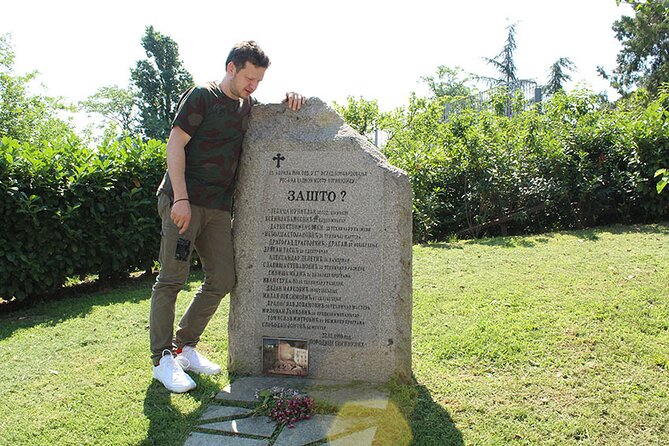
Your first stop is the RTS complex, Radio Television of Serbia, reached after pickup. You will begin at the monument called Zašto? (Why?). This is one of those places where the guide’s explanation matters as much as the building itself.
What you learn here is heavy: during the night shift, 16 mostly young people were killed. There is an original part of the building still standing on site, and it remains unrepaired, acting as a memorial to the disaster. That unrepaired look is not decorative. It is the point. Seeing the damage in place helps you understand why later discussions about targets and responsibility still carry real weight in Belgrade.
Why this stop works
RTS gives you emotional grounding. Without it, the rest of the tour can feel like a list of sites. With it, you remember that this was not abstract warfare, it was people on duty, caught in the middle of a night that changed lives.
Potential drawback
This stop can feel intense, especially if you are expecting a lighter afternoon. If you prefer a gentler pace through difficult topics, ask the guide to slow down during the story here.
Stop 2: Ministry of Defence, the bombing site many people recognize
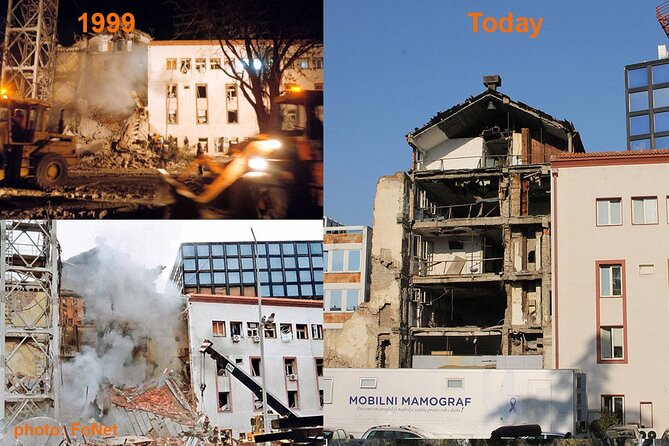
Next comes the Ministry of Defence. It is often pictured in accounts of NATO bombing in Belgrade, and you will see why when you are there. The guide links the site to the night of 29 April 1999, when many military objectives were hit.
The human impact is included in the explanation: one person lost their life, and many civilian buildings nearby were damaged. That detail matters, because it shows how even a military target area can overlap with civilian reality.
What to pay attention to
Try to listen for the guide’s connection between the target concept and the consequences in the surrounding area. Tours like this get most helpful when they connect strategy to impact, not just names and dates.
A practical tip
At this stop, I suggest you decide what you want to understand next. Do you want the narrative to focus more on military objectives, or more on civilian damage? Your answer can help shape what questions you ask the guide.
Stop 3: Ušće Business Center and the missile-proof Central Committee story
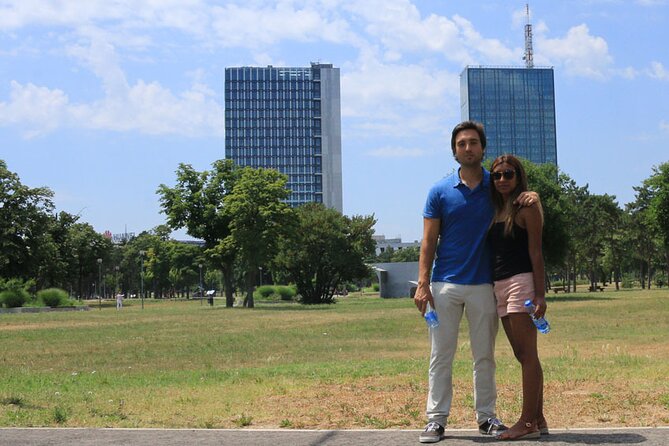
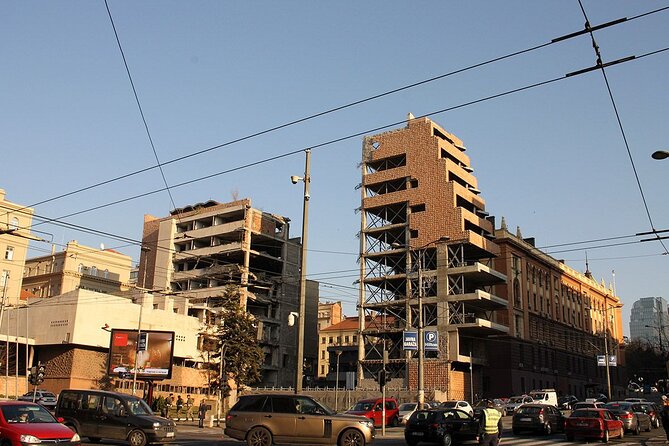
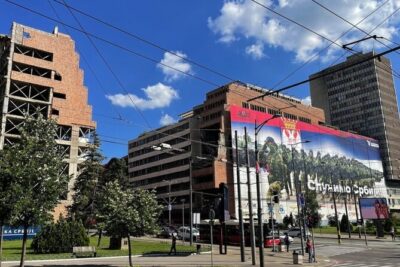
After the Ministry of Defence, you move to Poslovni centar Ušće, now a business center. The building you see today sits on the same skeleton as the former Central Committee of the Communist Party of Yugoslavia. In other words, the structure carries layers of political meaning, and the exterior appearance today still reflects the original form.
Here the guide explains something specific and fascinating: why this building was considered NATO missile proof in 1999, and then why it was hit anyway. That is the kind of detail that separates a memorable tour from a basic “here is where bombing happened” route.
Why this stop is valuable
You get to compare expectation versus reality. Even when a building was built with protection in mind, the bombing campaign still reached it. Understanding that contradiction helps you grasp why people at the time felt both threatened and confused by how events unfolded.
Time reality check
You will spend about 30 minutes here. That is enough for a clear story, but not enough for long debates. If you are the type who loves arguing timelines, you may want to save those questions for the ride between stops.
Other Belgrade trips travellers weigh against this one
Stop 4: Chinese Cultural Center, the contested embassy bombing
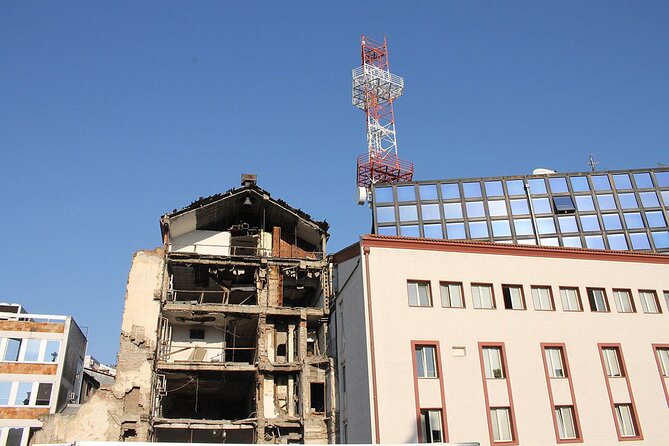
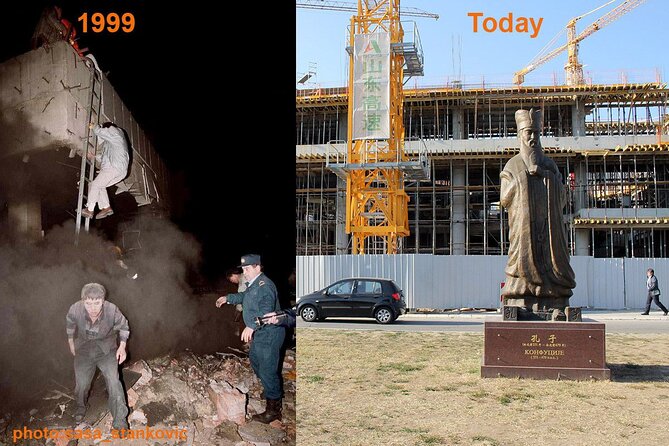
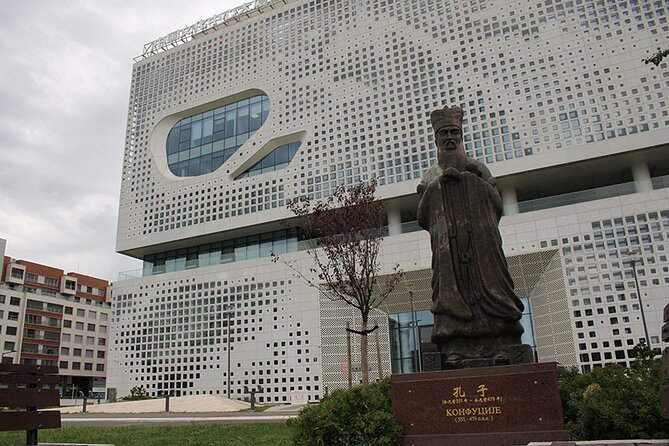
The fourth stop is the Chinese Cultural Center, formerly the Chinese embassy. The guide calls it one of the most controversial bombing sites from the 1999 campaign in Belgrade.
The explanation includes both sides of the narrative you will hear around this site:
- It was allegedly bombed due to an intelligence mistake.
- It is also suspected that the embassy had a different purpose.
What remains factual in the guide’s telling is the outcome: four Chinese citizens died on the night of 7 May 1999. That loss is not treated as trivia. It is presented as a human cost tied to a major international headline.
How to handle a sensitive stop
This is where you want to keep your mind open. Even if you already know a version of the story, hearing how the guide frames uncertainty, and then returns to the recorded deaths, tends to bring clarity.
A small note on emotional pacing
If you feel your focus slipping at this stage, it can help to ask the guide what information they prioritize, because this stop carries competing claims.
Stop 5: Air Force Command Building and the pilots who fought back
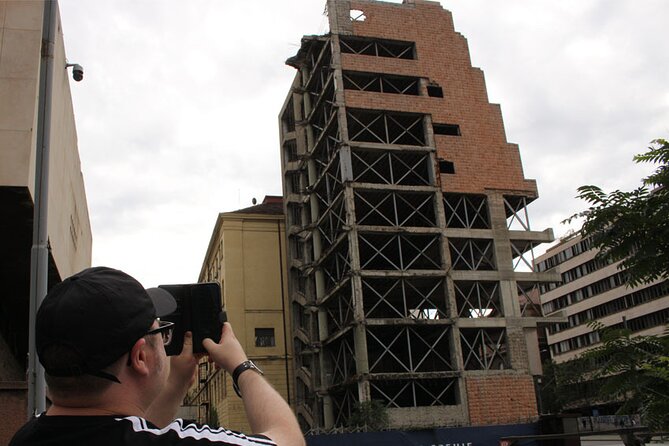
The final stop is the Air Force Command Building, a 1935 edifice known for architecture with Yugoslav and Serbian character. The guide connects it to a strategic objective hit with two missiles on 5 April 1999.
This is where the tour’s tone shifts toward defense and sacrifice. You will learn about pilots who knowingly engaged in the fight, and who lost their lives defending the sky above Serbia and Yugoslavia against a much stronger NATO air force.
Why this ending lands
Most bombing tours end on destruction. This one ends with intent, courage, and the idea of service in the face of overwhelming force. That does not erase civilian suffering, but it rounds out the picture by showing how each side viewed its own responsibility.
Time here is tight too
Like the other stops, expect about 30 minutes. I suggest you leave the last questions for this stop, because your understanding of the campaign will be sharper by the time you arrive.
How the guide makes the story stick (and why pictures help)
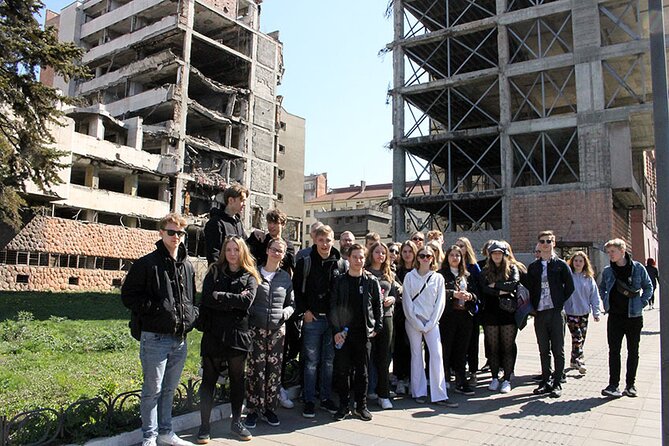
One thing I value in memorial tours is storytelling that respects your attention span. Here, the guide uses the power of being on location, while also using visual support, like pictures, to keep the details understandable as you move from site to site.
You will notice that the route is short and structured, roughly 3 to 4 hours total, with about 30 minutes at each stop. That timing is not accidental. It is designed so you can absorb each location as its own moment, then carry the context forward to the next one.
If you like history but hate lectures, this format usually fits well. You are standing in the middle of the story, not sitting through someone reading a timeline.
Getting the most from it: questions to ask your guide
If you want to walk away feeling like you truly understood what you saw, bring a few questions in your pocket. You can ask in plain language. For example:
- What did RTS represent to the people on duty that night, and why was the building left unrepaired?
- How does the guide connect military targeting to damage in nearby civilian areas at the Ministry of Defence stop?
- At Ušće, what explanation is given for the missile-proof expectation versus why it still got hit?
- At the Chinese Cultural Center, how does the guide distinguish allegations or suspicions from confirmed facts?
- At the Air Force Command building, what detail does the guide use to explain the pilots’ choices?
Even if you do not ask everything, just having one or two questions helps you listen more actively.
Who this tour suits best
This tour is a strong match if you:
- Want a private, English guide and a clear route through the main bombing sites in Belgrade.
- Prefer context and interpretation over wandering alone.
- Like learning how places function as memorials, not just photo stops.
- Are comfortable with serious content and want a respectful, fact-focused experience.
It may be less ideal if you want light entertainment, since every stop is tied to tragedy, targeting, or loss. Also, if you hate sitting in a car for part of your day, you should know the tour includes a driving component between locations.
What to bring, and how to stay comfortable
Because this is a short half-day style outing with multiple stops, I recommend you plan for a practical day:
- Wear comfortable shoes suitable for walking at each site.
- Bring a layer for weather changes in Belgrade, since your outdoor viewing time will vary by stop.
- Use the included bottled water, and keep an eye on time because the tour moves in blocks.
And mentally, bring the right expectations. This is not trying to turn trauma into spectacle. It is designed to help you understand why those buildings still matter.
Should you book the NATO Bombing of Belgrade private tour?
I would book this tour if you want a focused way to understand the 1999 NATO bombing impacts through the locations that still carry scars in the city’s landscape. The biggest reason is the balance of format and depth: five stops, short time per stop, free admissions at each location, and a private guide who ties the narrative together.
Skip it if you are looking for a cheerful, flexible tour with lots of free time. The emotional weight is real, and the schedule is built to deliver a complete story in a limited window.
If you are the type who likes to leave a place with clarity, not just photos, this is one of the better uses of half a day in Belgrade.
FAQ
What is the duration of the NATO Bombing of Belgrade private tour?
The tour lasts about 3 to 4 hours.
What time does the tour start?
The start time is 10:00 am.
How much does the tour cost?
It costs $145.10 per person.
Is this a private tour?
Yes. It is a private tour/activity, and only your group participates.
Is pickup available?
Yes. Hotel pickup and drop-off are included, and you can also request pickup from another location like an Airbnb or apartment if you specify. Pickup from Belgrade port is also offered.
Is the tour offered in English?
Yes, it is offered in English.
Are there admission tickets you need to pay for the stops?
No. Admission ticket is free at each listed stop.
What is included in the price?
Included are the private guide/driver, hotel pickup and drop-off, bottled water, and the private tour.
Is food included?
No. Food and drinks are not included.
What is the cancellation policy?
You can cancel for a full refund up to 24 hours in advance of the experience start time, with free cancellation.
Newly written up in Belgrade
- Private Belgrade Street Art Tour
★ 5.0 · 1 review - The best of Novi Sad walking tour
★ 5.0 · 1 review - Tara National Park, Mokra Gora and Zlatibor
★ 5.0 · 1 review - Zasavica Bike Tour
★ 5.0 · 1 review - Discover Belgrade’s most Photogenic Spots with a Local
★ 5.0 · 1 review - Topola: Royal Dynasty Half Day Tour from Belgrade
★ 5.0 · 1 review - Private Serbian Food Cooking Experience in Belgrade with Meal
★ 5.0 · 1 review
Tito & Yugoslavia Tours, compared.
Architecture of New Belgrade – Brutalism Decoded
Read our review →

More Serbia tours of this kind