
Reviewed · HISTORICAL TOURS
A Crash Course through Serbian History
Belgrade history hits fast on foot. This tour turns downtown Belgrade into a real timeline, with stops that connect today’s politics, churches, and parks to the city’s shifting rulers. You’ll spend your time on major landmarks and free-entry sites.
I love how it delivers a true crash course in Serbian history without making you wade through textbooks, and I like that the walk helps you get oriented for the rest of your trip. The route also ties the present to the past, so you understand why certain streets and monuments feel so loaded.
One possible drawback is the pace. With several stops packed into about 3 to 4 hours, you’ll be walking more than you would on a slow, museum-style day, so save your longer breaks for afterward.
In This Review
- Key Highlights Worth Planning For
- A Belgrade Walk That Explains the City, Not Just the Buildings
- Entering The National Assembly: Where Serbian Power Gets a Story
- Walking the City Ridge and Skadarska Street Like a Local
- Kalemegdan Park and Belgrade Fortress: Two Rivers, One Heavy Past
- Ružica Church: A Small Building That Guards Big Time Changes
- Studentski trg: The Calm Ending at Belgrade’s Student Park
- Price and Value: Why $72.41 Feels Reasonable Here
- How Long It Takes and How to Plan Your Day
- What the Guide Adds: Asking Better Questions While You Walk
- Mobility, Comfort, and Weather Reality Check
- Who Should Book This Tour (and Who Might Skip It)
- Should You Book A Crash Course Through Serbian History?
- FAQ
- Where does the tour start and end?
- How long is the tour?
- What is the price per person?
- Is the tour offered in English?
- What does the tour include?
- Are there admission fees for the stops?
- How big is the group?
- What if the weather is bad?
- Is free cancellation available?
- Can service animals participate?
Key Highlights Worth Planning For
- A short, high-impact history timeline in about 3 to 4 hours
- Free entry at every major stop, so your money goes toward the guide
- Kalemegdan Park and Belgrade Fortress views over two rivers
- Skadarska Street old-quarter vibe that adds culture to the history
- Belgrade’s “two sides” geography theme, starting from the ridge that shapes the city
- Guides praised by name, including Marina, Pedja, Jovana, Tibor, and T.B.
A Belgrade Walk That Explains the City, Not Just the Buildings
Belgrade can feel split in your head even when you’re only moving a few blocks. The city’s layout, built on a ridge that divides it into two parts, shapes how people move, where the main street grew, and where major civic sites landed. That geography matters, because the history here is not just dates, it is power, borders, and survival.
This is exactly the kind of tour that helps you connect dots quickly. You start downtown, work through Old Belgrade character and churches, then move up to Kalemegdan for a big-picture view that makes the rivers feel like history in motion.
And if you care about how the Balkans got to where they are today, this route aims straight at that connection. You don’t just see monuments, you hear what they meant, what changed, and what stayed stuck in place.
More of the past on foot in Belgrade:
- History and Culture in my Belgrade★ 5.0 · 41 reviews
- NATO Bombing of Belgrade Historical Tour★ 5.0 · 17 reviews
- Football tour: Red Star and Partizan Ultras History★ 5.0 · 14 reviews
Entering The National Assembly: Where Serbian Power Gets a Story
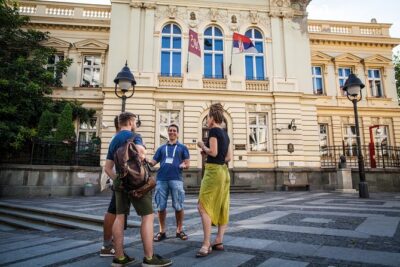
Your first stop is the House of the National Assembly of the Republic of Serbia. It is one of the most important places in the city, and the visit is framed as more than architecture. You’ll hear stories about the tale of two dynasties and two royal courts, plus the bigger context of how political power shaped Belgrade over time.
What I like about starting here is that it sets the tone for the whole walk. Belgrade’s history is not remote. Even when you’re standing somewhere that feels modern, the guide can point out how older structures of authority and identity still influence the way people talk about the city.
Practical note: admission at this stop is listed as free (with a ticket). That keeps the experience smoother, because you are not juggling extra costs before the route even begins.
Walking the City Ridge and Skadarska Street Like a Local
After the National Assembly, the tour shifts to the city’s spine, the ridge that has long guided the main pedestrian area and main street since Roman times. This part is useful because it gives you a physical sense of how Belgrade grew. When you understand that “ridge logic,” you can later read the city map with more confidence.
Then comes Skadarska Street, described as capturing the true spirit of Bohemia in a unique old-quarter area of Old Belgrade. This is the spot where the tour stops being only political and turns more cultural. You are basically getting the mood of the neighborhood, the feeling of an older social world, and the way street life carries history in its vibe.
I find this kind of stop essential on a history tour. Without a street like Skadarska, Belgrade history can start to feel like a list of takeovers. With it, you remember that people lived here, ate here, argued here, and built traditions that outlast the rulers.
Kalemegdan Park and Belgrade Fortress: Two Rivers, One Heavy Past
The biggest “wow” geography moment is Kalemegdan Park and Belgrade Fortress. You climb to a hilltop above the confluence of two mighty rivers, and the whole setting changes. Belgrade becomes visible as a strategic site, not just a scenic one.
This stop is also where the history gets more dramatic. The fortress is described as having a rich and violent history, and you’ll explore the promenade for views over the Sava River. On clear days, the rivers do a lot of work for the guide’s storytelling, because they make the logic of defense and control instantly believable.
A few specific points you’ll be shown:
- The Monument of Gratitude to France, which adds a World War era layer to the view
- The monumental Victor statue, a landmark you can’t miss once you’re there
- The grave of Ottoman vizier Ali-Pasha, which brings an Ottoman-era thread into the fortress story
Admission is listed as free here too. For a paid walking tour, that matters, because it means your price is going to the human part, not multiple entry fees.
If you like history that has teeth, this is your stop. If you mainly came for photos, it still works, because you get a good view of the Sava and a strong sense of why this exact spot has mattered for centuries.
Ružica Church: A Small Building That Guards Big Time Changes
Next up is Ružica Church. It is a lovely church built in the 15th century, destroyed in the 16th, and then rebuilt in the 19th. That sequence is a compact summary of Belgrade’s turbulence, all wrapped into one place of worship.
Ružica earns its time because it is not only pretty. It is a physical record of breakage and rebuilding. The guide’s job here is to help you notice how religious architecture becomes a survival strategy, not just a style choice.
Admission is listed as free, and the stop is short. That makes it a great “breather” between the larger, fortress-scale history and the final city-center park.
Worth putting on the shortlist while you plan Belgrade:
Studentski trg: The Calm Ending at Belgrade’s Student Park
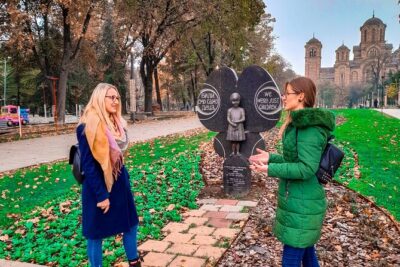
The tour closes at Studentski trg, a park loved by students who pass time between lectures. It sits in an academic neighborhood, right in the city center, which makes it a smart ending point. You finish feeling grounded in everyday Belgrade life, not stuck on fortress views and political institutions.
This last stop is brief, but that’s the point. It gives you a place to slow down, regroup, and decide what you want to do next on your own. The tour ends next to Student Park at Studentski trg 16, in the core of Belgrade’s downtown area.
If you’re using Belgrade as part of a broader Balkans trip, this ending location is handy. It is not out in the outskirts, so you can pivot to lunch, a museum, or an evening walk without backtracking.
Price and Value: Why $72.41 Feels Reasonable Here
At $72.41 per person, this tour sits in the mid-range for guided history walks. The value comes from two places.
First, you are paying mainly for the guide. Admission at each listed stop is free, including the National Assembly, Kalemegdan Fortress area, Ružica Church, and Studentski trg. That removes the usual “I paid for entry tickets too” friction that can inflate walking tours.
Second, the guide does the hard work of condensing a long timeline into something you can actually hold in your head. The reviews are consistent about this being a real overview, and the pace is managed so you can keep up and still ask questions. Guides with names like Marina, Pedja, Jovana, Tibor, and T.B. are singled out for clear explanations and friendly, patient interaction.
One more value factor: group size. The tour has a maximum of 30 travelers, which is large enough to find others easily but small enough that you should still feel guided. And if your date ends up with fewer people, the experience can feel closer to private.
How Long It Takes and How to Plan Your Day
Expect about 3 to 4 hours. That range matters because it determines where you can slot this in your schedule.
If you are arriving in Belgrade that day, this is a strong first outing. It helps you understand which areas are “central spine” versus “fortress viewpoint” versus “old quarter feel,” so your later choices get easier.
If you have a busy itinerary, treat this as your core walking block. You can pair it with a relaxed meal afterward. Since coffee and food are not included, you’ll want to pick a place near your route before you go, or stop for something after the tour ends at Studentski trg.
What the Guide Adds: Asking Better Questions While You Walk
A good history guide is not just reciting facts. They connect the present to the past in a way that makes your next steps make sense.
This tour is built around that idea. The story threads move from political power at the National Assembly, to the older city ridge and street life, to fortress strategy and monument meaning, then to church survival and an everyday student neighborhood finish. It’s the kind of arc that teaches you what to notice when you walk on your own later.
I especially like that the tour is described as a crash course with enough explanation to understand events, not just memorize dates. If you want to ask questions, this format usually gives you time. One review highlights that a guide made space for questions and even answered them in detail, which is exactly what you want on a condensed tour.
Mobility, Comfort, and Weather Reality Check
This is a walking tour in central Belgrade, so you should plan for time on your feet. The listing says most travelers can participate, and service animals are allowed.
It also requires good weather. If Belgrade weather turns rough, the provider may cancel and offer a different date or a full refund. That’s important because the fortress area and outdoor promenade depend on visibility and comfort.
Bring comfortable shoes and a layer. You’ll be walking through streets and up to a hilltop viewpoint, so you’ll feel the change in shade and wind at Kalemegdan.
Who Should Book This Tour (and Who Might Skip It)
This is for you if:
- You are a first-time visitor and want a structured overview fast
- You like history that explains the present, not just the past
- You want to see multiple key sites in a short half-day
- You enjoy asking questions and getting context on politics and culture
It might be less ideal if:
- You want long museum time at one site
- You dislike moving at a steady walking pace
- You only want photos and prefer minimal explanation
If you are also the type who likes to learn from local storytelling, this tour fits your style. The emphasis on links between events of today and events of the past is the reason it gets such strong ratings.
Should You Book A Crash Course Through Serbian History?
Yes, I think you should book it if you want a smart foundation for Belgrade. At $72.41, with free admission at major stops and a time-efficient route, it is a practical way to learn the city instead of just passing it by.
Book it especially if you only have a short window and you want the walk to do more than check boxes. The strongest reason to choose it is that it gives you an orientation you can actually use, plus a clear storyline that makes monuments, streets, and churches easier to interpret later.
If you’re torn between this and a slower tour, go for this one first. You’ll likely come out knowing what to return to, and that makes the rest of your Belgrade days feel more intentional.
FAQ
Where does the tour start and end?
The tour starts at Terazije 16, Beograd 11000, Serbia. It ends next to the Student park at Studentski trg 16, Beograd 11000, Serbia.
How long is the tour?
The duration is approximately 3 to 4 hours.
What is the price per person?
The price is $72.41 per person.
Is the tour offered in English?
Yes, the tour is offered in English.
What does the tour include?
The tour includes a tour guide.
Are there admission fees for the stops?
Admission tickets are listed as free for each of the listed stops.
How big is the group?
The experience has a maximum of 30 travelers.
What if the weather is bad?
The tour requires good weather. If it is canceled due to poor weather, you will be offered a different date or a full refund.
Is free cancellation available?
Yes, you can cancel up to 24 hours in advance for a full refund.
Can service animals participate?
Yes, service animals are allowed.
Newly written up in Belgrade
- The best of Novi Sad walking tour
★ 5.0 · 1 review - Tara National Park, Mokra Gora and Zlatibor
★ 5.0 · 1 review - Private Belgrade Street Art Tour
★ 5.0 · 1 review - Zasavica Bike Tour
★ 5.0 · 1 review - Discover Belgrade’s most Photogenic Spots with a Local
★ 5.0 · 1 review - Topola: Royal Dynasty Half Day Tour from Belgrade
★ 5.0 · 1 review - Private Serbian Food Cooking Experience in Belgrade with Meal
★ 5.0 · 1 review
Historical Tours, compared.

Football tour: Red Star and Partizan Ultras History
Read our review →

Full-Day Private Royal Heritage Tour to Oplenac With a Winery Visit
Read our review →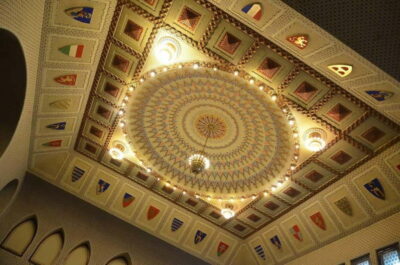
More Serbia tours of this kind