
Reviewed · HISTORICAL TOURS
Football tour: Red Star and Partizan Ultras History
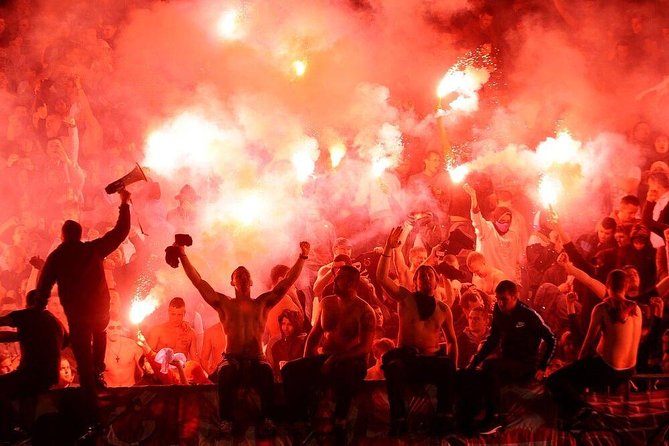
Belgrade has two football religions. I love the way Dorcol turns ultras rivalry into street-level atmosphere, with murals you can actually stand in front of, and I love that the Marakana stop includes the stadium museum with major trophies. The main thing to plan around is that this tour needs good weather.
You meet at Student Park at 10:00 am and you loop back to the same spot when you’re done. It runs about 3 to 4 hours, is offered in English, and the group size is capped at 99, so you will feel the energy of Belgrade’s football world without it turning into a long, endless slog.
In This Review
- Key things I’d circle before you go
- What this Belgrade football tour really does for you
- Dorcol: Partizan murals, fan streets, and a beer moment
- Senjak in 20 minutes: Red Star supporters and 1990s graffiti
- Red Star at Marakana: museum trophies, documents, and the 1991 Champions League
- Partizan Stadium: pitch walk, ghetto-stadium feel, and Belgrade views
- Guides make the story click, from Andrija to Tihomir
- Price, timing, and what to bring for a 3 to 4 hour walk
- Should you book this Red Star and Partizan ultras history tour?
- FAQ
- How long is the Red Star and Partizan Ultras History tour in Belgrade?
- Where does the tour start and where does it end?
- Is the tour offered in English, and how big are the groups?
- Which stadium and museum stops are included?
- Is a beer included, and do you get pitch access?
- What happens if the weather is poor?
Key things I’d circle before you go
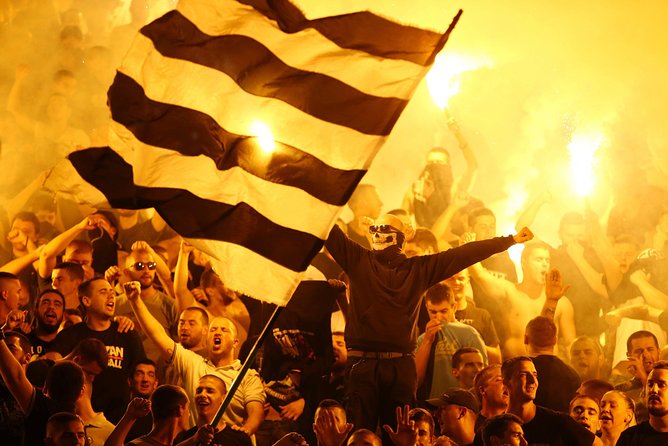
• Ultras culture mapped by neighborhoods, not just club talk
• Marakana museum time with major trophy room highlights
• Graffiti stops in Dorcol and Senjak, including a 1990s mural scene
• A real Partizan stadium pitch walk, in an old-school setting
• Beer included during one stadium visit, so it’s not all theory
• Guide-led storytelling, with standout guides like Andrija and Tihomir mentioned for their passion and approach
What this Belgrade football tour really does for you
This tour is built around something simple: you learn Belgrade’s football story by walking with it. Instead of starting at a club website vibe, you start in the neighborhoods where supporters show up day after day, where graffiti marks identity, and where the matchday mood spills into regular street life.
If you care about football beyond results, this format works. You get the culture layer, the social layer, and the city layout all in one afternoon. You also get stadium access in two big stops, so the “ultras history” theme stays grounded in real places, not only plaques and photos.
The tour also respects your time. It is short enough to fit into an active day, yet spaced so you can actually look, absorb, and ask questions. And because it runs in English and is guided, you’re not stuck trying to translate the meaning of murals and fan symbols on your own.
More of the past on foot in Belgrade:
- A Crash Course through Serbian History★ 5.0 · 58 reviews
- History and Culture in my Belgrade★ 5.0 · 41 reviews
- NATO Bombing of Belgrade Historical Tour★ 5.0 · 17 reviews
Dorcol: Partizan murals, fan streets, and a beer moment
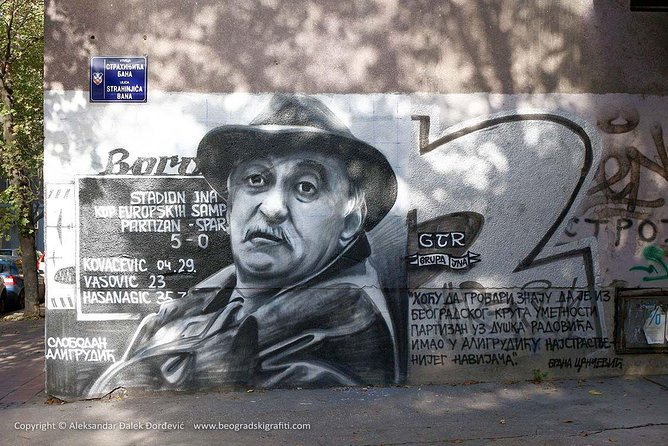
Dorcol is one of those Belgrade areas where football fandom is not a side hobby. It’s part of the neighborhood’s visual identity. You spend about an hour here, and you’re in the Partizan supporters zone, where you’ll see well-known graffiti of famous supporters and the presence of one of the city’s fiercest fan groups.
What I like about starting here is that Dorcol is not only “football territory.” It’s also a tourist-friendly district with bars and pubs and a genuinely charming neighborhood feel. That mix matters because it helps you understand something about Belgrade itself: the city can look relaxed on a street corner, then tighten instantly when you’re near matchday culture.
You also get one of the tour’s signature moments, a beer inside one team’s stadium. Even if you are not a beer person, treat this as the storytelling tool it is. It’s a chance to feel the atmosphere in a place that usually belongs to supporters, not spectators with a checklist.
One practical heads-up for Dorcol: the mood is social and visual. Wear shoes that handle uneven pavement and plan to slow down. This is the kind of stop where the best pictures come after you stop rushing.
Senjak in 20 minutes: Red Star supporters and 1990s graffiti
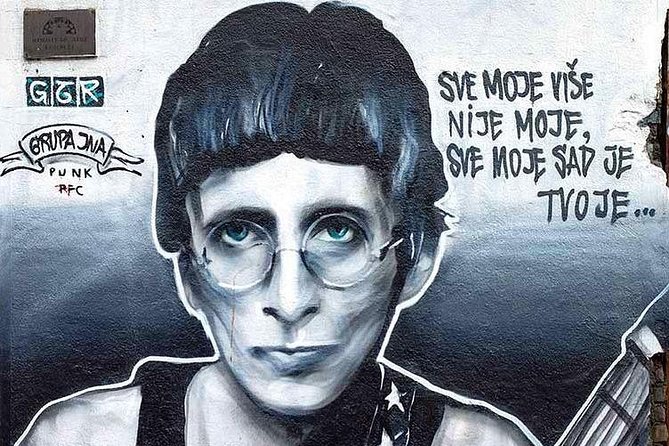
Senjak is shorter, around 20 minutes, but it’s designed to hit fast. This is the Red Star fans district, and you’ll see fierce supporter presence alongside the oldest graffiti in the city, dated to the 1990s.
What makes this stop interesting is the “guarded” element. The mural scene is described as being watched by fans 24/7. You can feel the point of that as soon as you’re there. It is not just street art, it’s continuity, the idea that supporters keep the symbols alive, even when nobody is “posting” anything for social media.
Because this is a quick stop, I recommend using it like a reset button. Look first. Then ask your guide what those images meant back then, and what they represent now. In a short window, that extra context turns a mural into a story.
If you’re sensitive to intense fandom energy, this is the moment to pace yourself. You’re seeing supporter identity in a concentrated way. Most people will find it fascinating, but the tone can be firm.
Red Star at Marakana: museum trophies, documents, and the 1991 Champions League
This is the anchor stop. You spend about two hours at the Red Star Belgrade Stadium, also known as Marakana. The museum is inside the stadium complex, and the key detail is that you can see both attractions with one entry setup.
This museum stop is where the tour shifts from neighborhood atmosphere to club institutional memory. You’re looking at trophies, flags, and important club documents. The highlight is the Champions League trophy from 1991, displayed as part of the museum’s trophy room.
There’s also a specific brag point built into the story of that trophy: Red Star is described as the only Eastern European club, alongside Steaua Bucuresti, that has it in its trophy room. Even if you don’t obsess over European competition trivia, it’s a concrete, real-world reason to care. You can stand in front of something that is not symbolic, not a replica, not a rumor.
Drawback to consider: museums move at a slower pace than street stops. If you’re only here for the street art vibe or only for stadium photos, you might feel this part stretches your attention span. But if you enjoy context, this is the part that ties everything together.
Also, because this is a stadium location, check how much walking is involved in the museum route and stadium area. Your guide will keep you moving, but you’ll want comfortable shoes and a quick willingness to pause.
Partizan Stadium: pitch walk, ghetto-stadium feel, and Belgrade views
Next up is Partizan Stadium, and this stop is around 30 minutes. The experience here is physical in the best way. You’ll walk down the pitch and see what’s described as one of the last remaining ghetto stadiums in Europe.
That phrase matters because it hints at the atmosphere: it’s not trying to feel like a modern entertainment complex. You’re getting something more grounded, older-feeling, and still tied to how supporters experience football.
You also get views of the city while you’re there. That matters more than you might think. Stadiums are often designed to separate you from the world outside matchday. Here, the views reconnect the ground to Belgrade itself, so it feels like the club is part of the city’s geography, not a sealed-off bubble.
If you’re the type who wants action, this is your stop. Walking on or near the pitch is rare for casual visitors, so the value is not only the building. It’s the sense of scale. You see the field like a participant, even if you’re just there for a short moment.
Worth putting on the shortlist while you plan Belgrade:
Guides make the story click, from Andrija to Tihomir
A tour like this lives and dies by the guide. You need someone who can explain what symbols meant, why neighborhoods matter, and why rivalry shaped more than football in Serbia.
Andrija is one of the standout guides mentioned for being phenomenal. People highlight his deep Serbian football knowledge, his ability to connect mural sightings to club and supporter history, and how he keeps the group moving without turning it into a lecture. There’s also a memorable detail: he’s helped people plan their day around football after the tour, including support to go to a Red Star game later that same day. Even more impressive, there’s mention of a next-day basketball game together, which speaks to the kind of hospitality and flexibility that goes beyond the basic tour script.
Tihomir is another guide praised for professional service and a deep understanding of ultras history. If your interest is specifically in the ultras side, that kind of specialization makes the difference between seeing graffiti as random art versus understanding it as identity.
One more practical point: some groups have had the tour customized, including extra access such as pitch time at the stadiums and viewing conference rooms when that is possible. If you want that, ask your guide early, but be ready for limitations based on the day and club access.
Price, timing, and what to bring for a 3 to 4 hour walk
The price is $84.21 per person, and the value comes from how much you pack into a half-day format. You’re paying for guided walking between two supporter neighborhoods, plus meaningful stadium time at both major Belgrade clubs, plus museum entry at Marakana, plus a beer moment.
This is not a “grab a photo and leave” activity. The time blocks are short enough to stay energetic, but they’re long enough to absorb details: about an hour in Dorcol, 20 minutes in Senjak, about two hours at Marakana, and 30 minutes at Partizan. That adds up to a tour that feels like you’re traveling through Belgrade by football logic.
Timing matters too. Starting at 10:00 am helps you avoid turning the day into a late-night scramble, and it gives you daylight for the mural stops.
What to bring:
- Comfortable walking shoes (you’ll be on foot and inside stadium areas)
- A light layer (weather can change quickly in Belgrade)
- A phone with enough battery for the mobile ticket
- Curiosity. You’ll get more out of it if you ask about symbols, not just who played where
One more realistic note: the tour needs good weather. That means you should keep some scheduling slack on your chosen day. If weather turns, you may be offered another date or a full refund, so plan with that in mind.
Should you book this Red Star and Partizan ultras history tour?
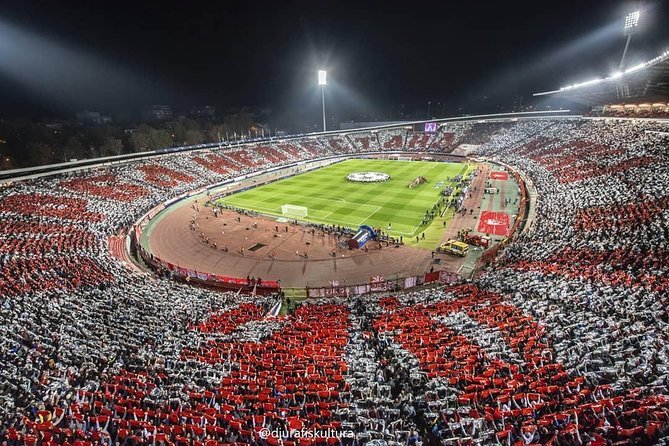
I think you should book it if you want Belgrade in a way that goes past monuments. You’ll get real supporter neighborhoods, not a generic city tour. You’ll see Marakana’s museum trophy room and the 1991 Champions League trophy, and you’ll finish with a pitch walk at Partizan Stadium.
You should skip it or rethink if you only want calm, family-friendly stadium sightseeing with minimal intensity. This is built around ultras culture, graffiti, and rivalry context. It can be intense as a theme, even when the atmosphere is friendly with a good guide.
If you’re a football fan, or even just a fan of how sports shape cities, this tour is a smart, focused way to spend half a day in Belgrade.
FAQ
How long is the Red Star and Partizan Ultras History tour in Belgrade?
It runs about 3 to 4 hours.
Where does the tour start and where does it end?
You meet at Student Park, Studentski trg 16, Beograd 11000, Serbia, and the activity ends back at the same meeting point.
Is the tour offered in English, and how big are the groups?
Yes, it is offered in English. The maximum group size is 99 people.
Which stadium and museum stops are included?
You visit Red Star Belgrade Stadium, Marakana, including the stadium museum, and you also visit Partizan Stadium with time to walk down the pitch.
Is a beer included, and do you get pitch access?
A beer is included during one of the stadium visits. At Partizan Stadium, you walk down the pitch.
What happens if the weather is poor?
This experience requires good weather. If it is canceled due to poor weather, you will be offered a different date or a full refund.
Newly written up in Belgrade
- Tara National Park, Mokra Gora and Zlatibor
★ 5.0 · 1 review - Private Belgrade Street Art Tour
★ 5.0 · 1 review - The best of Novi Sad walking tour
★ 5.0 · 1 review - Zasavica Bike Tour
★ 5.0 · 1 review - Discover Belgrade’s most Photogenic Spots with a Local
★ 5.0 · 1 review - Topola: Royal Dynasty Half Day Tour from Belgrade
★ 5.0 · 1 review - Private Serbian Food Cooking Experience in Belgrade with Meal
★ 5.0 · 1 review
Historical Tours, compared.

Full-Day Private Royal Heritage Tour to Oplenac With a Winery Visit
Read our review →
More Serbia tours of this kind