
Reviewed · HISTORICAL TOURS
History and Culture in my Belgrade
Belgrade stories, mapped in a single walk. I like this tour for its small-group feel and the hands-on rakija and slatko tasting in a Belgrade design district shop. The only drawback is how much ground it covers in about 3 hours, so you will want solid walking shoes and patience for short stops.
I also like that the guide who leads this route, often Marija, connects heavy moments to daily life. You get church customs, 1990s-era context, and plenty of modern city color, then you leave with practical ideas for what to see next.
In This Review
- Why This Belgrade History Tour Feels Like the Right First Step
- St. Mark Orthodox Church: Serbia’s Big Moments in One Peaceful Place
- RTS Radio Television of Serbia: The 1999 Bombing Story, and What Comes After
- Tasmajdan Park Mysteries: Underground Passages and a Break from the Crowd
- National Assembly to Nikola Pasic Square: Protests, Power, and a Game of Thrones Moment
- Republic Square, Pedestrian Zone Energy, and University Life in Belgrade
- Dorcol Graffiti Stories: A Past-to-Present Neighborhood Walk
- Bayrakli Mosque (Bajrakli džamija): Ottoman Influence Made Visible
- Znak Pitanja Kafana and Kosančićev Venac Viewpoints
- Čumićevo Sokače Tasting Stop: What You Actually Try and How to Toast
- Who This Tour Suits Best, and Who Should Skip It
- Should You Book This Belgrade Walking Tour?
- FAQ
- How long is the tour?
- What is the price per person?
- Is the tour in English?
- Do I need to pay for admission tickets?
- Where do I meet and where does it end?
- What food is included during the tasting?
- Can I cancel for a refund if my plans change?
Why This Belgrade History Tour Feels Like the Right First Step
For $90.11 per person, you are paying for more than sightseeing. You are paying for a tight route through Belgrade’s big eras, with cultural context at every stop and a food tasting that turns history into something you can actually experience.
The format is designed for small groups, with a cap described as maximum six people in the highlights, while the details also note an overall maximum of 15 travelers. Either way, it stays personal enough that questions and quick course-corrections do not feel weird.
You also have flexibility with three convenient start times, and you use a mobile ticket. That matters in Belgrade, where you might otherwise lose time figuring out where to begin and how to move efficiently.
One more practical note: this tour is booked fairly far ahead (about 40 days on average). If your dates are firm, don’t wait until the last minute.
St. Mark Orthodox Church: Serbia’s Big Moments in One Peaceful Place
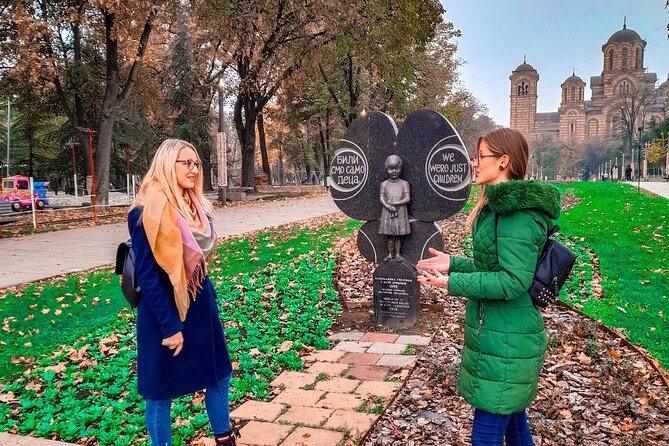
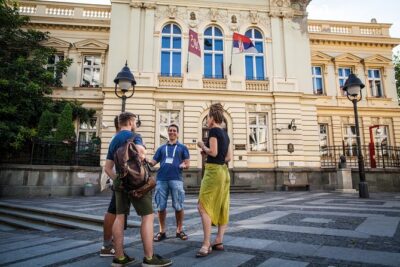
You start at St. Mark Orthodox Church, on Bulevar kralja Aleksandra 17. This is where the tour’s tone turns thoughtful, fast. The church is described as the second largest in Belgrade, and it becomes a gateway to understanding how Orthodox Christianity shaped Serbian identity.
Inside, you do not just look around. You learn the main historical events in Serbia, then you get explanations of the most interesting customs and what to notice as you move through the space. There is also time to enjoy the quieter side of the neighborhood, which is a nice reset after a day of transit and coffee.
One particularly memorable detail in the plan: you are shown the remains of one of the greatest medieval rulers of Serbia. That combination, church atmosphere plus medieval context, helps you place Serbia’s longer story without drowning in dates.
Time on this stop: about 20 minutes, with a ticket noted as free. Expect a short visit that still feels meaningful.
More of the past on foot in Belgrade:
- A Crash Course through Serbian History★ 5.0 · 58 reviews
- NATO Bombing of Belgrade Historical Tour★ 5.0 · 17 reviews
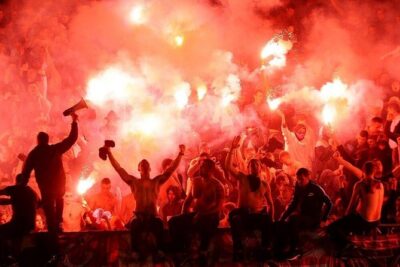
- Football tour: Red Star and Partizan Ultras History★ 5.0 · 14 reviews
RTS Radio Television of Serbia: The 1999 Bombing Story, and What Comes After
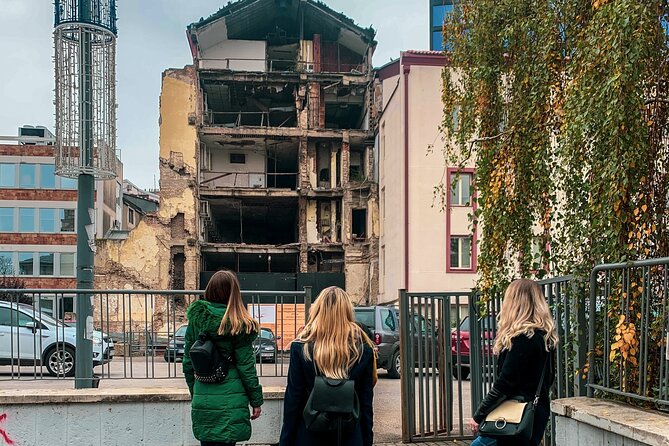
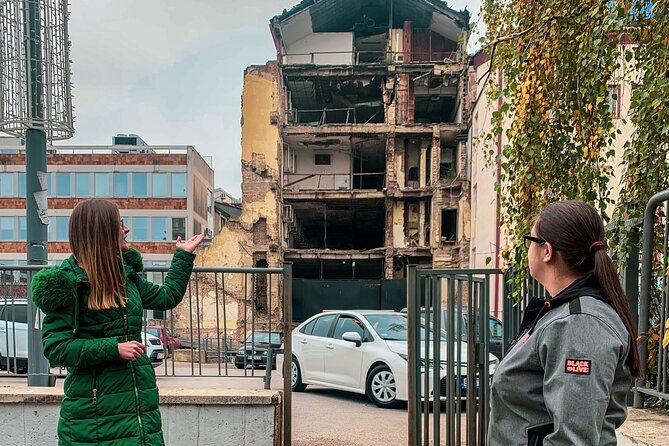
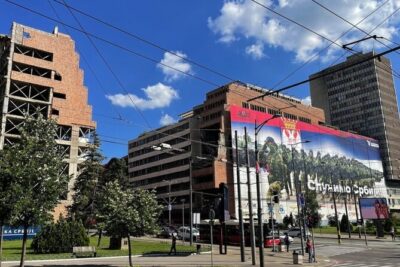
Next up is RTS, Radio Television of Serbia, where the buildings destroyed during the 1999 bombing are part of the lesson. This stop is not designed as a grim photo-op. It is framed as a way to understand how the trauma of the 1990s still echoes into modern life.
You also hear tragic stories from that period, then shift into broader context: Yugoslavia, the Serbian economy, and contemporary life. This is a good moment to remember that history is not only what happened, it is also what people rebuilt, rethought, and argued about afterward.
Time on this stop: about 20 minutes, with admission marked as free. The tour keeps it moving, but the theme stays serious.
If you do not love heavier topics, you still benefit here. Even light travelers usually appreciate the balance: you learn why certain places matter, then you do not linger in silence too long.
Tasmajdan Park Mysteries: Underground Passages and a Break from the Crowd
After the weight of RTS, the route gives you a breath of green at Tasmajdan Park. It is known for “mysteries” and underground passages, and that is exactly the kind of detail that makes a park feel more than a pause between landmarks.
This stop is short, but it works. Parks in cities like Belgrade are more than scenery. They are where daily life happens, where people decompress, and where you can watch the city breathe while your guide keeps connecting past and present.
Time on this stop: about 15 minutes, free admission noted.
If you are the kind of traveler who always wants to know what is behind the legend, this is a good place to let that curiosity run.
National Assembly to Nikola Pasic Square: Protests, Power, and a Game of Thrones Moment
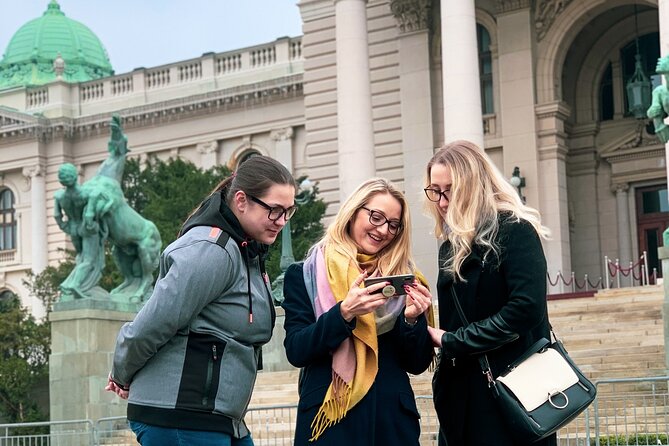
From there, the tour heads toward the House of the National Assembly of the Republic of Serbia. This is one of those buildings that looks instantly important, even if you have never studied politics. The guide connects it to cultural pop references, including why it became famous for a Game of Thrones connection, which gives you an easy mental hook.
Then the story turns practical: you learn the background of the biggest protests in Serbia that occurred here. That moves you beyond architecture and into how citizens used public space to push change.
Just after that, you reach Nikola Pasic Square, described as the youngest square in the city. There is a fountain, plus a discussion of the kind of contemporary customs youngsters in Belgrade seem to enjoy. This stop is brief, but it adds that modern, human texture that makes a history walk feel less like a museum.
The route also includes a mention of the only hotel in Serbia inscribed on the list of Historic Hotels Worldwide. You will see it during the walk, which is a nice reminder that even luxury and hospitality have their own layer of history here.
Time on these stops: about 10 minutes each, with admission marked as free.
Republic Square, Pedestrian Zone Energy, and University Life in Belgrade
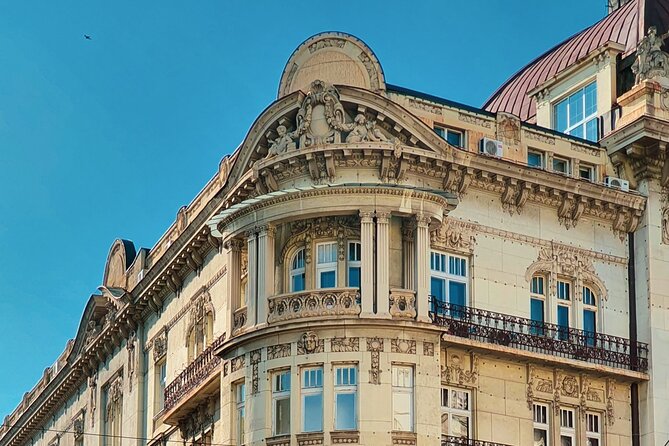
You hit Republic Square, the most famous square in Belgrade, with time described as about 10 minutes. This is your chance to see the city’s public pulse, not just big monuments. The tour keeps it quick, but it is enough to orient you to where people gather and where the main energy runs.
From there, you cross the main pedestrian zone, known for live atmosphere, street musicians, and cozy cafes. This is one of the smarter choices in the route. You do not stay stuck only at “important” sites. You also experience the everyday street rhythm that locals treat like normal life.
Then the tour moves to the University of Belgrade, where you look at Students’ Square and the surrounding park. The guide talks about education in Serbia, which gives the city a different kind of context. Instead of only politics, war, and religion, you get something about how the next generation is shaped.
Time on these stops: Republic Square about 10 minutes, University about 10 minutes, and you also spend a little time crossing the pedestrian area.
If you are visiting for the first time and you want to understand Belgrade in layers, this part helps you “feel” what kind of city it is.
Worth putting on the shortlist while you plan Belgrade:
Dorcol Graffiti Stories: A Past-to-Present Neighborhood Walk
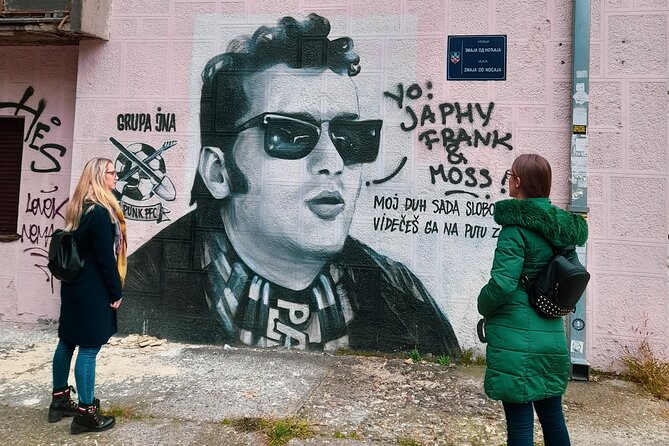
Belgrade’s neighborhoods can be read like a diary. In Dorcol, you walk through streets known for graffiti, and the guide gives you intriguing stories from the past.
This is not about street art as decoration. The point is interpretation: what the neighborhood remembers, how it talks back, and what locals are choosing to display now. Dorcol is also a good setting to shake off the “tour mode” and start noticing how people actually move.
Time on this stop: about 15 minutes, with free admission noted.
If you like your city walks with real narrative threads, this stop usually lands well.
Bayrakli Mosque (Bajrakli džamija): Ottoman Influence Made Visible
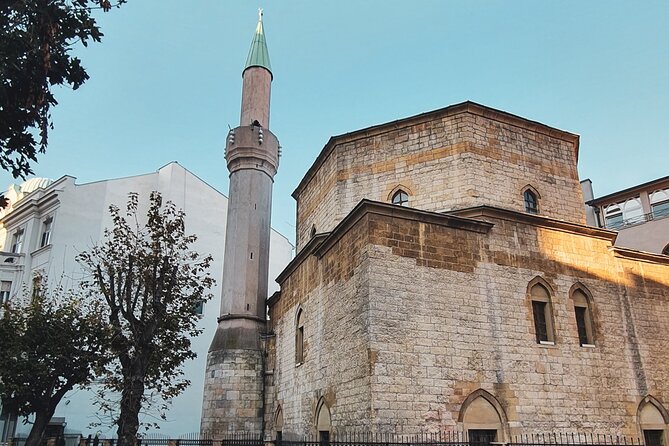
One of the most important stops in the tour’s “timeline” logic is Bayrakli Mosque (Bajrakli džamija). You are told it is the only preserved mosque in Belgrade from 273 that existed in the past.
That detail alone is a reminder of how much history can disappear, even when the present still carries traces. Here, the guide explains Ottoman influence in Serbia over almost five centuries, making it easier to spot how architecture and cultural habits travel through time.
Time on this stop: about 15 minutes, free admission noted.
You will likely notice that the tour treats this as a cultural crossroads, not just a sightseeing stop. That matters. You come away understanding why certain influences show up again and again in Belgrade life.
Znak Pitanja Kafana and Kosančićev Venac Viewpoints
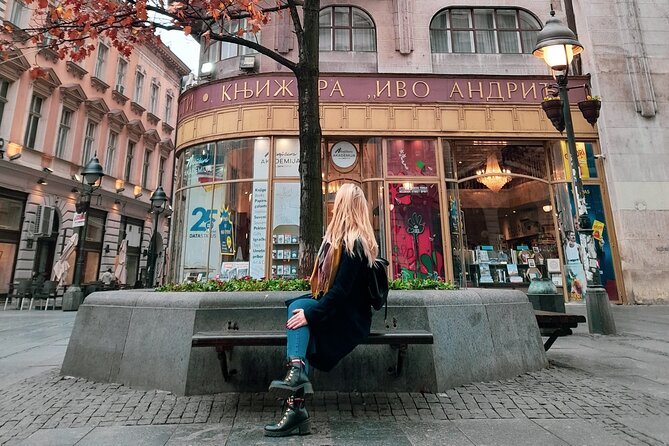
Now you shift into Belgrade’s older street culture. First is Znak Pitanja (Question Mark), known here as the architecture of the oldest kafana, or traditional restaurant, in Belgrade. The tour uses it to explain why kafanas matter in Serbian social life, which is one of the fastest ways to understand how people talk, argue, celebrate, and unwind.
Then you walk into Kosančićev Venac, one of Belgrade’s oldest areas. You get a cobblestoned stroll, and you see Orthodox church elements along the way. The tour also leads you toward a viewpoint where you can take in the panorama: New Belgrade, the Sava River, and traditional Serbian splavs (floating river clubs).
This is a smart combination. You get the “old stone” feeling of the street, then you get the wide-angle view that makes you understand how Belgrade sits and spreads.
Time on these stops: about 10 minutes for Znak Pitanja and about 10 minutes for Kosančićev Venac, with admission noted as free.
Bring a camera. Even if you do not love photos, this viewpoint gives your brain a map for the rest of your trip.
Čumićevo Sokače Tasting Stop: What You Actually Try and How to Toast
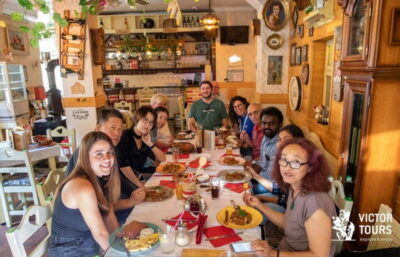
The tour’s most sensory moment is Čumićevo sokače in the Belgrade design district. Instead of just hearing about Serbian hospitality, you experience it in a small local store where you try traditional products.
The plan explicitly includes: domestic rakija, wine, natural juices, jam, slatko, and honey. You also get context on old customs and traditions, plus a practical piece most people love, learning how Serbs say cheers.
This is where the tour earns its value. Food tastings can be awkward when they are rushed or overly salesy. Here, the tasting is framed as culture, with learning goals built in, and it pairs perfectly with everything you just learned about religion, daily life, and public gatherings.
Time on this stop: about 30 minutes, and admission is marked as free.
If you want one solid “Belgrade tastes like” memory from your trip, this is the part to prioritize.
Who This Tour Suits Best, and Who Should Skip It
This is ideal for you if:
- You want a first-half-day overview that covers religion, politics, neighborhoods, and Ottoman influence without you building the itinerary yourself
- You like small groups and hate feeling lost
- You want a tasting that goes beyond one bite and actually teaches something
It may be less ideal if:
- You have mobility limits, because the plan moves between multiple sites and keeps each stop fairly short
- You prefer long museum-style visits instead of fast, story-driven walking
Also, if you are a history fan who gets frustrated by vague explanations, you will appreciate the way the guide connects difficult topics to normal life. That approach shows up repeatedly in the tour’s feedback, especially around Marija and her ability to explain complex things in a way that is easy to follow and not overly heavy.
Should You Book This Belgrade Walking Tour?
I think you should book this tour if you want an efficient, story-led introduction to Belgrade that includes both big historical anchors and everyday culture. For $90.11, the free-entry timing on most stops plus the structured tasting makes it feel more like a guided experience than a basic highlights walk.
One final decision tip: if you are the type who plans your trip in chunks, this tour works as a “setup” day. It gives you names, places, and a mental map, so your later independent exploring feels easier.
If you want Belgrade to make sense quickly, this is a strong choice.
FAQ
How long is the tour?
The tour runs for about 3 hours.
What is the price per person?
It costs $90.11 per person.
Is the tour in English?
Yes, it is offered in English.
Do I need to pay for admission tickets?
Admission tickets are listed as free for the stops included in the itinerary.
Where do I meet and where does it end?
You meet in front of St. Mark Orthodox Church at Bulevar kralja Aleksandra 17. The tour ends at Kosančićev venac 22, Beograd 11000.
What food is included during the tasting?
The tasting includes domestic rakija, wine, natural juices, jam, slatko, and honey.
Can I cancel for a refund if my plans change?
Yes. Free cancellation is available up to 24 hours in advance for a full refund.
Newly written up in Belgrade
- Private Belgrade Street Art Tour
★ 5.0 · 1 review - The best of Novi Sad walking tour
★ 5.0 · 1 review - Tara National Park, Mokra Gora and Zlatibor
★ 5.0 · 1 review - Discover Belgrade’s most Photogenic Spots with a Local
★ 5.0 · 1 review - Zasavica Bike Tour
★ 5.0 · 1 review - Private Serbian Food Cooking Experience in Belgrade with Meal
★ 5.0 · 1 review - Topola: Royal Dynasty Half Day Tour from Belgrade
★ 5.0 · 1 review
Historical Tours, compared.
Football tour: Red Star and Partizan Ultras History
Read our review →
Full-Day Private Royal Heritage Tour to Oplenac With a Winery Visit
Read our review →
More Serbia tours of this kind