
Reviewed · TITO & YUGOSLAVIA TOURS
Red Belgrade Communist Tour
Belgrade has one foot in communism and one in myth. This 4-hour Red Belgrade Communist Tour uses Republic Square to connect WWII to the 2000s, then keeps the story going with street scenes, legends, and the Tito-centered sites in Dedinje. I especially like how the tour links big politics to the actual buildings you pass, and the small-group format often makes it feel more like a focused conversation than a lecture.
Two things I like most are the variety of stops and the built-in museum time. You get a one-way trolley ride plus entry included for the Yugoslav History Museum, so you are not scrambling for tickets at the last minute. The one drawback to consider is that it is a lot of walking on city streets, some of it hilly, so bring comfortable shoes and expect to be on your feet most of the morning.
In This Review
- Key things to know before you go
- What this tour is really about, beyond the theme
- Price and value for your 4-hour time block
- Republic Square, where Tito’s era gets its opening scene
- Terazije Square and Hotel Moskva, glamour with political edges
- Pionirski Park and the Pioneer Oath, the bright side and the shadow side
- The trolley ride to Dedinje
- Dedinje and the Museum of Yugoslavia, where Tito’s image gets collected
- House of Flowers, the ending that sticks
- The guide makes or breaks it, and the best ones ask you questions back
- How group size affects your experience, and private vs shared
- Who this tour is a great fit for
- Comfort tips so you enjoy it more
- Should you book the Red Belgrade Communist Tour?
- FAQ
- Is the tour in English?
- How long is the Red Belgrade Communist Tour?
- Where does the tour start and end?
- Does the tour include the trolley ride?
- Is Museum of Yugoslavia admission included?
- How big are the groups?
- What happens if there are fewer people than the minimum for a shared tour?
- Can I cancel for a full refund?
Key things to know before you go
- Tito-focused stops with street-level context, from Republic Square to Dedinje
- One-way trolley ride as a living transport throwback
- Museum of Yugoslavia entry included, plus the House of Flowers visit
- City-square stops with free outdoor viewing, no ticket hassle for the first parts
- English-speaking guide, with time for questions in a max of 25 people
What this tour is really about, beyond the theme
This tour is called Red Belgrade for a reason. It is not just about communist posters and famous leaders. It is about how Yugoslavia worked day to day, and how people remembered it after the system ended. In practice, you walk through squares where speeches were made, holidays were staged, and public life had rules. Then you finish where Tito’s story becomes personal, at the Museum of Yugoslavia and the House of Flowers.
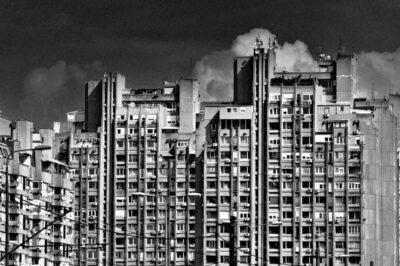
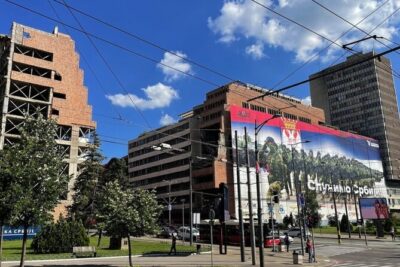
What makes this approach interesting is the contrast. You will see socialistic-era architecture mixed with older monuments from earlier Serbian history, plus signs of newer decades layered on top. The guide frames the whole thing as a contradictory era, with nostalgia on one side and darker chapters on the other. Expect the tour to mix big events with the kind of details that make you look twice at a street corner.
More Tito and Yugoslav-era tours:
- Architecture of New Belgrade – Brutalism Decoded★ 4.5 · 24 reviews
- Communist Tour in Belgrade★ 4.5 · 19 reviews
- NATO Bombing of Belgrade Historical Tour★ 5.0 · 17 reviews
Price and value for your 4-hour time block
At $53.10 per person for about 4 hours, the price lands in the “good value if you actually use what is included” category. You are not paying extra for the hardest part of this theme day. The tour includes trolley tickets and the entry fee for the Yugoslav History Museum. That matters because museum tickets plus local transport can add up fast once you are already in Belgrade.
Also, the tour is built to be efficient. Several stops are outdoors and have free admission, so your time goes to storytelling and viewpoints rather than waiting in lines. The group size cap is 25, and that makes it easier for a guide to keep momentum and still answer questions.
If you are budgeting, this is the kind of tour that saves you from piecing together a route to Dedinje yourself.
Republic Square, where Tito’s era gets its opening scene
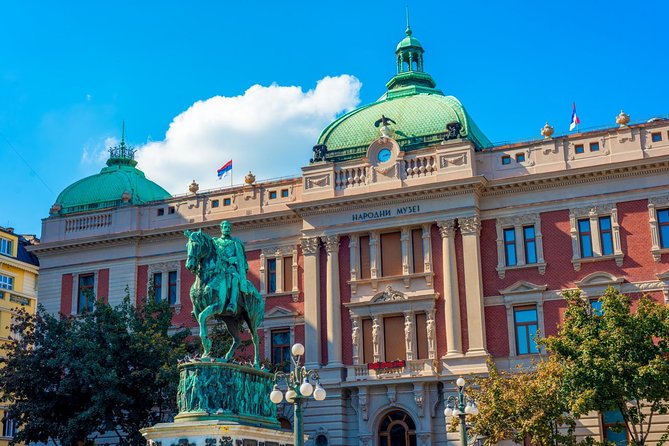
Your start point is Trg Republike (Republic Square), and the guide treats it as the place where communist Yugoslavia got its ceremonial beginning. This is where Tito’s inspiring speech is described as an overture for the proclamation of the Socialist Federal Republic of Yugoslavia.
From there, you do a walking sweep that connects multiple time periods. The guide points out how modern-looking socialistic grey buildings from the constructivism era can sit beside monuments from the Kingdom period and the later decades after it. It creates a useful mental map: you see how Belgrade did not replace the past neatly, it layered it.
The story here leans into contradiction. You get the fairytale-like nostalgia people associate with that generation that grew up under Tito, then you hear the more suspicious side, including conspiracy theories and urban legends from the second half of the 20th century. It can feel provocative, but it also explains why the communist period still sparks debate today.
Practical note: this part is mostly walking and observing, so you are looking up often. Keep your phone away from your eyes and focus on the buildings. It plays better that way.
Terazije Square and Hotel Moskva, glamour with political edges
Next you move to Terazije Square, a place tied to glamorous holidays, festivities, and high-society staging. The guide brings up world-known celebrities and unusual guests associated with Hotel Moskva, which gives the area a more human, cinematic feeling than you might expect for a communist-themed tour.
You also hear about the square as a former setting linked to Marx and Engels, and you look at major institutions around it, including the Trade Union Hall. This is where the tour explains how the state framed work as an ideal of Yugoslav society, even down to stories like how a miner became a superstar.
This stop works best if you like political history explained through culture. It is less about dates and more about how ideas were performed in public. You start seeing how Yugoslavia projected itself, not just what it claimed internally.
Pionirski Park and the Pioneer Oath, the bright side and the shadow side
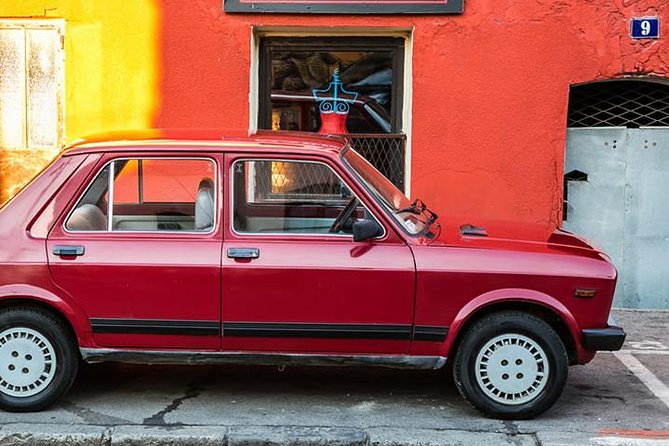
At Pionirski Park, the focus shifts to youth and ritual. The tour highlights the pioneer oath, and it also talks about how this socialist regime could feel more open compared to others in the same system. A key theme here is how Western influence seeped in, especially through music, and how that created a different lifestyle than you might assume.
Importantly, the tour does not pretend the story is only sweet. The guide shares the darker parts without censoring them, which keeps the topic from turning into nostalgia cosplay. You get the impression that the tour is trying to be fair: yes, there were freedoms and style, but there were also limits and consequences.
On the way, you see the monument of Ivo Andrić, a Nobel Prize-winning Serbian writer and a Serbian ambassador in Berlin at the beginning of World War II. That moment adds weight. It connects Serbia’s broader 20th-century story to the Yugoslav communist era you have been walking through.
Worth putting on the shortlist while you plan Belgrade:
The trolley ride to Dedinje
This is where the tour becomes physical in a good way. You catch a trolley, a symbol of public transportation back then, and it is still active. This is more than a cute prop. It helps you understand that the city’s communist-era rhythm did not vanish overnight. You are literally moving through Belgrade the way residents once did.
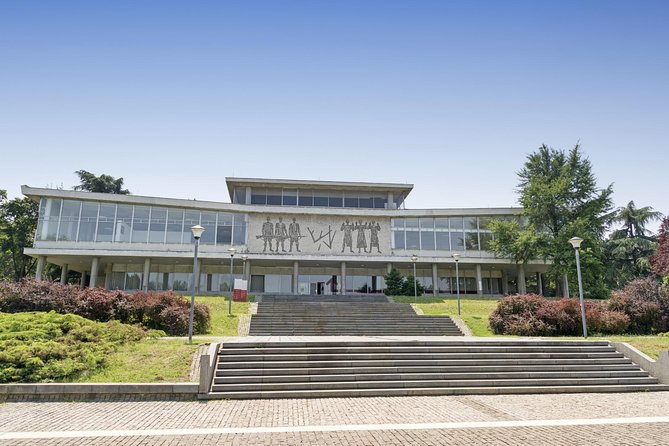
The trolley takes you toward Dedinje, described as an elite district with embassies and residential villas, plus the Museum of Yugoslavia complex.
Dedinje and the Museum of Yugoslavia, where Tito’s image gets collected
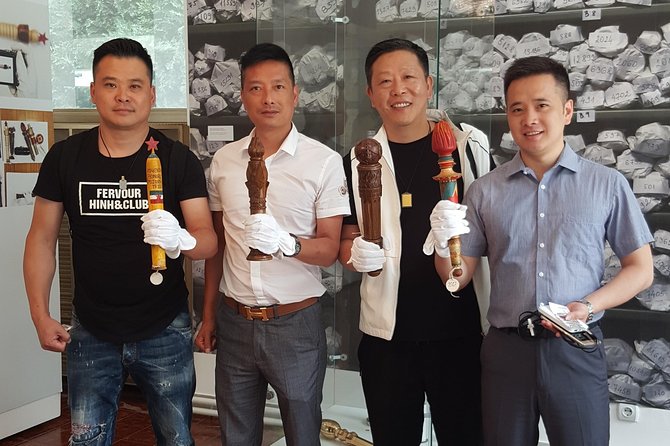
The Museum of Yugoslavia is devoted to Josip Broz Tito, and the tone changes from street narration to preserved artifacts and gifts. The guide introduces the museum as a place that shows not only the man, but the way power was displayed.
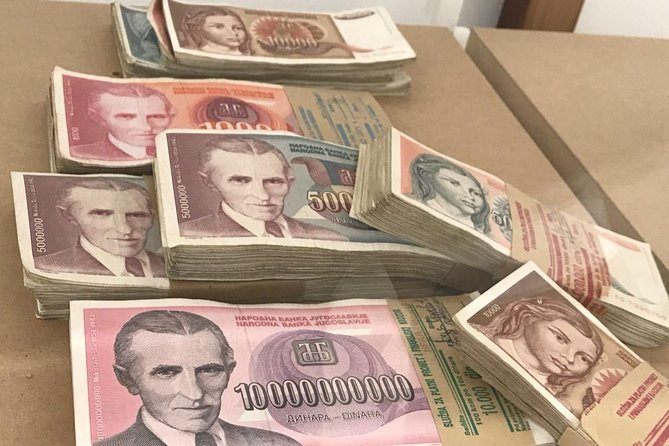
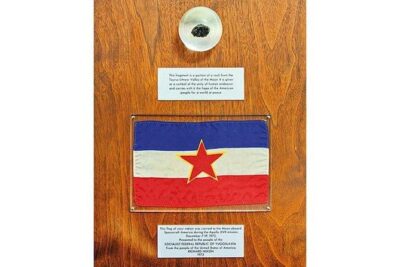
One of the most striking details you hear about inside is the collection of ceremonial presents given to the Yugoslavian President. Among them, the Apollo 11 gift is highlighted. It is the kind of item that instantly makes the period feel global and unusual, like Yugoslavia was trying to balance between influence, prestige, and independence.
This section is where the tour’s timing matters. Expect about 1 hour 30 minutes at this final historical anchor, including the lead-in to the mausoleum visit.
If you like history that involves objects, not just theories, you will probably enjoy this part a lot. You are not reading a wall of text, you are hearing a guided explanation of how the regime curated Tito’s public image.
House of Flowers, the ending that sticks
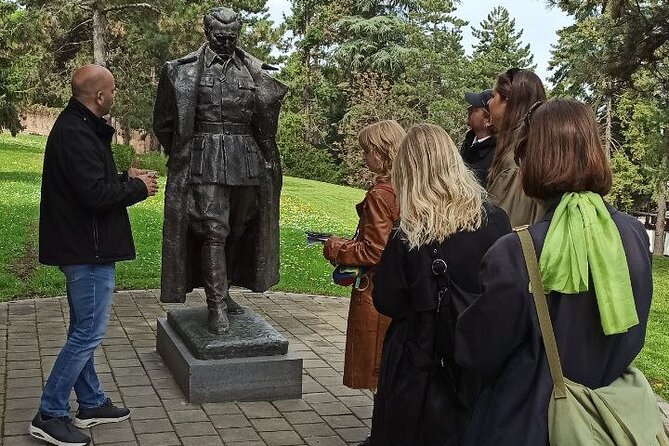
After the museum visit, you get introduced to the House of Flowers, Tito’s mausoleum where he is buried. The tour frames this as part of bringing the last days of the former Yugoslavia back to life, using the combination of artifacts and storytelling.
This ending lands differently than you might expect from a tour title. It is not only about communism as an ideology. It is also about how leaders are remembered and how places become memory machines.
If you are the type who likes to feel the atmosphere of a place, this is the most emotional stop on the schedule. You may walk away thinking about how history gets preserved, sanitized, argued over, and reused.
The guide makes or breaks it, and the best ones ask you questions back
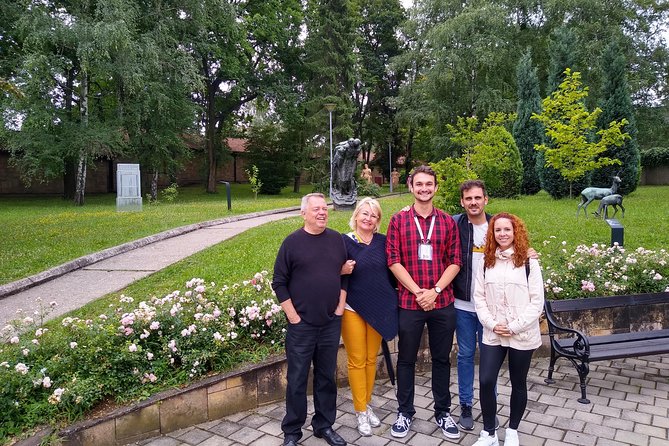
The biggest repeated strength here is the guide’s ability to turn politics into something you can picture. Names that have stood out include Dragor, Marko, Nebo, Radica, Isadora, Borjan, Hristina, Dragana, and Nina. What they have in common is a steady, conversational style: lots of answers, time for questions, and a sense of humor that keeps the topic from feeling heavy all the way through.
You can also count on the guide using the buildings as prompts. When you are standing in front of Republic Square or looking toward the museums in Dedinje, it is hard to imagine the scale of what happened there. A good guide does that translation for you.
If you care about Serbian perspective, the tour tends to help you connect Yugoslavia’s story to the region’s later conflicts. That does not mean it becomes only modern politics. It means the timeline is never stuck in the past.
How group size affects your experience, and private vs shared
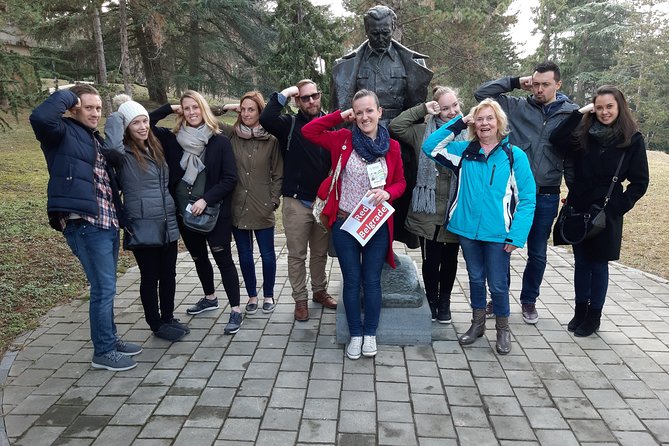
This tour has a maximum group size of 25. In practice, it can feel smaller, and a smaller group makes questions easier. That matters because the subject invites debate and personal interest, not just sightseeing.
There is also a minimum passenger rule for shared tours, with a minimum of 2. If you end up being the only guest on a shared tour, you will be informed at least 24 hours before, with two options: cancel for a full refund, or pay a 75% supplement to keep the tour running.
So for planning, treat this tour as something you should book based on your flexibility. If you want the most tailored feel, private is the safer bet. If you are fine with a shared group and possible changes, the shared option can still be a strong value.
Who this tour is a great fit for
I recommend this tour most for you if you:
- Want to understand Serbia and Yugoslavia using real city scenes, not just museum walls
- Like Tito-era history but also want context for why it still affects conversations today
- Prefer guided interpretation, especially when the topic is political and emotional
- Enjoy public transport as part of the story, not just a transfer
It may not be your best match if you are expecting only Serbia-focused communism and little attention to Yugoslavia as a whole. The tour’s core identity is Yugoslavia and Tito, even when the walk stays in Belgrade.
Comfort tips so you enjoy it more
Bring comfortable walking shoes and a water bottle, since you will be on streets for much of the morning. Also wear clothing you can handle for weather changes. Belgrade mornings can shift, and you are walking between open-air stops.
If you are sensitive to long walking, you might want to do this tour early in your trip while your legs are fresh. It is not a sit-down tour.
Should you book the Red Belgrade Communist Tour?
Book it if you want a guided, well-paced way to understand Yugoslavia’s communist era through Belgrade’s actual geometry and landmarks. The price works because trolley tickets and Museum of Yugoslavia entry are included, and the guide-led storytelling is the main product here.
Skip it only if you strongly prefer a purely Serbia-only focus on communism, or if you dislike walking through multiple city squares and then finishing with a longer museum section. If you are comfortable with 4 hours that mix outdoor viewpoints and indoor artifacts, this is an efficient and memorable way to get your bearings in Belgrade’s political past.
FAQ
Is the tour in English?
Yes. The tour is offered in English with an English-speaking guide.
How long is the Red Belgrade Communist Tour?
It runs for about 4 hours.
Where does the tour start and end?
The tour starts at Trg republike 9, Beograd 11102, Serbia. It ends after the visit at the Yugoslav History Museum area, including the House of Flowers.
Does the tour include the trolley ride?
Yes. You get a one-way trip trolley ride, and trolley tickets are included.
Is Museum of Yugoslavia admission included?
Yes. Entry fee for the Yugoslav History Museum is included, and the visit includes the House of Flowers.
How big are the groups?
The tour has a maximum of 25 travelers.
What happens if there are fewer people than the minimum for a shared tour?
The minimum number of passengers for shared tour realization is 2. If you are the only person, you will be informed at least 24 hours before. You can choose to cancel for no fees or pay a 75% supplement to keep the tour.
Can I cancel for a full refund?
Yes. You can cancel up to 24 hours in advance for a full refund. Cancellation within 24 hours of the start time is not refunded.
Newly written up in Belgrade
- Tara National Park, Mokra Gora and Zlatibor
★ 5.0 · 1 review - Private Belgrade Street Art Tour
★ 5.0 · 1 review - The best of Novi Sad walking tour
★ 5.0 · 1 review - Zasavica Bike Tour
★ 5.0 · 1 review - Discover Belgrade’s most Photogenic Spots with a Local
★ 5.0 · 1 review - Topola: Royal Dynasty Half Day Tour from Belgrade
★ 5.0 · 1 review - Private Serbian Food Cooking Experience in Belgrade with Meal
★ 5.0 · 1 review
Tito & Yugoslavia Tours, compared.
Architecture of New Belgrade – Brutalism Decoded
Read our review →
More Serbia tours of this kind