
Reviewed · CITY TOURS
Half-Day Sightseeing and Walking Tour of Belgrade City
Belgrade’s layers show up fast on foot. I especially like the tight small-group pacing and the way the guide ties each landmark to the bigger political story of Serbia. It also feels great value for a 2 to 3 hour orientation that skips the guesswork.
One watch-out: the tour is listed as English only, and that mismatch has caused problems for at least one booking when another language was expected. If language matters for your group, confirm clearly before you go.
You’ll also get a proper coffee or tea stop, and the walk threads together churches, palaces, monuments, and the river fortress area without feeling like a checklist.
In This Review
- Quick Hits Before You Go
- Why This Half-Day Walk Is Such Good Value
- Crkva Svetog Marka and Stefan Dušan’s Tomb
- Old Palace and the Royal Obrenović Building (City Assembly Today)
- National Assembly, Terazije Fountain, and Prince Mihailo’s Monument
- Knez Mihailova to Kalemegdan: Where the River Story Comes Alive
- Sahat Kula Clock Tower, the France Monument, and the City Keys of 1867
- Coffee and Walking Comfort, Plus How to Pair This Tour With Your Day
- Should You Book This Belgrade Walking Tour?
- FAQ
- How long is the Belgrade half-day sightseeing and walking tour?
- What time does the tour start?
- Where is the meeting point?
- Where does the tour end?
- What language is the tour offered in?
- How many people are on the tour?
- Is coffee or tea included?
- Are admission tickets required for the stops?
- What is the cancellation policy?
Quick Hits Before You Go
- Small group max of 6 so it feels personal, not crowded.
- Free admission for the main stops, with focus on what to notice instead of ticket lines.
- History that connects across centuries, from Emperor Stefan Dušan to 1867 and beyond.
- Major Belgrade streets on the route, including Knez Mihailova and the Terazije fountain area.
- Kalemegdan and fortress viewpoints give you geography you can actually remember.
- Coffee or tea included, and one review specifically calls out Turkish coffee.
Why This Half-Day Walk Is Such Good Value
At $38.34 per person for about 2 to 3 hours, you’re paying for a guide who can explain why Belgrade looks the way it does, not just where things are. Because the itinerary is built around central landmarks, you’re not losing time to transport, and most stops have admission ticket free access.
This is also a smart choice for a first visit. The route covers medieval Serbia, 19th-century government buildings, and the Ottoman-Austrian period, then ends in an area where you naturally want to keep exploring on your own. The pace is fast enough to feel efficient, yet it still includes enough pauses for questions.
One more thing I appreciate: reviews highlight that guides can handle sensitive topics with care. That matters in Belgrade, where history is not just old pages, it’s part of how people talk about identity today.
More of Belgrade done at street level:
- Belgrade: 3-Hour Small Group Walking Tour★ 5.0 · 180 reviews
- Belgrade Private Walking Tour with a Local★ 5.0 · 19 reviews
- Belgrade City Walk, Gathering and Sightseeing★ 5.0 · 19 reviews
Crkva Svetog Marka and Stefan Dušan’s Tomb
The tour starts at Crkva Svetog Marka, home to the tomb and sarcophagus of Emperor Stefan Uroš IV Dušan. This is where you get a medieval “origin point” for Serbian state power, because Dušan ruled in the 1300s and is remembered as an especially ambitious ruler.
Why this stop works: you’re not walking through a random church. You’re seeing the kind of symbolism medieval rulers used to project authority. Even if you only remember a few names from the walk, the guide’s framing helps those names make sense.
Practical note: plan modest dress if you want to go inside. One review mentioned that shorts were an issue for a child trying to enter a church, and the guide helped by sharing a coat for coverage.
Old Palace and the Royal Obrenović Building (City Assembly Today)
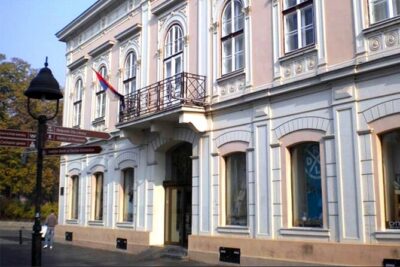
Next you’ll look at the Old Palace, now the Royal Palace of the Obrenović dynasty and currently housing the City Assembly of Belgrade. It’s in a prominent crossroads area near Kralja Milana and Dragoslava Jovanovića streets, and it was built between 1882 and 1884, designed by Aleksandar Bugarski.
This stop is mostly about how Belgrade reinvented itself in the 1800s. The outside architecture is described as a standout achievement of Serbian 19th-century academism, and your guide uses that style to explain what the city was trying to communicate.
The bonus here is that you get context without long museum time. In just a 30-minute segment, you get a feel for how civic power was staged through buildings, not only through speeches or battles.
National Assembly, Terazije Fountain, and Prince Mihailo’s Monument
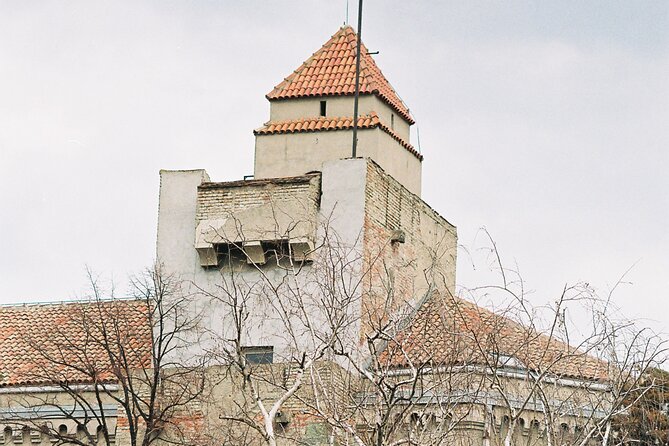
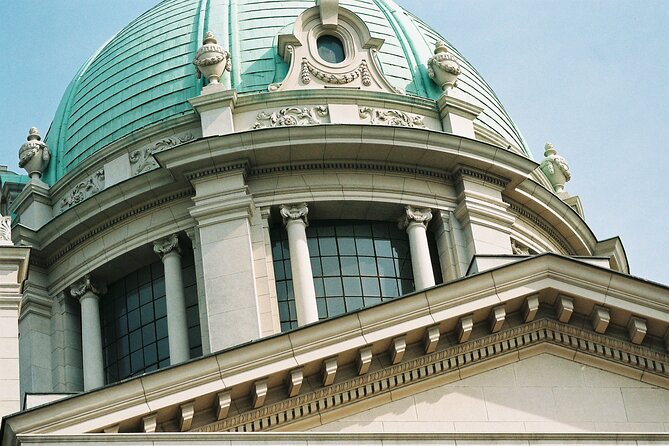
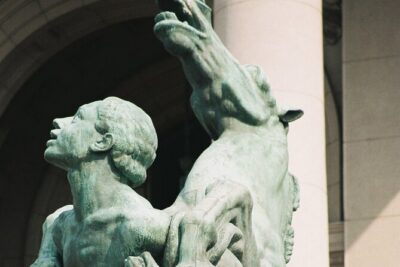
The tour then moves to the House of the National Assembly of the Republic of Serbia, with a sculptural highlight called “Play of the black horses.” One detail that sticks is how long the construction took, almost 30 years, due to lack of finances and wars, plus misunderstanding in society.
This is where the guide’s explanations really pay off. You’re learning that government buildings can take generations to complete, because politics and money are always in the mix. It’s a good reality check, especially if you think history always moves in straight lines.
From there, you get a rhythm shift into classic city-center landmarks:
- Terazije Fountain (erected in 1860) as both utilitarian object and decoration.
- Prince Mihailo Monument, shaped by sculptor Enrico Pazzi, with decorative reliefs by Konstantin Jovanović.
- Knez Mihailova, the big pedestrian street near Kalemegdan Fortress.
These stops are short, but they do two useful jobs. First, they help you reset your eyes in between heavy history. Second, they show you how 19th-century Belgrade used statues and public space to project national pride.
If you’re sensitive to noise, keep expectations realistic. One review mentioned losing some details due to traffic noise, so it’s smart to stay attentive and ask your guide to repeat anything key.
Knez Mihailova to Kalemegdan: Where the River Story Comes Alive
Knez Mihailova acts like your transition from formal civic buildings into the older, more strategic geography of Belgrade. The pedestrian street leads you toward Kalemegdan, and that’s important because Belgrade’s “why here?” question is answered by the rivers.
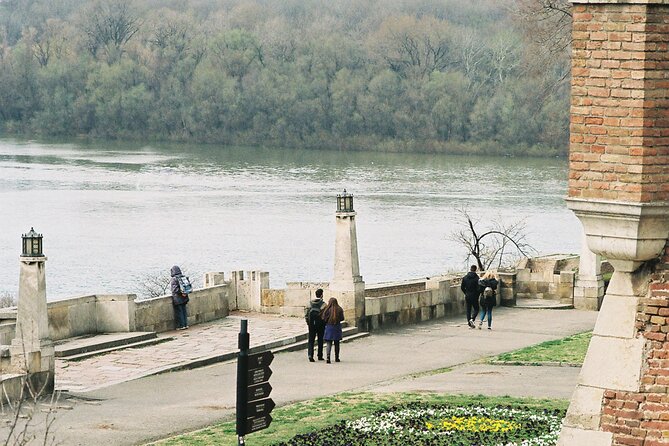
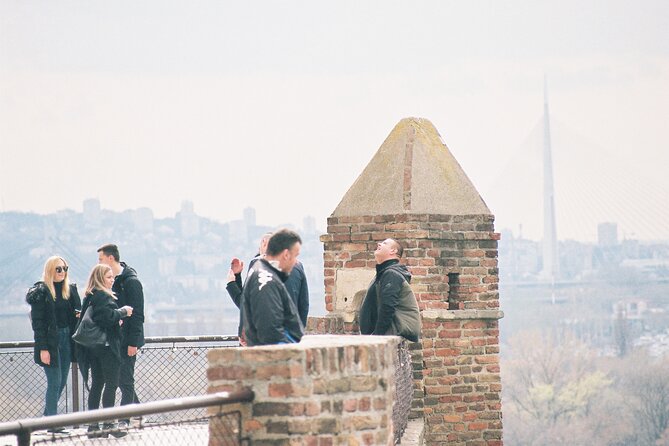
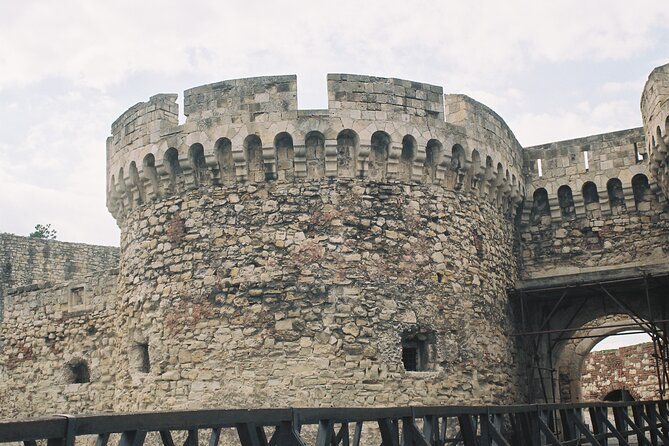
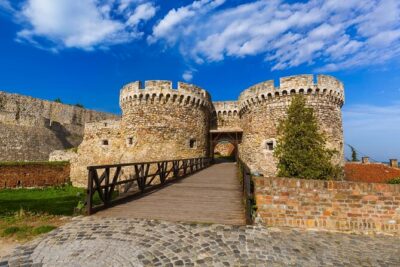
At Kalemegdan Park and Belgrade Fortress, you’re on the ridge at the confluence of the Sava and Danube. The geography is the strategy: that elevated position historically allowed control over the plain on the north and west sides. The area has been inhabited since prehistoric times, so the story feels layered even before you start listening to it.
This is the stop where you’ll likely understand the city better than you will from photos. Views from the ridge help you picture how people moved, watched, and defended. If you’ve been staring at maps, Kalemegdan makes the map feel real.
Time tip: the itinerary allots around 45 minutes here. That’s enough for the big viewpoints and orientation, but not for a long independent wandering loop. If you’re the type who wants to linger, plan to come back after the tour ends.
Half a day, out and back:
Sahat Kula Clock Tower, the France Monument, and the City Keys of 1867
After Kalemegdan, the walk gets more symbolic, moving from an old timepiece to modern diplomacy and national milestones.
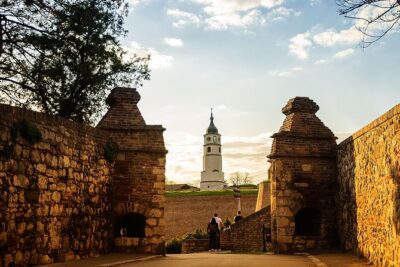
You’ll see Clock Tower (Sahat Kula), which began under Austrians and finished under Turkish rule, between 1740 and 1789. That mixed-era construction detail is a fast way to understand how power in this region changed hands without erasing buildings. It also helps you spot why Belgrade can feel both European and Ottoman in different corners.
Then comes the Monument of Gratitude to France, located just outside Kalemegdan Fortress. It’s positioned as a symbol of friendship and cooperation between Serbia and France during World War I. Even if you know little about the war, your guide should help you connect this monument to how wartime alliances became postwar narratives.
Finally, the tour closes with the City Keys Handover Memorial, marking where on 6 April 1867 the town keys of several Serbian fortresses were handed to Prince Mihailo Obrenović by the Ottoman Turks. This moment is framed as an important step toward Serbia’s international recognition at the Treaty of Berlin in 1878.
This ending works because it ties the whole route together. You start with a medieval emperor and you end with a symbolic handover tied to international recognition. That arc makes Belgrade feel like one continuous story, not isolated snapshots.
Coffee and Walking Comfort, Plus How to Pair This Tour With Your Day
A coffee or tea stop is included, and it’s more than a perk. It gives you a natural reset point, and it also makes the history feel less like a lecture and more like a shared walk. One review specifically mentions Turkish coffee, so if that matters to you, keep an eye out for what’s served on your departure.
For comfort, dress for city-center walking. You’ll be on foot through streets and between viewpoints, so bring shoes you trust. If you’re traveling with kids, plan for modest clothing for church entry, since one family reported shorts were an issue and the guide helped with extra coverage.
Pairing this tour with the rest of your day is easy. Because it ends near Knez Mihailova at the Belgrade City Library area, you’re in a perfect spot for lunch or a self-guided wander into nearby shops and cafés. If your schedule is tight, you now know exactly where to go next without guessing.
Should You Book This Belgrade Walking Tour?
I think it’s a strong booking if you want a compact overview of central Belgrade with a guide who can connect monuments to the political story behind them. The pricing feels reasonable because many stops are admission-free, and you get a full arc from medieval symbolism to 19th-century milestones.
Book it especially if:
- You like guided history that stays practical and location-based.
- You prefer a small group experience, max 6.
- You want to get orientated around Kalemegdan and the old city center quickly.
Skip or adjust if:
- You need a language other than English, since the tour is listed as English and one reviewer had a mismatch with expectations.
- You want extended time inside fortress areas or museums. This walk is an introduction, not a deep museum program.
If you’re deciding between doing this and wandering alone, do the tour first. It gives you the map in your head, then you can explore freely with better eyes.
FAQ
How long is the Belgrade half-day sightseeing and walking tour?
The tour lasts about 2 to 3 hours.
What time does the tour start?
The start time is 11:00 am.
Where is the meeting point?
The meeting point is Kosovska 47, Beograd 11000, Serbia.
Where does the tour end?
The tour ends at Kneza Mihaila 54a, Beograd 11000, Serbia, in front of the Belgrade City Library at 56 Knez Mihailova street.
What language is the tour offered in?
The tour is offered in English.
How many people are on the tour?
The tour has a maximum of 6 travelers.
Is coffee or tea included?
Yes. Coffee and/or tea is included.
Are admission tickets required for the stops?
The listed sights on the route show admission as free (ticket free).
What is the cancellation policy?
Free cancellation is available up to 24 hours in advance for a full refund.
Newly written up in Belgrade
- Private Belgrade Street Art Tour
★ 5.0 · 1 review - The best of Novi Sad walking tour
★ 5.0 · 1 review - Tara National Park, Mokra Gora and Zlatibor
★ 5.0 · 1 review - Discover Belgrade’s most Photogenic Spots with a Local
★ 5.0 · 1 review - Zasavica Bike Tour
★ 5.0 · 1 review - Private Serbian Food Cooking Experience in Belgrade with Meal
★ 5.0 · 1 review - Topola: Royal Dynasty Half Day Tour from Belgrade
★ 5.0 · 1 review
City Tours, compared.

Walking Tour city center and Petrovaradin Fortress
Read our review →
Your Own Belgrade: Unexpected Treasures of the City
Read our review →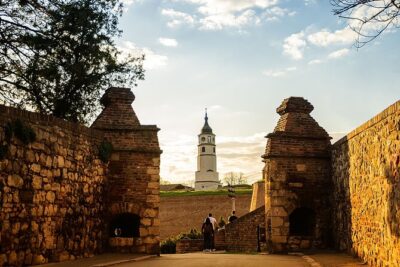

Belgrade To Kopaonik Private Taxi Transfer (city or the airport)
Read our review →More Serbia tours of this kind