
Reviewed · CITY TOURS
Belgrade Old City 2-Hour Walking Tour
Belgrade tells its story on foot. This 2 to 3 hour Old City walk links Republic Square to the fortress park and two churches, with guide-led context that makes the streets feel purposeful, not random.
What I like most is the way the route mixes big landmarks with human scale. You get Ružica Church as a true highlight, including a quick explanation of why its interior is so striking. I also like that the tour leans on clear English explanations, and guides such as Jelica, Aleksandar, and Melissa are repeatedly described as strong communicators.
One consideration: it’s still a walking tour through uphill fortress areas and city cobblestones, so you’ll want moderate physical fitness, especially if it’s warm.
In This Review
- Key things to know before you go
- Belgrade Old City walking tour: what you really cover in 2 to 3 hours
- Republic Square and Prince Mihailo: the center’s stage set
- Student’s Square and Captain Miša: learning life without a campus
- Dorćol crossroads: cafes, galleries, and WWII memory
- Bajrakli Mosque: the Ottoman story told through one surviving building
- Kalemegdan Fortress approach: Roman remains to medieval gates
- Ružica Church inside: chandeliers made from cartridges
- Upper Town views: the Sava and Danube confluence in real time
- Pobednik and the fortress walkout: monuments plus gates and wells
- Kosančićev Venac and the Belgrade Cathedral area: artists, churches, and a restored calm
- Back to the center: King Peter Street, Knez Mihajlova, and Republic Square again
- Price and value at $60.08: is it worth it?
- Who should book, and who might skip it
- Should you book the Belgrade Old City 2-Hour Walking Tour?
- FAQ
- How long is the Belgrade Old City walking tour?
- Where do we meet for the tour?
- Is the tour offered in English?
- Are there admission tickets required for the stops?
- What is included in the price?
- Does the tour include hotel pickup and drop-off?
- Is the tour private?
- Is free cancellation available?
Key things to know before you go
- Republic Square as your anchor point, with context for Prince Mihailo and the major buildings around it
- Student’s Square and Captain Miša’s Edifice, for a look at academic Belgrade without a classic campus
- Dorćol’s layered story, where lively cafes meet Jewish history and WWII memory
- Bajrakli Mosque, the 16th-century stop that helps you picture Ottoman-era Belgrade
- Kalemegdan Fortress churches, including St Petka and the especially memorable Ružica Church
- Pobednik and river views, with the Sava and Danube confluence as a natural wow moment
Belgrade Old City walking tour: what you really cover in 2 to 3 hours
This is a compact tour that moves at a “get your bearings fast” pace. You’ll start in the center at Republic Square, then work your way toward Dorćol and Ottoman-era landmarks, and finally spend time in Kalemegdan, the big central park that sits atop fortress remains.
The stops are short by design, usually around 10 to 15 minutes each. That means you’ll see a lot in one afternoon, but you won’t have time to linger deeply at every site. The payoff is that the guide stitches the places together, so you understand why you’re seeing them and what to look for later if you return on your own.
If you’re the type who likes to trade long museum hours for walking and street-level context, this format fits nicely. If you prefer slow wandering with long photo sessions, you may wish you could slow down in the fortress and around the churches.
More of Belgrade done at street level:
- Belgrade: 3-Hour Small Group Walking Tour★ 5.0 · 180 reviews
- Half-Day Sightseeing and Walking Tour of Belgrade City★ 5.0 · 37 reviews
- Belgrade City Walk, Gathering and Sightseeing★ 5.0 · 19 reviews
Republic Square and Prince Mihailo: the center’s stage set
You meet at Trg Republike (Republic Square), in front of the horseman statue tied to Prince Mihailo. This is a smart start because the square is surrounded by major civic buildings, so it’s easy for a guide to explain how Belgrade’s modern identity formed around the center.
You’ll learn about the National Museum and National Theatre around the square, and you’ll also get a short primer on why Prince Mihailo matters in Serbia’s modern story. The point here isn’t memorizing dates. It’s learning how to “read” the city: why certain buildings are where they are, and how Belgrade wanted to present itself.
This start also gives you something practical. If you come here later without a guide, you’ll still have a mental map of what you’re looking at. And if you’re sensitive to walking, starting flat and central first helps you ease into the day.
Student’s Square and Captain Miša: learning life without a campus
After a short walk, you reach Studentski trg (Student’s Square). It’s described as the oldest urban city square in Belgrade, and it has a formal, classical feel, with a park in the middle.
Here the focus shifts from monuments to institutions. You’ll hear about how Belgrade doesn’t have one central campus like some cities do, yet many major educational institutions cluster here. The tour mentions Faculty of Philosophy, Faculty of Philology, Faculty of Mathematics and Natural Sciences, and the Captain Miša’s Edifice, which serves as a key headquarters for the University of Belgrade.
What I like about this stop is the balance. You’re not just seeing “student places.” You’re being shown a pattern: Belgrade’s public life and intellectual life share the same central space. The guide also brings in a story about Captain Miša’s charity and generosity, which helps the building feel human rather than just architectural.
If you enjoy cities where everyday life is tied to institutions, this is a good one.
Dorćol crossroads: cafes, galleries, and WWII memory
Next comes Dorćol, one of Belgrade’s most lively inner neighborhoods, known for cafes, galleries, restaurants, and museums. The tour also explains the name, tracing it to a colloquial Turkish word meaning crossroads, which fits the area’s long role as a trading point during Ottoman occupation.
This stop matters because Dorćol isn’t only about today’s scene. You’ll stand near the Jewish community center and hear about the Jewish community in Belgrade, including daily work and life, and then the severe rupture of WWII.
That makes Dorćol one of the more emotionally heavy segments of the walk. The value is that it’s not treated like a generic “sad chapter.” You’re shown how community life existed here, and then how it was destroyed. If you like guided history that stays grounded in real places, this stop will likely stick with you.
Practical note: because this is an active neighborhood, it can be easier to get distracted by coffee lines and shopfronts. Let the guide finish the story first, then you can decide how much you want to explore on your own afterward.
Bajrakli Mosque: the Ottoman story told through one surviving building
Then you visit Bajrakli džamija, a 16th-century mosque. It’s highlighted as the only remaining mosque in Belgrade, so the stop gives you a “last witness” feeling. Even if you’ve seen other Ottoman sites elsewhere, this one carries extra weight because there aren’t many surviving equivalents in the city.
The guide’s job here is to help you picture how Belgrade looked and lived under Ottoman rule. You’re not just watching architecture, you’re learning how religion and daily life were shaped by the era.
This is also a nice pause in the route. After the fortress later, you’ll see more stone, more layers, more defensive structures. This mosque stop gives you a different texture, and it helps the rest of the walk make more sense.
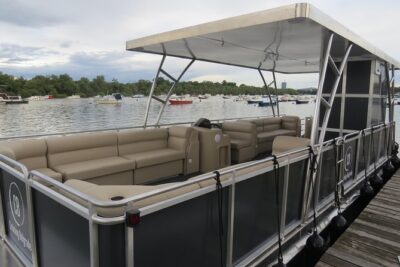
Two hours and no more:
Kalemegdan Fortress approach: Roman remains to medieval gates
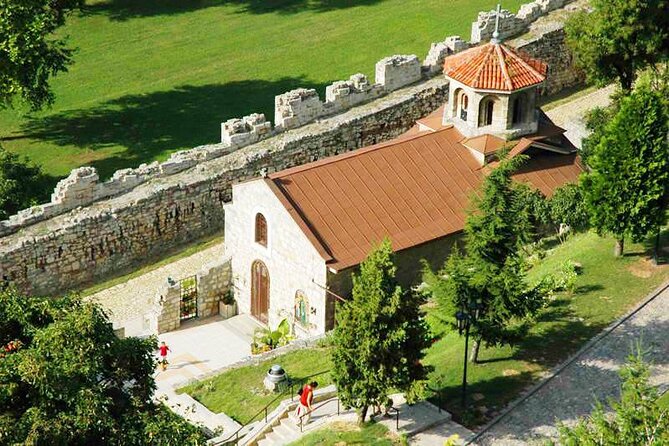
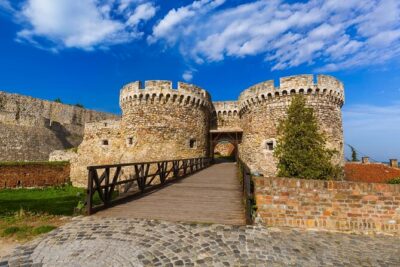
Now the tour flows into Kalemegdan, the central park built around the fortress complex. You’ll start near Leopold’s Gate and move past the remains of a Roman castrum, connected to Singidunum, then medieval walls built upon earlier foundations, including Zindan Gate and Despot’s Gate.
As you walk, you’ll hear about multiple layers, plus structures like Jakšića tower, with dating mentioned to the 15th century. That layering is the big idea here. Belgrade’s fortress is not one time period. It’s a stacking of roles, empires, and defenses.
You’ll also visit two Orthodox churches in this fortress area: the Chapel of St Petka and Ružica Church. That combination is effective because churches in fortress zones are usually positioned to serve both spiritual life and a community under pressure. In other words, these are not abstract buildings. They connect to what it meant to live here.
If you’re hoping for sweeping fortress photos, you’ll get them, but the time is still limited at each point. The guide helps you prioritize what to look for so you don’t feel rushed without understanding why.
Ružica Church inside: chandeliers made from cartridges
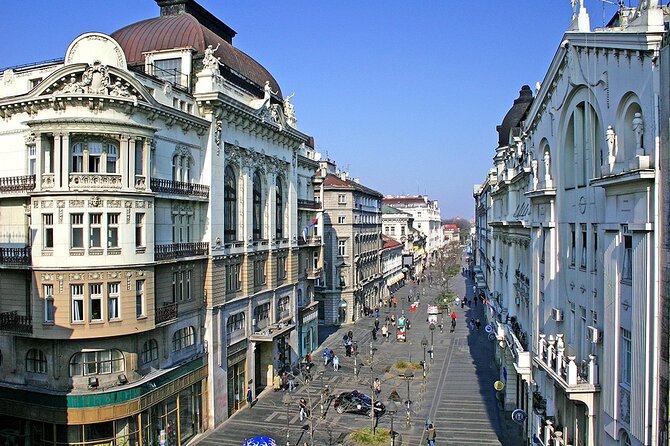
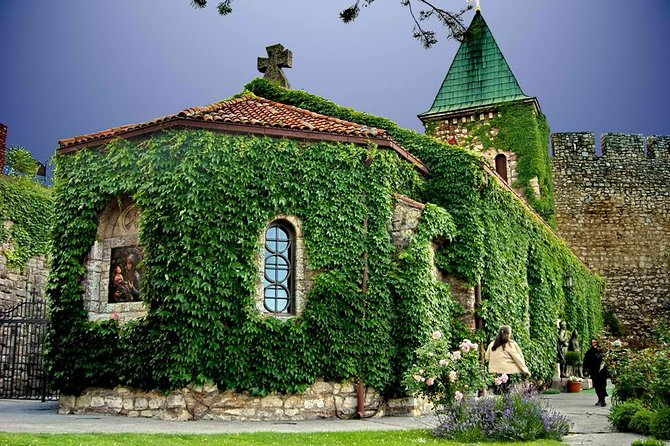
Ružica Church (Church of the Holy Mother of God) is built around 1875, and the tour explains that the building earlier served as a gunpowder magazine and a military school. Today it’s described as the oldest Orthodox church in Belgrade and one of the most visually impressive religious buildings in the city.
The standout detail is inside: the interior has three chandeliers made from spent cartridges, cannon ammunition, officers’ swords, and soldiers’ pistols from the Salonika Front. That fact sounds almost too specific to be real, but it’s exactly the kind of detail that makes you slow down and look.
What you should plan for: if services are happening, photography may not be appropriate, and the guide will guide you on quiet behavior. One guide, Jelica, is specifically praised for saying photos wouldn’t be appropriate during a service, and the tour still allowed a short experience inside. That kind of respectful, practical guidance is a real quality marker.
Even if you’re not a church person, this is a stop where the details are so unusual that it becomes a story you can’t forget.
Upper Town views: the Sava and Danube confluence in real time
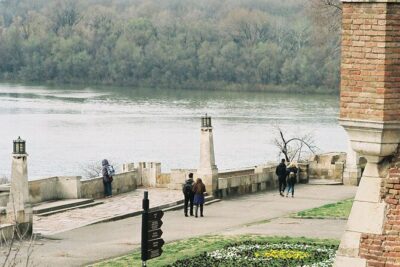
After Ružica, you continue deeper into the fortress, moving toward the Upper Town. Here you get one of the tour’s most natural “wow” moments: the sight of the confluence of the Sava and Danube.
You’ll pass landmarks such as Mehmed-pasha Sokolović fountain and Defterdar’s gate, then look down toward the Lower Town from above. The guide also points out areas tied to the fortress’s function, including gunpowder storage and gates and towers such as Karl VI’s gate and Nebojsha tower.
This is valuable even if you don’t memorize every name. When you understand the geography, Belgrade starts to click. You see why the fortress sits where it does, and why rivers were always a strategic advantage.
Also, the air and viewpoint make the walking feel worth it. Kalemegdan is a park, not only a museum, and that matters when you’re on a timed tour.
Pobednik and the fortress walkout: monuments plus gates and wells
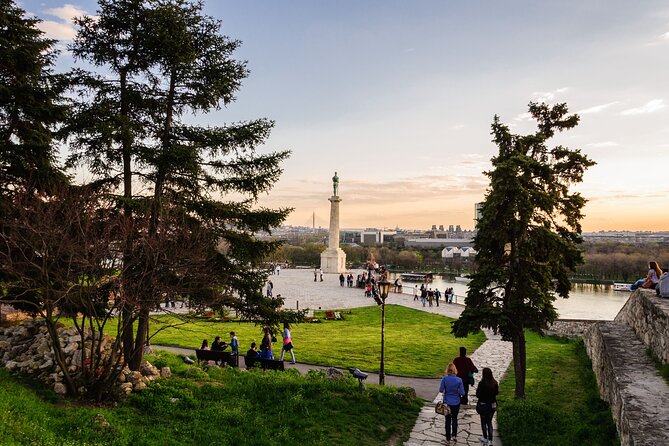
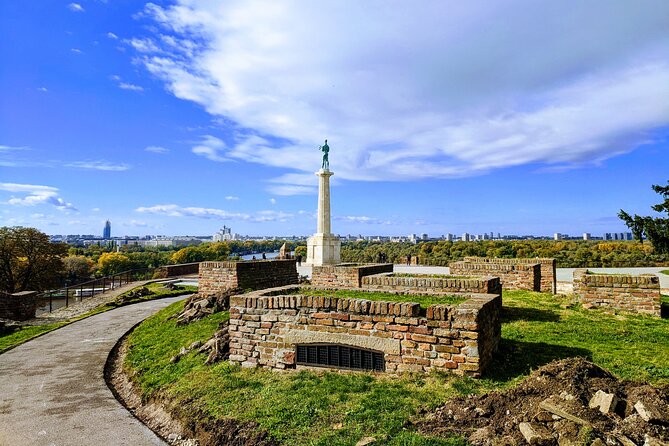
As you walk through the Upper Town again, you reach Pobednik, the Victor monument, which is probably the most recognized and photographed Belgrade landmark. The tour explains that sculptor Ivan Meštrović created it in 1928, tied to Serbia’s triumph over both the Ottoman and Austro-Hungarian empires.
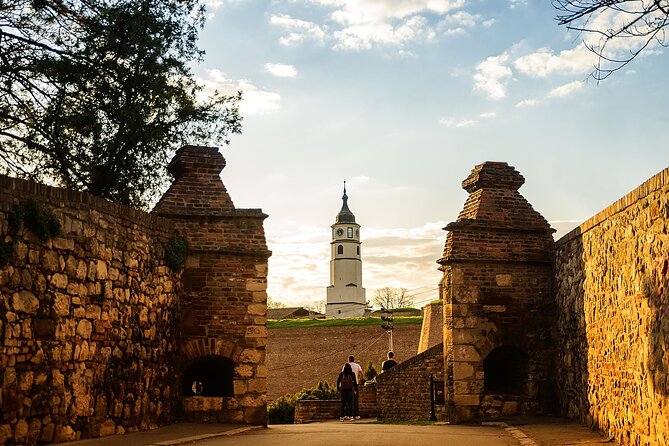
From there, you continue through the Upper Town, with stops near features like the Roman well, the King’s gate, and the Sava promenade. You’ll also hear about Damat Ali Pasha Tomb and the Clock Gate with the Clock Tower. The tour mentions the Military Museum and Istanbul’s gate (Stambol gate) as part of your path leaving the fortress behind.
Then you re-enter Kalemegdan park, looping back. There’s also a Monument of Gratitude to France by Ivan Meštrović in the park, plus busts of famous Serbian writers.
What I like here is that you end this fortress section not with another “lecture,” but with a sense of place. After seeing gates, towers, and viewpoints, the park walk feels earned. You understand why people meet here and why it’s a popular central space.
Kosančićev Venac and the Belgrade Cathedral area: artists, churches, and a restored calm
Once you exit Kalemegdan, the route heads toward Kosančićev Venac, part of the town built on the Sava river banks. The tour brings you to the Serbian Orthodox Patriarchy and Belgrade Cathedral, then toward Varoskapija and nearby areas that mix old streets and institutional landmarks.
You’ll also hear about The Question Mark, an old tavern name, plus the Residence of Princess Ljubica, described as an elegant Balkan style building. Then you get a cobblestone stroll through a quieter quarter, often likened to Belgrade Montmartre because of the number of artists, art schools, and galleries.
One specific detail I appreciate from the tour notes: the area includes the site where the National Library of Serbia stood before it was destroyed in Belgrade’s Nazi bombing in 1941. Even without going inside anything, that kind of point turns a stroll into a guided understanding of loss, survival, and memory.
This part of the walk is slower in feel, even if the schedule stays tight. It’s a good moment to take photos and reset your brain after fortress intensity.
Back to the center: King Peter Street, Knez Mihajlova, and Republic Square again
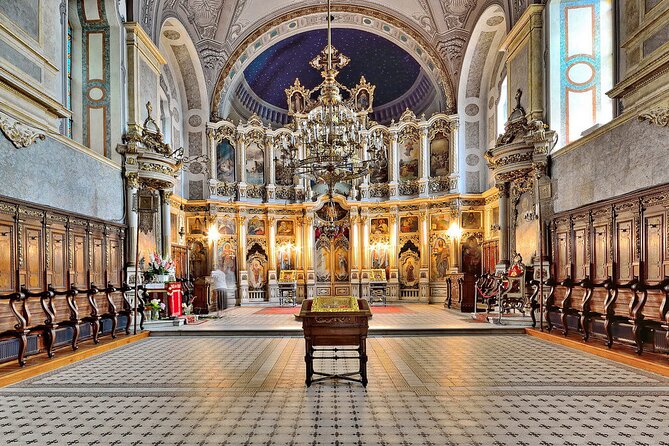
To finish, you climb back toward the city center via King Peter’s street. The tour passes King Peter the 1st Elementary school and the Neo-renaissance palace of the National Bank of Serbia, then moves past an Art Nouveau department store.
Finally, you’ll walk down the pedestrian street Knez Mihajlova, returning to Republic Square. Along the way you pass examples of 19th and 20th-century civil architecture, including the Serbian Academy of Science and Arts.
Ending back where you started is more than convenient. It helps you stitch the walk together. When you return to Republic Square, you can look at it with new context, instead of treating it as just a meeting point.
Price and value at $60.08: is it worth it?
At $60.08 per person for a 2 to 3 hour guided walk, you’re paying for three things: an English-speaking guide, a curated route that covers major zones efficiently, and the guide’s ability to connect monuments to stories.
The stops listed include entry marked as free for the sites along the way, so you’re not typically paying separate attraction fees during the tour. The included value is the guiding itself, which is the hardest part to replicate on your own if you want accuracy and flow.
This tour also seems to attract repeat interest, with a high recommendation rate and near-perfect ratings. That matters because it suggests the guides can handle questions and maintain an engaging rhythm across very different sites, from mosques to churches to fortress viewpoints.
Is it “cheap”? No. But for an English-guided Old City loop that hits Kalemegdan plus the central neighborhoods without hotel pickup chaos, it can feel like good value, especially for first-timers who want orientation.
Who should book, and who might skip it
This fits best if you:
- Want a high-impact first Belgrade walk that covers Ottoman-era and Serbian Orthodox landmarks alongside fortress history
- Like guides who explain more than what you can see in a quick photo
- Prefer spending your time outdoors and moving between areas, rather than doing one long indoor museum session
It might be less ideal if you:
- Want plenty of time inside every building (this is short stop travel, not a slow museum day)
- Have mobility concerns that make uneven ground and fortress stairs harder
- Are extremely photo-focused and need long quiet time at one site, like Ružica Church or the fortress viewpoints
Should you book the Belgrade Old City 2-Hour Walking Tour?
If you’re arriving in Belgrade and want a fast, story-rich orientation, I’d book this. You get the biggest “Belgrade ingredients” in one go, from Republic Square and Dorćol to Bajrakli Mosque and the fortress churches, with Ružica Church as the kind of detail that turns your memory into something vivid.
I’d especially consider it if you like practical guidance, because multiple guides are praised for clear English and for handling respectful moments, like church services and what that means for photos. And since the route returns you to Republic Square, you’ll finish with a sense of where everything sits, so you can plan your next day with less guesswork.
FAQ
How long is the Belgrade Old City walking tour?
The tour runs about 2 to 3 hours.
Where do we meet for the tour?
The meeting point is Republic Square, Trg republike 3, Beograd 11000, Serbia, in front of the Prince Mihailo monument horseman statue.
Is the tour offered in English?
Yes. The tour is offered in English.
Are there admission tickets required for the stops?
The tour notes list admission as free for the stops included.
What is included in the price?
The included item is a professional English-speaking guide.
Does the tour include hotel pickup and drop-off?
No. Hotel pickup and drop-off are not included.
Is the tour private?
Yes. Only your group will participate.
Is free cancellation available?
Yes. You can cancel up to 24 hours in advance for a full refund.
Newly written up in Belgrade
- Private Belgrade Street Art Tour
★ 5.0 · 1 review - The best of Novi Sad walking tour
★ 5.0 · 1 review - Tara National Park, Mokra Gora and Zlatibor
★ 5.0 · 1 review - Zasavica Bike Tour
★ 5.0 · 1 review - Discover Belgrade’s most Photogenic Spots with a Local
★ 5.0 · 1 review - Topola: Royal Dynasty Half Day Tour from Belgrade
★ 5.0 · 1 review - Private Serbian Food Cooking Experience in Belgrade with Meal
★ 5.0 · 1 review
City Tours, compared.
Walking Tour city center and Petrovaradin Fortress
Read our review →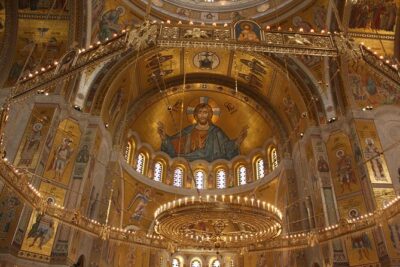
Half-Day Sightseeing and Walking Tour of Belgrade City
Read our review →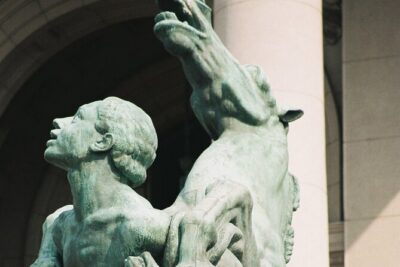
Your Own Belgrade: Unexpected Treasures of the City
Read our review →
Belgrade To Kopaonik Private Taxi Transfer (city or the airport)
Read our review →More Serbia tours of this kind