
Reviewed · 1-DAY TOURS
Belgrade Sightseeing Half-Day Trip Old and New Belgrade
A half-day that gives you Belgrade fast. You start with hotel pickup and a tight route through Kalemegdan and Belgrade Fortress, then swing into St Sava Temple and the city’s government and cultural core. I like how the tour keeps moving without feeling rushed, and how it mixes old defensive walls with 20th century power and modern city life. One thing to weigh: it is packed, and the experience can feel closer to 2 hours of active touring for some people, even though the schedule is about 3 hours.
If you want a crash course with photo stops and clear explanations, this is a strong match. Guides can be a highlight, with names like Aleksandr, Ivan, Milosh, Vladimir, and Stefan showing up in past experiences, often with the same theme, clear English, good pacing, and smart driving around busy streets.
The tradeoff is physical effort. You’ll do some walking in the fortress area and around major sights, so comfortable shoes matter, especially if it is hot.
In This Review
- Key highlights you should care about
- Quick take: how this 3-hour private route actually feels
- Kalemegdan Park and Belgrade Fortress: walls, gates, and two churches
- Upper Town views from the confluence to Pobednik
- New Belgrade by road: socialist modernism and major institutions
- Dedinje and Topčider Hill: mansions, football rivalry, and luxury contrast
- Tito’s resting place: Museum of Yugoslavia and House of Flowers
- St Sava Temple in Vračar: the dome you will notice everywhere
- Government core, Parliament photos, and the Royal Palaces area
- Republic Square finish: a clean place to end your Belgrade story
- Price and value: is $150.85 worth it?
- Tips that make this tour smoother
- Should you book this Belgrade Old and New half-day tour?
- FAQ
- What time does the tour start?
- How long is the Belgrade Old and New half-day trip?
- Is hotel pickup included?
- Are there pickup supplements if I am farther out?
- What language is the tour guide?
- Is this a private tour?
- What transport will we use?
- What is included in the price?
- Is the St Sava Temple entrance fee included?
- Are service animals allowed?
- What is the cancellation policy?
- Is gratuity included?
Key highlights you should care about
- Kalemegdan Fortress and the Roman and medieval layers you can see as you walk
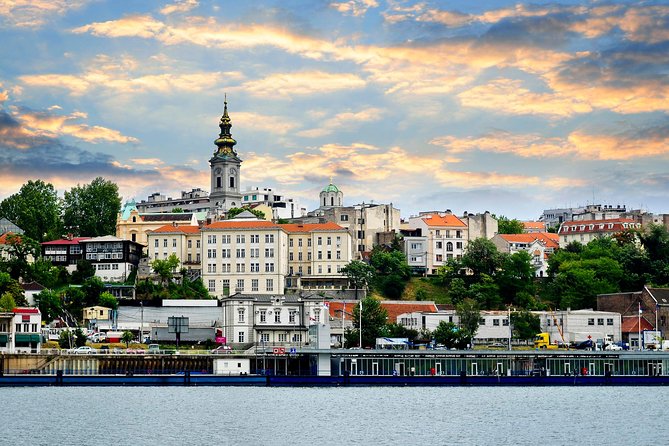
- Two Orthodox churches inside the fortress: Chapel of St Petka and Ružica Church
- Pobednik and the Danube-Sava confluence viewpoints from the Upper Town
- New Belgrade architecture including Ex Central Committee building and Genex Tower, plus Sava Center
- Dedinje and Tito era sites via the House of Flowers and Museum of Yugoslavia
- St Sava Temple at Vračar with a dome visible from across the city
Quick take: how this 3-hour private route actually feels
This is a half-day, private-style tour with pickup and drop-off, built for first time visitors or anyone with limited time. You ride in an air-conditioned minivan for small groups (about 4 to 7) or a private sedan if you are just a couple. The goal is simple: give you the big landmarks in a way that helps you understand what Belgrade is, and why it has been fought over, rebuilt, and reinvented.
You are not left to figure things out on your own. Your guide handles the story line, points out details you might otherwise miss, and builds in short breaks for photos. The best part is that the route is not only about famous buildings. You also get street level context, like where city power sits, how the city looks from key heights, and how the neighborhoods shift in character as you move from river fortress to socialist modernism to luxury residential areas.
If your plan is to add a longer second day later, this tour is a great “set the stage” move. If you already know Belgrade well and want slow wandering, you might feel the schedule squeezing you. That short timing concern shows up in real experiences, so I would go in with the right expectations.
One day, there and back:
- Day Trip from Belgrade: Gems of Eastern Serbia★ 5.0 · 424 reviews
- Western Serbia 1-Day Tour of the Key Sites from Belgrade★ 4.8 · 333 reviews
- Along the Danube: Golubac Fortress & Iron Gate Gorge day trip from Belgrade★ 4.5 · 185 reviews
Kalemegdan Park and Belgrade Fortress: walls, gates, and two churches
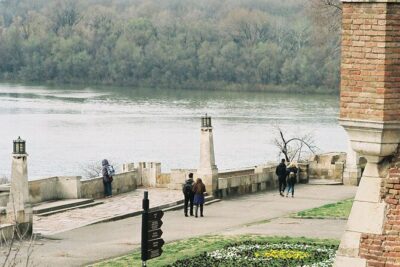
Kalemegdan is the kind of place where Belgrade’s contradictions make sense. One minute you are in a green park, the next you are inside fortifications that link Roman and medieval eras. Your tour starts here, with pickup that gets you quickly out of the car and into the best early walking zone.
Inside the fortress walk, you pass the kinds of features that make history tangible:
- the Roman castrum remains of Singidunum
- medieval walls built on top of those older structures
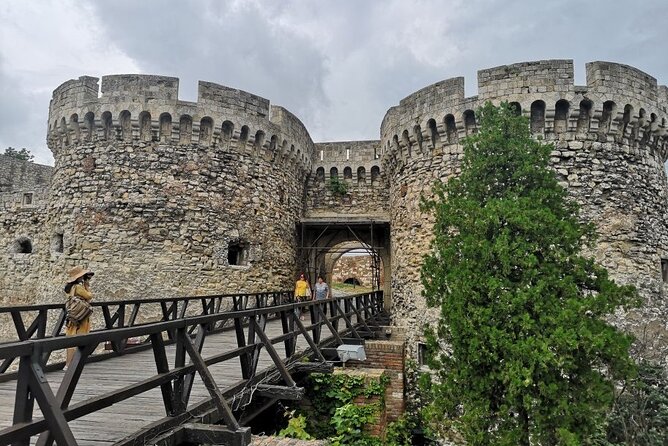
- fortress gates such as Zindan Gate and Despot’s Gate
- towers like Jakšića tower (described as dating to the 15th century)
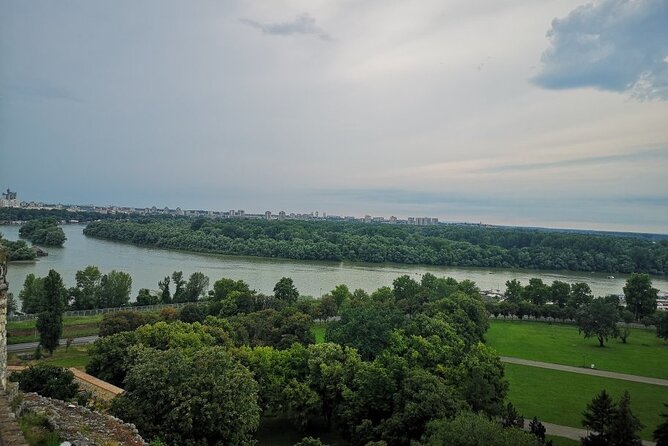
This part of the tour is where I think most first timers benefit, because the city’s geography becomes obvious. From the Upper Town, you get the dramatic “two rivers” moment, the confluence of the Sava and Danube, which helps you understand why this location mattered for centuries.
Then you get the payoff for people who love religious art and architecture: you visit two Orthodox churches inside the fortress. The Chapel of St Petka and Ružica Church (Virgin Mary Church) are both included stops. Even if you are not a deep religious architecture person, it is a smart way to break up fortress walking with something beautiful and distinct.
How long is it? Expect about 30 minutes for this stop, and it is marked as free admission for the churches. That short window is enough to see what you came for, but not enough to do it like a full guided museum experience, so keep your priorities clear.
Upper Town views from the confluence to Pobednik
After the fortress highlights, you continue walking through the Upper Town areas around the central monument sites. This is not a long hike, but it is a steady “look, read the sign, take the photo” circuit with viewpoints along the way.
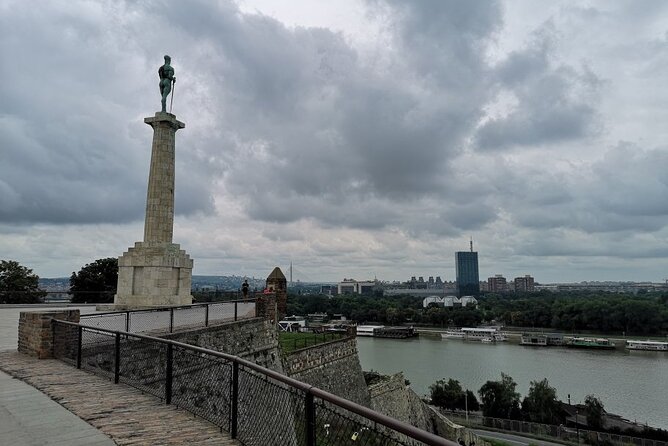
A key stop here is Pobednik, the Victor monument by Ivan Meštrović. It is one of the landmarks people use to recognize Belgrade. You also move past several fortress and promenade points, including:
- the Roman well
- the King’s Gate
- Sava promenade areas
- Damat Ali Pasha Tomb
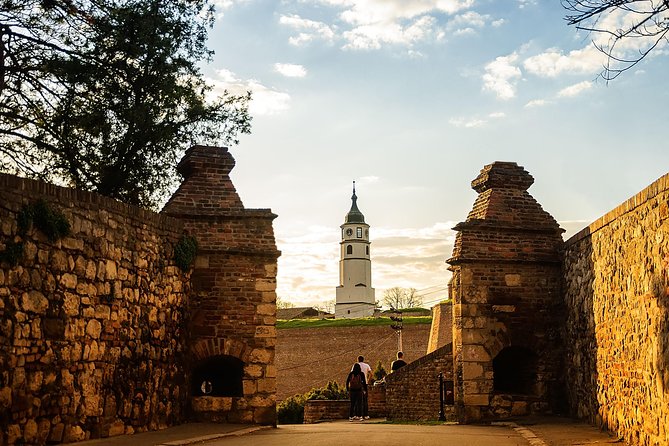
- Clock Gate (Sahatkapija) and Clock Tower (Sahatkula)
- Military Museum and the Istanbul Gate (Stambol Gate)
The vibe changes slightly as you walk from the densest fortress points toward the park edges again. In past experiences, guides have been good about staying on script without killing the momentum, and you tend to get clear, organized explanations instead of long tangents.
There is also a Monument of Gratitude to France in the park, also by Ivan Meštrović, plus busts of notable Serbian writers. If you enjoy cultural markers, this little add-on is a nice way to learn names without turning it into a school lecture.
Then you head back into the vehicle and move on, because the tour is designed to hit several different “Belgrade faces” in one sitting.
New Belgrade by road: socialist modernism and major institutions
Once you leave Kalemegdan behind, the city’s character shifts fast. New Belgrade shows up as a planned, post WWII part of the city, shaped by the socialist regime and later modern business growth. You are not just driving past it either. This section is built into the tour so you see the architecture as a theme.
Your route includes stops or passing views tied to landmark buildings, such as:
- the Ex Central Committee of the Communist Party, including the Palace of Federation
- Genex Tower (also called Western Gate of Belgrade)
- Sava Center, one of the major congress halls in this area of Europe
- references to a MoMA related exhibition about New Belgrade architecture, called Toward a Concrete Utopia
This is the part that I think many people underestimate. Belgrade is usually described through fortresses and churches, so it surprises visitors to see how strongly the city also reads as an architecture statement. Even if you do not care about concrete politics, you will still enjoy the visual contrast.
And yes, New Belgrade also includes modern business buildings from later decades, so you get a sense of continuity. Past experiences highlighted that the mix of socialist style structures and newer commercial development makes the drive more interesting than a simple “transfer between stops.”
Dedinje and Topčider Hill: mansions, football rivalry, and luxury contrast
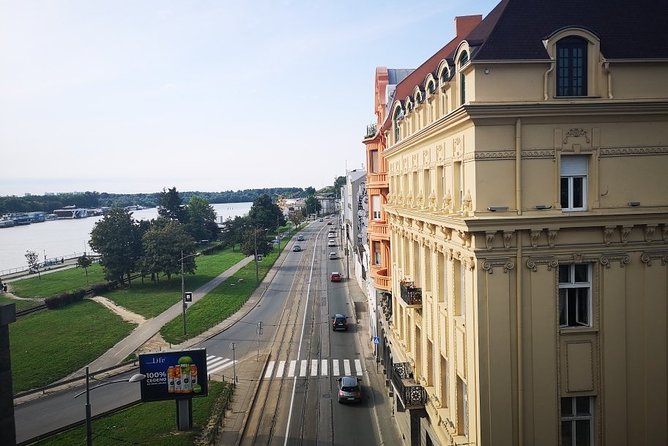
After crossing the Gazela Bridge, you head to Dedinje, one of Belgrade’s most upscale residential areas, tied closely to the “quiet green hill” look of Topčider Hill. The tour gives you a guided look at mansions and property history, and this is one of the moments where the guide’s ability to tailor the story can really matter.
You’ll also pass the huge sports reference point: the Rajko Mitić Stadium, home of Red Star Belgrade. The tour ties it to the bigger context of Serbian football, including the fact that Red Star is described as the last club from Eastern or Southern Europe to win the Champions League. Across the hill, the rivalry with Partizan Belgrade is explained as lasting more than 70 years.
Even if you are not a soccer fan, stadiums often work as a practical lens into a city. They tell you where passion lives, what people rally around, and how history keeps showing up in daily life.
This stop can feel like a mood change compared to the fortress and temple areas. It is less about monuments and more about Belgrade’s human side, the neighborhoods where the city’s power and prosperity built their homes.
Half a day, out and back:
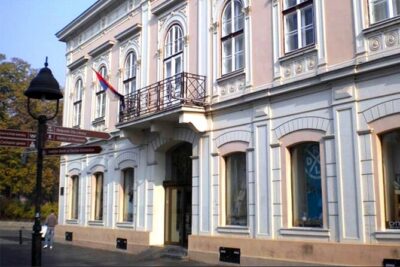
Tito’s resting place: Museum of Yugoslavia and House of Flowers
Next comes a stop centered on Yugoslavia’s 20th century story. You visit:
- the Museum of History of Yugoslavia
- the House of Flowers, which is described as Josip Broz Tito’s resting place
If you come from outside the region, this is where Belgrade can suddenly feel bigger than just Serbia. Yugoslavia was a whole world to itself, and this stop gives you a physical place to anchor that history.
Because you only have limited time, the value here is focus. This is not a wandering museum day. It is a “see the key place and understand the why” moment, which sets up what you’ll see next in the tour’s religious and civic landmarks.
St Sava Temple in Vračar: the dome you will notice everywhere
Then the tour hits one of Belgrade’s biggest spiritual and architectural signals: The Temple of Saint Sava, also called St Sava Temple. The dome is described as visible from all over the city, and once you understand that, it makes sense that the tour would place this as a central stop.
This church is presented in a way that helps you grasp scale quickly:
- construction began in the 1930s
- it is on the site where occupying Ottoman forces burned relics of St Sava
- it is built in Serbian-Byzantine style
- it occupies around 3500 m² on the floor, plus extra gallery space
- the dome is described as 70 m high, with a gilded cross adding more height
- the interior includes vaults and a decorated crypt
You spend about 30 minutes here, with entrance included in the tour package. That means you can appreciate the main features without losing your afternoon to a long line or a slow circuit.
This is also the stop where guides often show their style. In past experiences, guides like Ivan and Aleksandr were praised for friendly explanations and for keeping the talk clear and not overwhelming. In practical terms, that helps you look at the building instead of just hearing facts.
If you are traveling in summer heat, treat this as your “look carefully, then cool off” moment. Past experiences mention guides finding shade and encouraging water on hot days, so it helps to bring your energy and let the schedule work.
Government core, Parliament photos, and the Royal Palaces area
After the temple, you move through the Vračar area toward central Belgrade. The route includes Slavija Square and then Nemanjina Street, where you pass state governmental institutions like:
- the Government Building
- Ministry of Foreign Affairs
- General Staff of the Serbian Army
- Ministry of Railways
- Ministry of Finance
- the State Court
This is a good reminder that Belgrade’s story is not only about battles and churches. Power sits in real buildings, and the tour gives you a look at how the city organizes itself around civic functions.
Then you reach House of the National Assembly of the Republic of Serbia for a short picture stop. This stop is brief, about 10 minutes, but it is placed well. You hear stories that connect buildings to dynasties ruled in the 19th and 20th centuries, and you also pass or view Old and New Royal Palaces.
From there, you ride through Kralja Milana Street, sometimes described as the city’s artery, and then you reach Terazije Square, where you see the recognizable 19th century white stone fountain and the Moskva Hotel.
Even if your interests are purely aesthetic, this part helps you understand where Belgrade’s everyday authority lives. It also gives you context for what you will see at the end.
Republic Square finish: a clean place to end your Belgrade story
The tour ends at Republic Square (Trg Republike), described as the heart of the capital. This stop is about 15 minutes, and it is intentionally short because it functions like a reset point.
Around the square you learn about major institutions like the National Museum and National Theatre. You also get context on Prince Mihailo and why he matters in modern Serbian history.
The practical value of ending here is that it is easy to keep moving afterward. You are not dropped into a far suburb. You are placed right where transit and walking options are naturally better for continuing your own plan.
Price and value: is $150.85 worth it?
At $150.85 per person for an approximately 3-hour private tour, you are paying for three things at once:
- Hotel pickup and drop-off
- A professional English-speaking guide
- Vehicle transport between widely spaced neighborhoods
So the value depends on what you would do otherwise. If you are pairing taxis with self-guided walking, the cost often creeps up once you start bouncing between fortress areas, New Belgrade, Dedinje, and St Sava Temple. This tour reduces that friction by turning the transit time into guided context.
You also get a small but real inclusion: a bottle of water per person, plus entrance fee to St Sava Temple. Fuel costs and parking fees are included too, which matters in a city where parking can be a hassle.
The “small timing” tradeoff is worth noting. Some experiences felt closer to 2 hours of tour time than the advertised 3 hours. I would treat this as a quick-hit itinerary. If you want time for long photo breaks inside each site, you may need to schedule extra hours on your own later.
For many people, the best value comes from choosing this early in your trip. It gives you a Belgrade map in your head, so your later exploration costs less time and brainpower.
Tips that make this tour smoother
- Wear shoes you can walk in. Fortress paths and church areas involve steady walking, even if the stops are time-limited.
- Plan for heat. Some guides were praised for finding shade and pushing water on hot days. If it is warm when you go, treat water like a priority.
- Ask your guide to tailor the pace. Past experiences included a guide adjusting for a mother who could not walk long distances. Tell them what you need early.
- Use the photo stops wisely. You get quick windows at places like the Parliament area. If you want a perfect angle, ask your guide where to stand before the timer starts running.
- Bundle your must-sees. This route is strongest as a first-or-second visit overview. If St Sava Temple or New Belgrade architecture is your top priority, build your day around that.
Should you book this Belgrade Old and New half-day tour?
Book it if you want to get oriented fast, see Belgrade’s most iconic landmarks, and learn why the city looks the way it does across different eras. I especially like this plan for first timers because it pairs Kalemegdan Fortress with St Sava Temple and then adds New Belgrade and Dedinje so you do not only get the postcard layer.
Skip or reconsider if you need lots of slow, inside-site time, or if you hate tight schedules. The itinerary is built around short stops and driving between neighborhoods, so it is not designed to be a long, linger in one place kind of day.
If you do book, I would send a note with your interests, for example architecture, churches, Yugoslavia-era history, or sports rivalry. The best experiences described guides who were flexible and kept the day organized, not chaotic.
FAQ
What time does the tour start?
The tour starts at 9:30 am.
How long is the Belgrade Old and New half-day trip?
It is listed as about 3 hours.
Is hotel pickup included?
Yes. Free hotel pick-up and drop-off is included. Pick up is free from hotels or accommodations up to 5 km from Republic Square, and also from Belgrade port.
Are there pickup supplements if I am farther out?
Yes. If your pick-up location is more than 5 km but less than 10 km from the city center, there is a 10 EUR supplement. For start at Belgrade airport, the supplement is 15 EUR.
What language is the tour guide?
The tour is offered with an English-speaking guide.
Is this a private tour?
Yes. It is described as a private tour or activity, with only your group participating.
What transport will we use?
You travel in an air-conditioned minivan (4 to 7 pax) or a private sedan (1 to 3 pax), depending on group size.
What is included in the price?
Included are hotel pickup and drop-off, transportation, a professional English-speaking tour guide, fuel and parking fees, entrance to St Sava Temple, and a bottle of water per person.
Is the St Sava Temple entrance fee included?
Yes. Entrance to St Sava Temple is included.
Are service animals allowed?
Yes. Service animals are allowed.
What is the cancellation policy?
There is free cancellation. You can cancel up to 24 hours in advance of the experience start time for a full refund.
Is gratuity included?
No. Gratuities are not included and are optional.
If you want, tell me your travel dates and whether you prefer architecture, churches, sports, or WWII to Tito era history most, and I’ll suggest how to prioritize what you ask your guide to focus on.
Newly written up in Belgrade
- The best of Novi Sad walking tour
★ 5.0 · 1 review - Tara National Park, Mokra Gora and Zlatibor
★ 5.0 · 1 review - Private Belgrade Street Art Tour
★ 5.0 · 1 review - Zasavica Bike Tour
★ 5.0 · 1 review - Discover Belgrade’s most Photogenic Spots with a Local
★ 5.0 · 1 review - Topola: Royal Dynasty Half Day Tour from Belgrade
★ 5.0 · 1 review - Private Serbian Food Cooking Experience in Belgrade with Meal
★ 5.0 · 1 review
1-Day Tours, compared.
Day Trip from Belgrade: Gems of Eastern Serbia
Read our review →
Western Serbia 1-Day Tour of the Key Sites from Belgrade
Read our review →
Along the Danube: Golubac Fortress & Iron Gate Gorge day trip from Belgrade
Read our review →
Šargan Eight Railway, Wooden Town & House on Drina river day trip from Belgrade
Read our review →
Full-Day Trip from Belgrade: Tara National Park & The Drina River Valley
Read our review →
More Serbia tours of this kind