
Reviewed · CITY TOURS
Belgrade City Walk, Gathering and Sightseeing
Belgrade works best when you understand the why behind the walls. This walk strings together major sights in central Belgrade, so you can get your bearings fast and start spotting themes on your own later. I also love the focus on Serbian culture and identity through religion, customs, and politics, not just dates.
The tour’s pace is built for walking and lingering. You’ll stop at places you can revisit later, plus you get a complimentary hot beverage that makes Belgrade feel personal, not just scenic.
One thing to consider: the approach can lean more political than purely architectural, so if you want strictly neutral, art-only facts, say that early and keep an eye on how the guide is framing the story.
In This Review
- Key things that make this Belgrade walk worth your time
- Price and logistics: what $38.41 buys you
- Starting out in central Belgrade: how the route sets the story
- Crkva Svetog Marka: a church with political gravity
- The House of the National Assembly: monumental architecture, interrupted plans
- The Old Palace (Obrenović) and the academy-style facade
- Hotel Moskva and Terazije Square: celebrity history in a city landmark
- Republic Square: the city’s main meeting place
- Nebojsa Tower: traditions and celebrations
- Monument of Gratitude to France: a 1930 message in stone
- Kalemegdan Park and the Belgrade Fortress: the big finale view
- Pobednik: the Victor monument and the symbolism in each pose
- Coffee and Serbia’s daily ritual: the included hot beverage moment
- Who this walk is for, and who should pick something else
- Should you book the Belgrade City Walk?
Key things that make this Belgrade walk worth your time
- Small group size (max 6) keeps the questions flowing and the explanations tailored
- Central orientation across the Old Palace area, Republic Square, and the fortress zone
- A real coffee stop included, with Serbia’s coffee-and-conversation feel
- Belgrade Fortress time (45 minutes) so you are not rushed at the best viewpoint
- Stop variety from church burials to monumental government buildings
- Clear English tour with a mobile ticket, easy to use on the day
Price and logistics: what $38.41 buys you
For about 2 to 3 hours, this tour costs $38.41 per person. That price is not just for someone to walk with you. It includes a complimentary hot beverage and at least one attraction where admission is included, so the value is strongest if you would otherwise skip a guided overview.
You meet at Kosovska 47 at 11:00 am and finish in front of the Belgrade City Library at 56 Knez Mihailova Street. There is no transportation included, so plan on doing the walking part. The tour is in English, capped at 6 travelers, and uses a mobile ticket that you’ll show during the experience.
A practical note before you book: one of the review concerns was that the tour can shift in emphasis based on interests, and a guest felt their preferred itinerary wasn’t followed. If you have strict must-see priorities, it helps to set those expectations at the start.
And yes, the weather matters in Belgrade. When the sky turns gray, you will still get value because the route is packed with shaded or indoor-adjacent stops, like the church and government-adjacent buildings.
More of Belgrade done at street level:
- Belgrade: 3-Hour Small Group Walking Tour★ 5.0 · 180 reviews
- Half-Day Sightseeing and Walking Tour of Belgrade City★ 5.0 · 37 reviews
- Belgrade Private Walking Tour with a Local★ 5.0 · 19 reviews
Starting out in central Belgrade: how the route sets the story
The tour is designed like a guided orientation map, moving through the layers of power and identity in the city center. You start near Kosovska Street, then work your way through a sequence of landmarks that are easy to understand once someone gives you the connective tissue.
Your guide is Aleksandar Bastic, and the reviews consistently highlight two things: his enthusiasm for the city and his ability to explain without making it feel like a lecture. In a small group, that matters. You can ask a follow-up, and the pacing stays human.
The walk is also a good first-day option because it touches the major anchors you will later use for self-guided exploring. Even if you don’t enter every building, you’ll know where you are and what you are looking at.
Crkva Svetog Marka: a church with political gravity
Stop one is Crkva Svetog Marka, where important members connected to the Obrenović dynasty are buried. The church area also ties to a moment in the early 1800s: in 1830, the sultans’ edict announcing Serbian autonomy within Turkey was read at the site where today’s church stands.
This is one of those stops that changes how you see the street. Instead of thinking of churches as only religious spaces, you start to notice them as national memory holders.
Admission here is included, and the stop time is about 20 minutes. That’s enough to absorb the main story points without feeling like you’re being dragged through it. If you’re someone who likes to take photos slowly, give yourself extra time because the setting encourages lingering.
The House of the National Assembly: monumental architecture, interrupted plans
Next you move to the House of the National Assembly of the Republic of Serbia. The building is monumental and was constructed between 1907 and 1936, with many interruptions and project changes along the way.
Two helpful context points make this stop worth it. First, it’s not just a pretty facade. The construction history reflects shifts in the Serbian, and then Yugoslav, state. Second, multiple leading architects of the early 20th century were involved, which is why the building feels “big” in more ways than one.
The stop is about 15 minutes. Admission is not included, so treat this stop as a viewpoint and exterior-understanding moment unless you choose to pay separately on your own. The upside is that you still get the why behind the wall.
If you hate long explanations and prefer quick, visual sightseeing, this is your moment to choose your level of detail. The group size helps, because you can focus on what you care about.
The Old Palace (Obrenović) and the academy-style facade
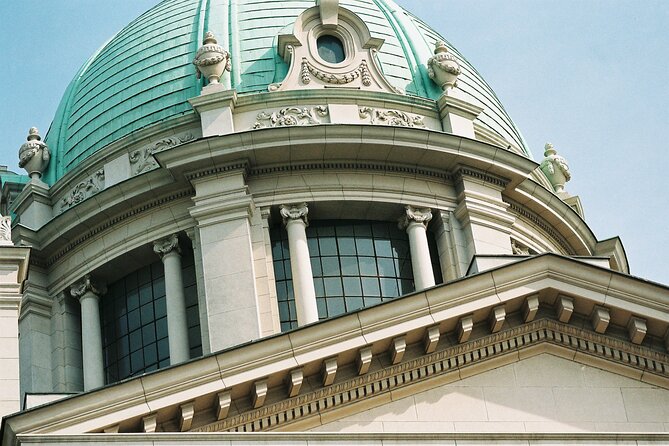
The third stop takes you to the Old Palace, the Royal Palace of the Obrenović dynasty, now housing the City Assembly of Belgrade. It was built between 1882 and 1884, designed by Aleksandar Bugarski.
The architecture is described as one of the most beautiful achievements of academism in Serbia of the 19th century. In plain terms, that means it’s formal, structured, and meant to signal status. When you pair that with what you learned at the church and assembly building, it starts to read like a timeline you can walk.
This stop is about 15 minutes and is free to access. The drawback is also simple: if you are hoping for a lot of interior time, you may be disappointed. This is more of a landmark-and-meaning stop.
Still, it’s a great chance to look back at how the guide frames “why this matters,” not just “what it is.”
More of the city in one outing:

Hotel Moskva and Terazije Square: celebrity history in a city landmark
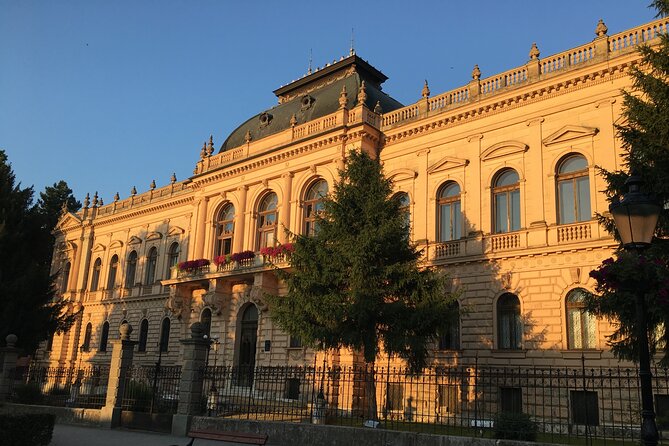
Then you reach Hotel Moskva, a protected cultural monument on Terazije Square. It’s a historic four-star hotel established in 1908, in a Russian secession style, and it has 123 rooms.
What makes it memorable is the name-level history tied to the building. It has hosted notable celebrities including Albert Einstein and Robert De Niro. That kind of detail helps Belgrade feel connected to more than one era, not stuck in one narrative.
The stop is about 15 minutes. Admission is not included, so you’re mostly observing and taking in the facade and its place in the area’s flow. If you want the full experience, the hotel is known for its café and restaurant, and the tour does include the coffee ritual later, making this an easy setup to enjoy it on-site.
One practical tip for this stop: wear comfortable shoes. You’ll be on foot through central streets, and the Erzats of “just one more stop” adds up quickly on a 2 to 3 hour walk.
Republic Square: the city’s main meeting place
Republic Square (Trg Republike) is the central meeting point for Belgradians. The tour frames it as a modern square built on the location of former gates leading into the city.
Even without entering any building, the value here is orientation and understanding. You see where the city once controlled entry, then you notice how the space became a public gathering place.
This is about 15 minutes and admission is not included. If you’re sensitive to crowds, you may want to time your photos carefully. The upside is that this is a natural pause in the walk, and it sets you up for the fortress area later.
Nebojsa Tower: traditions and celebrations

The route includes Nebojsa Tower, with a free admission stop time indicated as 25 minutes. This is where the tour shifts from buildings to customs and celebrations, focusing on what makes Serbia’s traditions distinct.
That thematic turn is a smart move. If the morning only covers monuments, you leave with a list. If you also get how people celebrate and what they value, you leave with a lens for understanding day-to-day Belgrade life.
The best part is that this isn’t a separate “show.” It’s tied into the story your guide is building across the day.
If you prefer only concrete, place-based facts, you might find yourself wanting more about the tower itself. But as part of the overall arc, it gives context to the city’s identity beyond stone and street names.
Monument of Gratitude to France: a 1930 message in stone
Next comes the Monument of Gratitude to France, created by sculptor Ivan Meštrović and erected at the end of the main alley of Kalemegdan Park in 1930.
This stop works because it’s small enough to be absorbed without rushing, about 10 minutes. But it also expands the story. It reminds you that Belgrade’s relationships with other countries have been shaped over time, not simply written as one modern alliance.
Admission is not included. In practice, that means you focus on the monument and its setting rather than paying for an interior. Still, Meštrović’s work is distinctive, and seeing it here helps you connect the city’s public art with its political memory.
Kalemegdan Park and the Belgrade Fortress: the big finale view
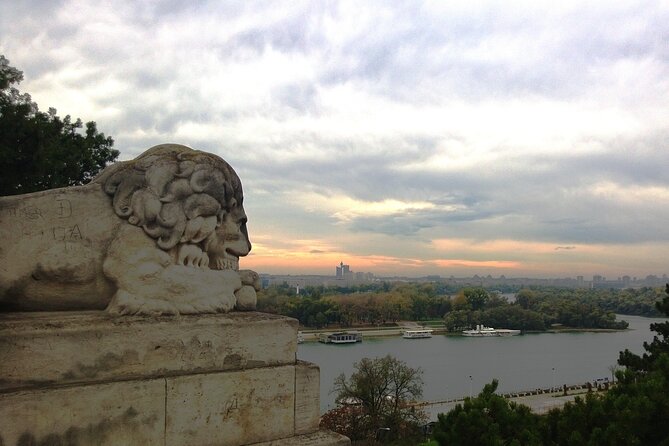
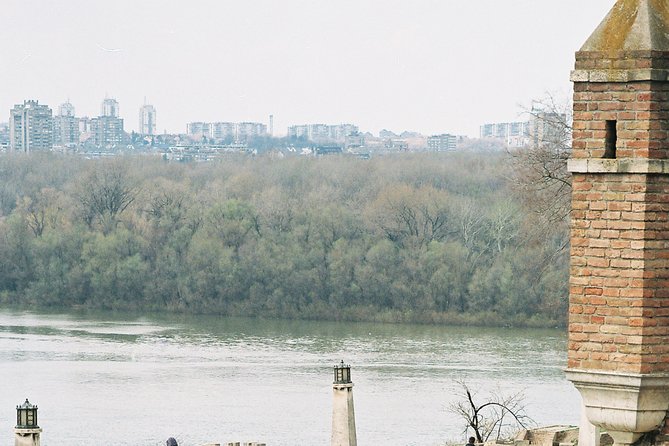
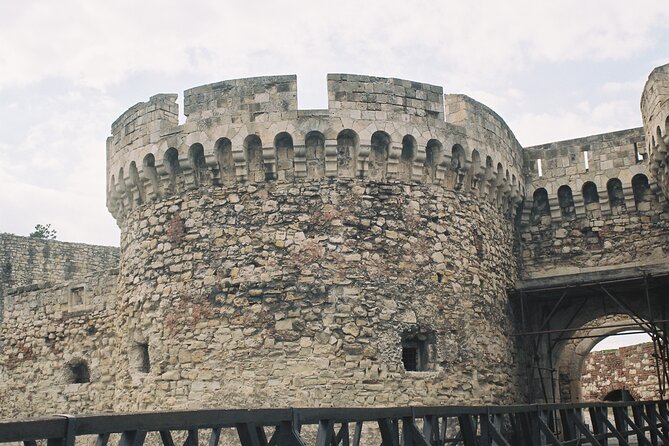
Your longest time block is Kalemegdan Park and the Belgrade Fortress, around 45 minutes, and this is where you feel the city open up. The fortress consists of the old citadel plus Kalemegdan Park at the confluence of the Sava and Danube rivers.
This area is the historical core of modern Belgrade, located in the Stari Grad municipality. Standing here, you understand why so many cities fight over river junctions and why fortifications are never just defensive structures. They become identity anchors.
Admission is free for this part of the tour. The practical advantage is you can spend time looking without worrying about extra tickets. The drawback is weather and wind. If it’s cold or rainy, the view is still worth it, but bring layers and plan for quick photo moments between shelter.
This is also a good time to ask your guide a question you’ve been saving all morning. In a small group, you’ll actually get an answer you can use later while wandering on your own.
Pobednik: the Victor monument and the symbolism in each pose
Finally, you reach Pobednik, the Victor monument, one of Belgrade’s most recognizable symbols. It was created in the years before the First World War, with a long, unusual development timeline.
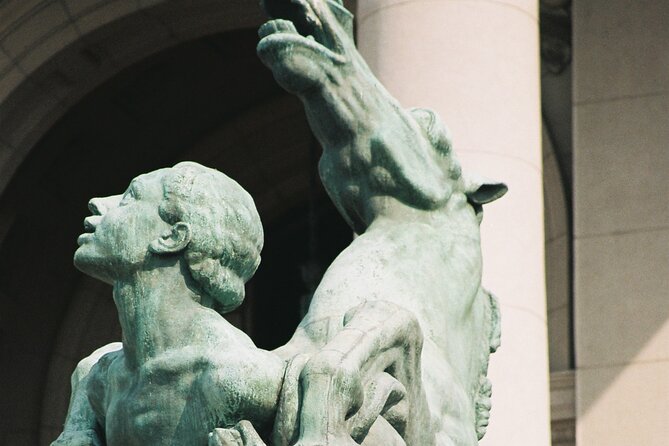
The story you get here is one of the best “how to read a monument” moments on the walk. The statue was originally conceived as a fountain in the center of Belgrade at Terazije. Ivan Meštrović was the sculptor, and by the beginning of the First World War, he had cast the central part of the fountain in the form of a naked male figure holding a sword in his right hand, symbolizing war, and a falcon in his left hand, symbolizing peace.
This stop is about 15 minutes, free to access, and it’s a great closing point because it combines art, politics, and city planning in one image. If you like symbolism, you’ll enjoy standing here and looking at how the design forces you to interpret the message.
And it’s an easy place to take a last photo before you end near the Belgrade City Library area.
Coffee and Serbia’s daily ritual: the included hot beverage moment
The tour includes coffee and/or tea, and it’s positioned as a highlight for many people. The logic is solid. Serbia’s coffee culture is not treated as just fuel. It’s a pause, a social rhythm, and a way locals connect.
The hotel stop area is part of that vibe, and in reviews, the coffee at Hotel Moskva was singled out as a standout. That makes sense because the setting alone feels like a snapshot of Belgrade’s modern history.
If you’re a tea person, you should still be fine. The inclusion is flexible, coffee or tea.
My advice: treat this as a reset. Ask one extra question while you’re holding your cup, then use the answer to guide your next hour of wandering.
Who this walk is for, and who should pick something else
This city walk is a strong fit if you want three things at once: orientation, context, and an enjoyable pace. The small group size and the emphasis on history and culture make it especially good for first-time visitors who want to come back later and explore without feeling lost.
You’ll also like it if you prefer a guide who can explain clearly in English and adapt to your interests. Several review comments point to Aleksandar Bastic noticing what mattered to the group and keeping the walk easy to follow.
It may be less ideal if you want strictly architectural, neutral facts with no political framing. One guest felt the balance leaned too political and that the guide didn’t stick to the itinerary in the way they expected. If you have firm preferences, communicate them early.
Should you book the Belgrade City Walk?
Yes, if you want a practical, well-paced introduction to central Belgrade that ties monuments to meaning. The value is strongest because you get a hot beverage included, a free fortress zone with real viewpoint time, and at least one included admission stop that you might otherwise skip.
Book it especially if you’ll be short on time and want a guided map you can use later. When a small group guide like Aleksandar Bastic brings both enthusiasm and context, it turns a walk into a sharper first day.
Skip or compare options if you are very sensitive to political framing. In that case, ask at the start how the guide will balance architecture versus politics, and set your must-see priorities for the walk.
Newly written up in Belgrade
- Private Belgrade Street Art Tour
★ 5.0 · 1 review - The best of Novi Sad walking tour
★ 5.0 · 1 review - Tara National Park, Mokra Gora and Zlatibor
★ 5.0 · 1 review - Discover Belgrade’s most Photogenic Spots with a Local
★ 5.0 · 1 review - Zasavica Bike Tour
★ 5.0 · 1 review - Private Serbian Food Cooking Experience in Belgrade with Meal
★ 5.0 · 1 review - Topola: Royal Dynasty Half Day Tour from Belgrade
★ 5.0 · 1 review
City Tours, compared.
Walking Tour city center and Petrovaradin Fortress
Read our review →
Half-Day Sightseeing and Walking Tour of Belgrade City
Read our review →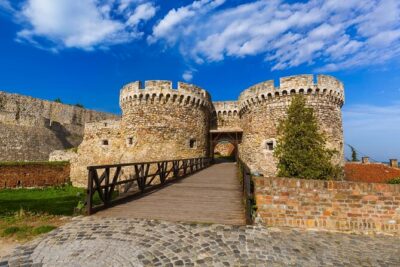
Your Own Belgrade: Unexpected Treasures of the City
Read our review →

Belgrade To Kopaonik Private Taxi Transfer (city or the airport)
Read our review →More Serbia tours of this kind