
Reviewed · WALKING TOURS
Belgrade SightSeeing Walking Tour
Belgrade makes sense on foot. This small-group walk strings together big landmarks and everyday street life with clear guidance and local context, so you spend less time figuring it out and more time seeing it. I like the max 7-person size for an easy pace and questions, and I also like how the route hits major icons like the National Assembly and Clock Tower without feeling rushed.
The only real catch: this experience depends on good weather, since you will be walking from the center toward Kalemegdan and the fortress area. Plan for that, and the payoff is strong.
In This Review
- Key points you will care about
- Why this 3-hour Belgrade walk is a smart setup
- Start at Svetogorska 37, in front of the National Assembly
- Old Palace and the Belgrade Assembly: see the city’s seat-of-power zone
- Terazije Fountain: the city symbol you will recognize later
- Palace “Albania” and the meaning of Belgrade’s center buildings
- Knez Mihailova Street: pedestrian life, shops, and easy orientation
- Coffee or tea break: a real reset in the middle of the walk
- Kalemegdan Park and the famous fortress: slow down and look around
- Kalemegdan memorial site: the keys of Belgrade stop
- Sahat Kula, the Clock Tower: finish with a recognizable landmark
- Price and value: what $98.87 gets you
- Who this tour suits best
- Practical tips so the route feels easy, not stressful
- Should you book this Belgrade Sightseeing Walking Tour?
- FAQ
- How long is the Belgrade sightseeing walking tour?
- What is the group size for this tour?
- Where does the tour start and end?
- What are some of the main stops on the route?
- Is the tour suitable for most people?
- Do I need good weather for the tour to run?
- What payment and ticket format is used?
- What is the cancellation policy?
Key points you will care about
- Up to 7 people, which makes the commentary feel personal instead of lecture-style
- About 10 major stops, including the National Assembly, Terazije Fountain, and Sahat Kula
- You get oriented fast, so you can explore more on your own after the tour
- Coffee or tea break built in, so you are not sightseeing on empty
- Kalemegdan Park and fortress zone, with a memorial stop tied to the handing over of the keys of Belgrade
- Mobile ticket for smoother start-of-tour entry
Why this 3-hour Belgrade walk is a smart setup
A walking tour sounds simple until you hit a city with strong layers of politics, old architecture, and busy streets. That is exactly the mix Belgrade gives you. This one works because it is short, focused, and structured, so you walk away with a mental map, not just photos.
I like that it is designed around a tight route, with the guide leading the way from major civic buildings to the pedestrian heart of the city and finally into Kalemegdan. You are not trying to connect dots alone. You are learning where things are, why they matter in the city layout, and how they relate to each other as you move.
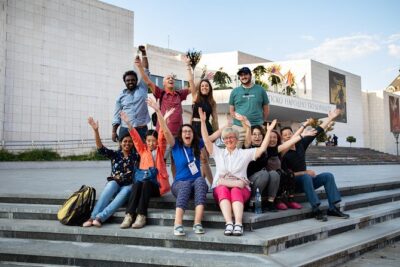
With a maximum group size of seven, you also get that rare thing on tours: a chance to ask questions and get answers that fit your interests, whether you care more about the city center vibe or the fortress views and memorial spot.
More of Belgrade done at street level:
- Belgrade: 3-Hour Small Group Walking Tour★ 5.0 · 180 reviews
- Half-Day Sightseeing and Walking Tour of Belgrade City★ 5.0 · 37 reviews
- Belgrade Private Walking Tour with a Local★ 5.0 · 19 reviews
Start at Svetogorska 37, in front of the National Assembly
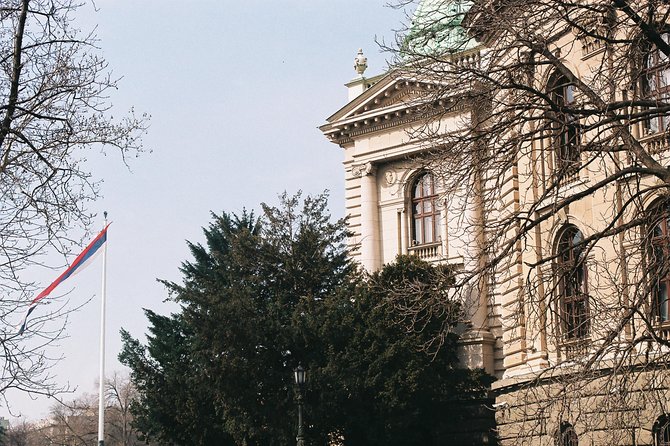
The tour begins in front of the National Assembly of the Republic of Serbia. The meeting point is listed as Svetogorska 37, Beograd 11000, and the end is at the Belgrade Fortress area near Sahat Kula.
Starting at the National Assembly is a practical choice. It is a major landmark, so it is easier to orient from the first minute. It also sets the tone. Early on, you are pointed at the kind of building that signals where formal city power and national identity sit in the urban layout.
If you like history in the real-world sense, this start helps. You see the seat of governance as a physical part of the city, not a distant concept. And if you are more of a “show me the streets” person, you still benefit, because the route quickly transitions from official buildings to public spaces.
Old Palace and the Belgrade Assembly: see the city’s seat-of-power zone
From there, the route passes the Old Palace, also referred to as the Belgrade Assembly. This stretch is useful because it shows you another layer of how government buildings sit next to the rest of the city.
In practical terms, this is where you learn the shape of the area. Even if you do not memorize every detail, you start understanding the geography: where the official buildings are clustered, how the central streets connect outward, and where you will likely want to return later when you are exploring on your own.
One thing I would keep an eye on here is the contrast in architecture and scale between different civic buildings. The route makes it easy to compare without you having to hunt for each stop.
Terazije Fountain: the city symbol you will recognize later
Next comes Terazije Fountain, one of Belgrade’s city symbols. I love this kind of stop because it is not just another building. It is a recognizable public meeting point, something you can reference again later when you are trying to orient yourself.
When you learn Belgrade from this kind of marker, you start noticing how the city’s central life is arranged around landmark points. That helps a lot if you plan to wander afterward, since you can use Terazije Fountain as a reference point to regroup.
This stop is also a good reminder that Belgrade is not only a fortress-and-monument city. It is a city of public space, street flow, and everyday activity.
Palace “Albania” and the meaning of Belgrade’s center buildings
The tour then includes Palace Albania. This is the type of stop that rewards simple attention. Even if you are not going deep into architectural jargon, you are training your eye to notice how the center of a city expresses identity through prominent buildings.
I find that these stops are valuable because they connect to the next big phase of the walk: the shift from landmark squares to street-level life. You go from the civic and institutional scale into a place where people spill into shops, cafes, and pedestrian space.
If you like taking photos, this is a good segment to do it. Just keep an eye on where you are stepping and how the group is moving, since the later street area is busy.
Worth putting on the shortlist while you plan Belgrade:
Knez Mihailova Street: pedestrian life, shops, and easy orientation
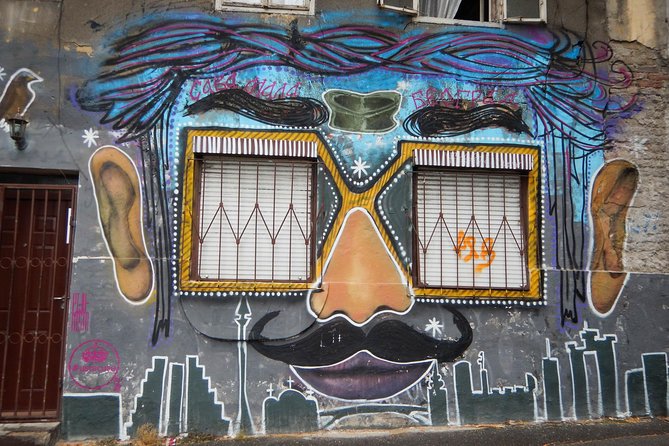
Then you hit Knez Mihailova Street, the pedestrian zone that is always full of life and people and various stores.
This is where the tour becomes both sightseeing and navigation training. You learn the main pedestrian artery of the city center, so later you can find your way without relying on maps as much. It also gives you a feel for the rhythm of the city, which makes the rest of the stops land better. A fortress visit is more meaningful if you understand what the city feels like just outside it.
A practical note: because it is a pedestrian area with lots of activity, it is a great place for people-watching. But it is also where the crowd can make it harder to pause. Lean into it, but do not get stuck in one spot if the group keeps moving.
Coffee or tea break: a real reset in the middle of the walk
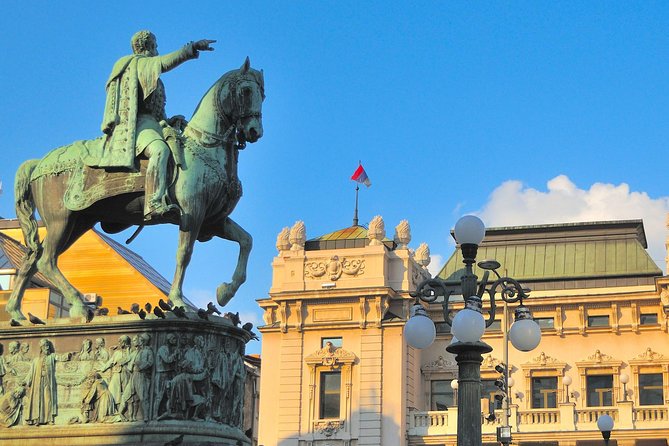
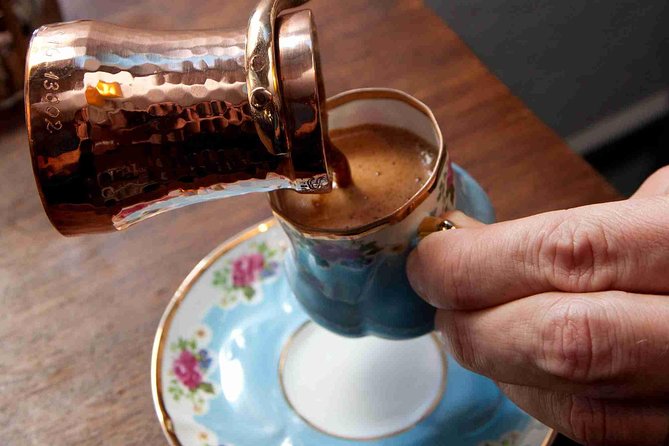
A coffee or tea break is built into the itinerary. I am a big fan of breaks that are actually scheduled, because they change how you experience a walking tour. Instead of pushing through fatigue, you get a chance to reset your pace and refocus.
This is also a smart time to ask your guide a few personal questions. You will be partway through the route, so your questions can be more specific now. You can ask what areas are worth revisiting after the tour or what direction makes the most sense for your next stop.
Even if you do not buy anything, the break helps you stay engaged. It turns the tour from a series of stops into a guided flow.
Kalemegdan Park and the famous fortress: slow down and look around

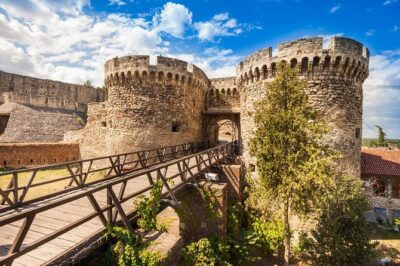
After the break, you enter Kalemegdan Park and the famous fortress. This is a major shift in atmosphere. You go from city center street energy into a zone where the city opens up toward viewpoints and fortification space.
This is the moment I expect many people to remember. The fortress area gives you a sense of Belgrade’s strategic position and its layered layout, even without you needing a lecture full of dates. You are physically moving into a different kind of space, and the guide’s commentary helps you connect what you are seeing to the bigger story of the city’s layout.
If you enjoy photo stops, this part is usually where your camera earns its keep. Just be mindful that fortress paths can involve uneven footing and changes in terrain, so keep your footing steady as you walk.
Kalemegdan memorial site: the keys of Belgrade stop
The itinerary then includes the Kalemegdan memorial site tied to the handing over the keys of Belgrade.
This is a meaningful stop because it turns the fortress visit into more than just scenery. It adds a human-centered reminder that the city’s defensive and ceremonial identity is part of local memory, not just stone and walls.
I like that this stop is integrated into the walk rather than tacked on as an optional add-on. It gives the fortress portion an emotional point, so the visit feels grounded.
Sahat Kula, the Clock Tower: finish with a recognizable landmark
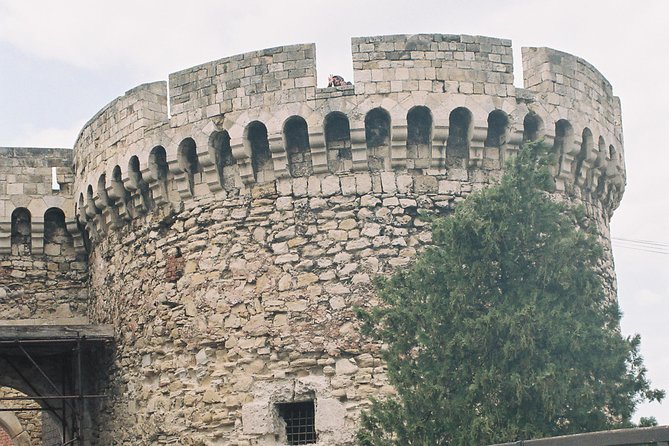
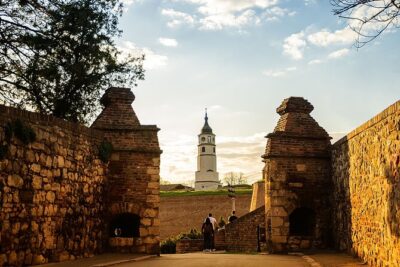
The tour ends with Sahat Kula, the Clock Tower. Finishing here makes a lot of sense. A clock tower is visual proof of how Belgrade marks time and identity in the public realm, and it is also the kind of landmark that helps you orient after the tour.
Since the end is listed near Belgrade Fortress and Sahat Kula, you are not ending in the middle of nowhere. You end at a high-recognition site, which is practical if you want to keep exploring right away or head back to your next destination.
If you are planning the rest of your day, build your timing around this finish. In other words, treat the Clock Tower area as your launching point for whatever comes next, because it is already a strong orientation anchor.
Price and value: what $98.87 gets you
At $98.87 per person, this is not a budget tour. But it also is not priced like a private guide for one or two people. The value comes from a few things that work together:
- Small group size of up to seven. That can be the difference between a tour you tolerate and a tour you actually enjoy.
- Around 10 city highlights packed into about 3 hours, which keeps the guide’s time efficient and lets you see a lot without spending your day zigzagging alone.
- Guided commentary that goes beyond basic stop descriptions, the kind of storytelling that helps you remember what you saw and where it fits in the city.
- You get orientation for future exploring, which can save you time later, especially if you only have limited days.
If you are the type who hates wasting hours figuring out where things are, the structure justifies the price. If you already know Belgrade well or you prefer to wander freely with no guidance, you might feel this is more curated than you need.
Who this tour suits best
This is a great match if you want Belgrade to feel understandable fast. I also think it is ideal if you want a guide who can translate what you are seeing while you walk, instead of handing you a map and hoping you connect the dots yourself.
It is also a solid fit for couples or small groups who want company but still want space to ask questions. The maximum of seven people supports that.
Most travelers can participate, so it is not limited to a narrow kind of pace. Still, this is a walking tour, so if you know you struggle with steady walking, plan carefully around your comfort level.
Practical tips so the route feels easy, not stressful
A few things will help you enjoy this tour more.
First, wear shoes you trust. You will be walking from the city center toward Kalemegdan and through park and fortress areas. That usually means more uneven ground than a straight city sidewalk route.
Second, keep an eye on weather. The experience requires good weather, so if conditions are questionable, do not wait until the day-of to decide what to wear and how to plan.
Third, bring your phone for the mobile ticket. The tour is set up for that, so have your ticket ready and avoid last-minute screen searching.
Finally, treat the tour as your base layer. Your goal is to build a map in your head. After Sahat Kula, you can keep going on your own with a clearer idea of how the city’s pieces connect.
Should you book this Belgrade Sightseeing Walking Tour?
Book it if you want the fast track to Belgrade’s key landmarks, with a small group and a guide who helps you connect the dots as you walk. The best reason is practical: you leave with orientation, not just a list of places.
Skip or rethink it if you are already very familiar with Belgrade center landmarks, or if you prefer fully independent exploring with no structured route. At $98.87, you want to feel the value quickly, and this tour is designed to do that by staying focused and efficient.
If you are on the fence, a simple rule helps: if you want help understanding what you are looking at, this tour is worth it.
FAQ
How long is the Belgrade sightseeing walking tour?
It lasts about 3 hours.
What is the group size for this tour?
The tour has a maximum of 7 travelers.
Where does the tour start and end?
It starts at Svetogorska 37, Beograd 11000, Serbia, and ends at Belgrade Fortress near Sahat Kula (Clock Tower).
What are some of the main stops on the route?
The route includes the National Assembly, Old Palace (Belgrade Assembly), Terazije Fountain, Palace Albania, Knez Mihailova Street, Kalemegdan Park and fortress, a Kalemegdan memorial site about the handing over of the keys of Belgrade, and Sahat Kula.
Is the tour suitable for most people?
Most travelers can participate.
Do I need good weather for the tour to run?
Yes. The experience requires good weather, and if it is canceled due to poor weather, you will be offered another date or a full refund.
What payment and ticket format is used?
You receive a mobile ticket.
What is the cancellation policy?
Free cancellation is available. You can cancel up to 24 hours in advance for a full refund. If you cancel less than 24 hours before the experience starts, the amount paid is not refunded.
Newly written up in Belgrade
- Private Belgrade Street Art Tour
★ 5.0 · 1 review - The best of Novi Sad walking tour
★ 5.0 · 1 review - Tara National Park, Mokra Gora and Zlatibor
★ 5.0 · 1 review - Zasavica Bike Tour
★ 5.0 · 1 review - Discover Belgrade’s most Photogenic Spots with a Local
★ 5.0 · 1 review - Topola: Royal Dynasty Half Day Tour from Belgrade
★ 5.0 · 1 review - Private Serbian Food Cooking Experience in Belgrade with Meal
★ 5.0 · 1 review
Walking Tours, compared.

Walking Tour city center and Petrovaradin Fortress
Read our review →
Half-Day Sightseeing and Walking Tour of Belgrade City
Read our review →
More Serbia tours of this kind