
Reviewed · WALKING TOURS
Belgrade Walking Tour in French
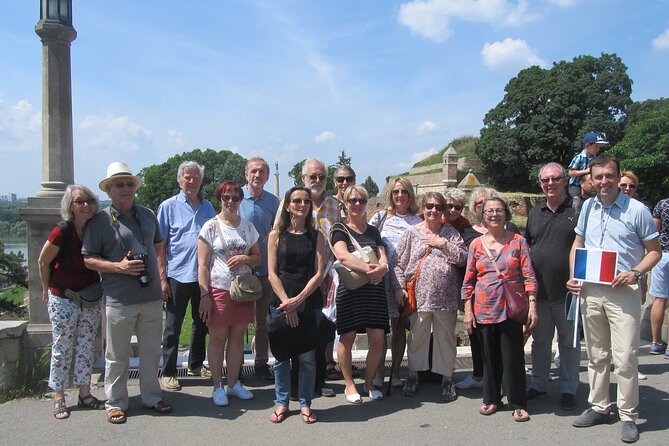
Belgrade reveals itself fast on foot. This French-language walk mixes journalism-style stories with history, culture, and today in Serbia, with Nenad guiding you through both the big sights and the less obvious corners. The route also follows a clear Francophonie thread, from places near the rue de France to the end near the rue de Paris area.
What I like most is the small group pace and the way Nenad connects facts to real street life, not just monuments. I also like the focus on the “Belgrade underside,” plus the practical add-ons like learning how to spot Cyrillic in Dorćol instead of treating the script as a mystery.
One thing to consider is the 3 hours 30 minutes and mostly walking through multiple neighborhoods, so wear shoes you trust. It is a morning-start tour at 9:30 am, which might feel early if you like to travel slow.
In This Review
- Key highlights before you go
- A French-language Belgrade tour that feels like conversation
- Republic Square to the Prince Michel area: where the city’s main story begins
- Skadarlija and the French street links you can actually follow
- Dorćol: old Belgrade, one mosque, and a Cyrillic reading moment
- Ruzica Church in the citadel: from gunpowder to military church
- Kalemegdan Park and the fortress views over the Sava and Danube
- Monument of Gratitude to France: friendship stories since the Great War
- The French Embassy building and King Peter I street stops
- Price and value for a 3.5-hour French guide
- Who this tour suits best, and who should skip it
- What to expect from Nenad’s journalist-style guide method
- Should you book this French walking tour of Belgrade?
- FAQ
- What language is the tour in?
- How long is the Belgrade Walking Tour in French?
- How much does the tour cost?
- How big is the group?
- Where do we meet and where does the tour end?
- Is a mobile ticket used?
- Are there admission tickets to pay for the stops?
- What is the cancellation window?
Key highlights before you go
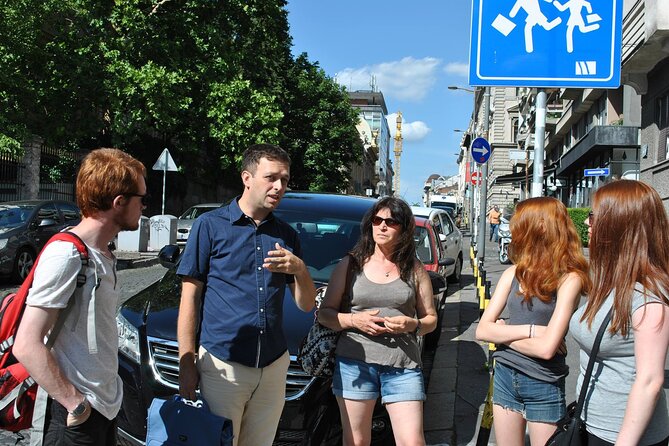
- French commentary with Nenad: a journalist-style approach, with anecdotes you will actually remember.
- Small group max of 8: more chances to ask questions and get answers that fit your interests.
- Dorćol practical Cyrillic practice: you will be prompted to look closely at signs and learn to read the alphabet basics.
- Kalemegdan Fortress panoramic payoff: Sava and Danube at your feet, with lots of context on Ottoman-era influence.
- Francophonie route: France-Serbia connections show up through monuments, embassy architecture, and even street names.
A French-language Belgrade tour that feels like conversation
Belgrade can be confusing at first, especially if you do not know the layers of history that sit over the streets. This tour helps because it is built like a guided report, with Nenad acting as your narrator. Expect history plus current life in Serbia, delivered in French, with journalist-style stories you can use to place what you see.
The pacing is also a big deal. With a group capped at 8, you avoid the “herded along” feeling. You get time at key stops, and the guide can tailor answers when a question pops up.
And yes, the focus on Francophonie is real, not decorative. You will see how French culture, language, and symbols show up in Belgrade through specific locations, not just a vague theme.
More of Belgrade done at street level:
- Belgrade: 3-Hour Small Group Walking Tour★ 5.0 · 180 reviews
- Half-Day Sightseeing and Walking Tour of Belgrade City★ 5.0 · 37 reviews
- Belgrade Private Walking Tour with a Local★ 5.0 · 19 reviews
Republic Square to the Prince Michel area: where the city’s main story begins
You start at Trg Republike, right by Republic Square. This is Belgrade’s classic launch pad, where the city’s formal identity shows up fast. From there you walk past the monument of Prince Michel, the National Theater, and the National Museum.
This section matters because it sets the tone. You get a framework for what you will later see in the fortress and older quarters. Think of it as your timeline on the move, so when the tour shifts into more hidden, older, and more complicated areas, you already know what the city is trying to say about itself.
The stop timing is short, but it is not shallow. Even at this early stage, the goal is to give you context, so you do not just collect buildings. You start learning how the city organizes memory, pride, and identity in stone.
Skadarlija and the French street links you can actually follow
Next, the walk turns toward the bohemian energy of Skadarlija. The tour connects this with a very specific clue: la rue de France, and nearby la rue Skadarska. Skadarska is associated with a 19th-century bohemian district, often called the Montmartre of Belgrade.
What I find practical here is the way it turns street names into navigation. If you want to explore on your own later, these are the kinds of anchors that help you find your way. You also learn a neat detail that makes the place feel less generic: rue Skadarska is described as the only street twinned with Montmartre.
This is also where the tour starts feeling more personal. The journalist anecdotes help you connect the neighborhood’s vibe to the story behind it, instead of treating it like a photo-op district.
Dorćol: old Belgrade, one mosque, and a Cyrillic reading moment
Then comes Dorćol, described as the epicenter of old Belgrade. This is where the tour earns its “Belgrade underside” label. You do not just skim the exterior of the district. You pause on details that help you understand what it meant historically and what it looks like now.
A key stop here is the only mosque in town. The guide asks you to pay special attention to the plates and signs, and it is one of the more useful parts of the whole experience. You get the chance to learn to read the Cyrillic alphabet during the walk, not in a classroom.
If you are the type who worries about language barriers, this is your fix. You will not magically read everything, but you will start recognizing letters and patterns. That turns future wandering into something more confident and less guesswork.
Ruzica Church in the citadel: from gunpowder to military church
From Dorćol, you move toward the citadel area, where the Church of Ruzica is a standout. The tour frames it with a strong timeline: it was once a gunpowder warehouse, then transformed into a military church between 1867 and 1869.
That transformation is what makes this stop click. It is not just a pretty church you pass through. It is a building with a job, and the job changed as the area’s military and political role changed. You get an object lesson in how Belgrade’s past keeps resurfacing in the present.
Short stop times can sometimes be a downside, but in this case the lesson is clear. You focus on one building and one story, so you leave with a mental image instead of a blur.
Worth putting on the shortlist while you plan Belgrade:
Kalemegdan Park and the fortress views over the Sava and Danube
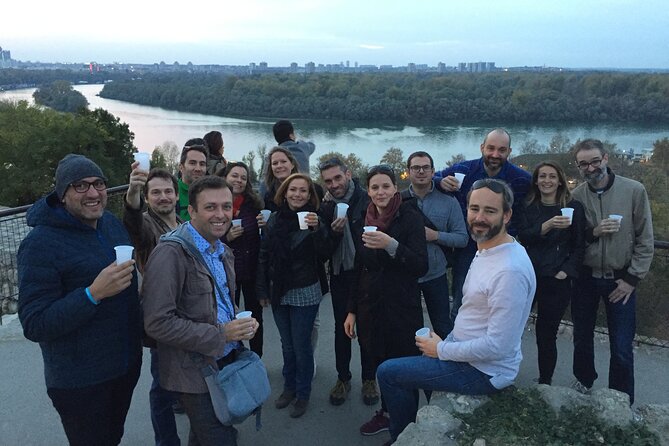
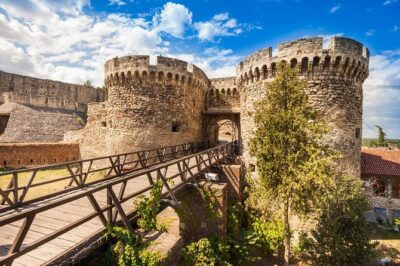
The walk’s biggest visual payoff is the fortress and Kalemegdan Park. From here you get the panoramic view of the confluence of the Sava and the Danube. If you have only seen Belgrade from the road, this is where the city’s geography makes sense.
The tour also gives a lot of information connected to the Ottoman era in Serbia and how that influence shaped Serbian culture. I like this because it is not only about dates. It is about why the city looks the way it does, and how outside powers and local life overlap.
This section is also a good reality check on how Belgrade’s history works. You are looking at a military and strategic landscape, then hearing how that mattered culturally. The view helps the story stick, because it gives your brain a spatial reference.
Practical tip: this is the part where you want to be mentally ready for a few stairs and uneven ground. Even if the tour timing feels manageable on paper, fortress terrain can slow you down a bit.
Monument of Gratitude to France: friendship stories since the Great War
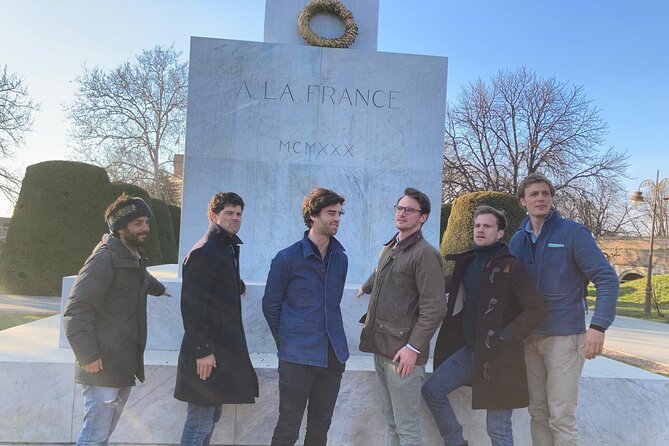
Before ending, the tour visits the Monument of Gratitude to France. This stop ties the route theme together in a clear way, with stories about Franco-Serbian friendship since the Great War.
What I like about ending with this kind of memorial is the emotional reset it gives. After seeing fortifications, old quarters, and the daily texture of different neighborhoods, the monument forces you to reflect on the human side of the story. It also helps you answer the question you might be asking while walking: why does France show up here so often?
If you like tours that go beyond “point and shoot,” this stop is exactly that. It is short, but it gives the theme a concrete shape you can remember.
The French Embassy building and King Peter I street stops
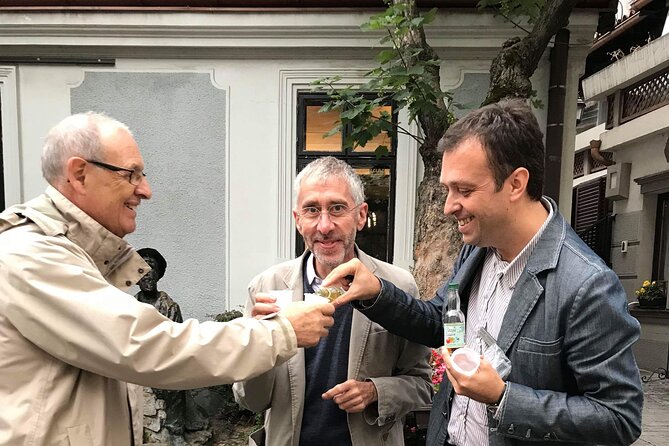
As you wind toward the end, you pass the French Embassy in Serbia and hear anecdotes tied to the building. You also get a quick architectural framing: the style is described as typical of the interwar period, nourished by monumental classicism, with refinement in the sculptures.
This is useful even if you are not an architecture fan. Knowing the period helps you read the building as something with a purpose and a message, not just a landmark behind a gate.
Then you end the walk near Kneza Mihaila 49, at the crossroads of Kneza Mihaila and Kralja Petra streets. On the way, you pass King Peter I of Serbia street, connected to a French-speaking king. The route also notes nearby places like the oldest restaurant in Belgrade and Princess Ljubica’s mansion.
This is a smart way to finish, because it puts you in a central area you can keep using. You come out near a lively core where it is easy to keep exploring with no big commute.
Price and value for a 3.5-hour French guide
At $43.94 per person for about 3 hours 30 minutes, this is priced like a proper guided walking tour, not a budget group shuffle. The value comes from three things you feel during the walk.
First, you get French narration for the full route. If you want Belgrade in French, that narrows the options in a way you will appreciate fast.
Second, the small group size, up to 8 people, changes the experience. You can ask questions and get answers that are not watered down. That is hard to replicate with larger groups.
Third, the itinerary includes multiple stops that are marked as free of admission tickets, including the big city landmarks, the citadel church area, the fortress park, and the France-focused memorial. When the paid admissions stay near zero, the guide fee becomes the main cost, and that is usually what you want from a walking tour.
So if you are deciding between self-guided wandering and a guide, this one wins if you want structure and story, especially in French.
Who this tour suits best, and who should skip it
I think this tour is a strong fit if you:
- want Belgrade context in French
- enjoy history told through street-level details
- like small groups where questions are welcome
- care about Cyrillic so you feel more confident moving around after
You might want to skip it if:
- you dislike walking long routes through hilly fortress terrain
- you want a mostly museum-heavy day instead of neighborhood walking
- French is not your working language and you are not comfortable with guided French commentary
What to expect from Nenad’s journalist-style guide method
Nenad is described as an experienced and effective guide who mixes history, Serbian culture, and current life in Serbia. The journalist angle shows up in the way he strings anecdotes to what you see, not as random stories.
The best part is that the tour aims to show you places you might not find alone. That matters in Belgrade, where some of the most interesting parts are not always the most obvious from a map. The goal is not just to say where things are, it is to explain why they matter and what to look for while you are standing there.
Also, he is reported as very attentive, including answering lots of questions. If you like interactive tours, you are likely to enjoy this style.
Should you book this French walking tour of Belgrade?
Book it if you want a French-guided route that makes Belgrade feel readable, especially through the fortress and older quarters. The combination of Francophonie landmarks, Dorćol Cyrillic help, and the panoramic fortress views gives you a day’s worth of meaning in one guided morning-to-afternoon block.
Skip it if you are only chasing quick photos and you do not care about language, context, or explanations. Also, if you have limited walking tolerance, you will want to plan carefully for citadel terrain.
If you are unsure, the deciding factor is language and pace. This tour is built for people who want to hear Belgrade explained in French, at a comfortable small-group tempo.
FAQ
What language is the tour in?
The tour is offered in French, with a French-speaking journalist guiding you through Belgrade.
How long is the Belgrade Walking Tour in French?
The tour lasts about 3 hours 30 minutes.
How much does the tour cost?
The price is $43.94 per person.
How big is the group?
The group size is capped at a maximum of 8 travelers.
Where do we meet and where does the tour end?
You start at Trg Republike 3, Beograd, Serbia, and you end at Kneza Mihaila 49, Beograd 11000, Serbia, at the crossroads of Kneza Mihaila and Kralja Petra streets.
Is a mobile ticket used?
Yes, the tour uses a mobile ticket.
Are there admission tickets to pay for the stops?
The stops listed in the tour are marked as free of admission tickets.
What is the cancellation window?
Free cancellation is available up to 24 hours in advance of the experience start time for a full refund.
Newly written up in Belgrade
- Private Belgrade Street Art Tour
★ 5.0 · 1 review - The best of Novi Sad walking tour
★ 5.0 · 1 review - Tara National Park, Mokra Gora and Zlatibor
★ 5.0 · 1 review - Discover Belgrade’s most Photogenic Spots with a Local
★ 5.0 · 1 review - Zasavica Bike Tour
★ 5.0 · 1 review - Private Serbian Food Cooking Experience in Belgrade with Meal
★ 5.0 · 1 review - Topola: Royal Dynasty Half Day Tour from Belgrade
★ 5.0 · 1 review
Walking Tours, compared.
Walking Tour city center and Petrovaradin Fortress
Read our review →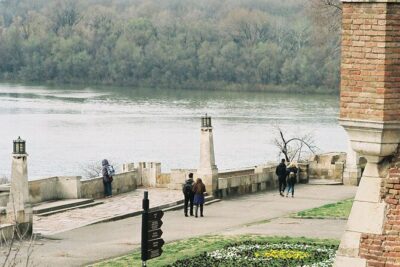
Half-Day Sightseeing and Walking Tour of Belgrade City
Read our review →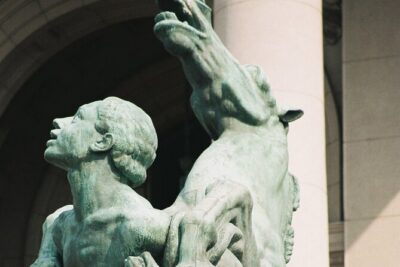
More Serbia tours of this kind