Reviewed · TOURS
Small Group Tour; Belgrade to Tirana 5 Balkan Countries in 8 Days
Five countries in eight days is a sprint. This is a Belgrade to Tirana small-group route that strings together major Balkan capitals and contrasts, from Belgrade Fortress viewpoints to Sarajevo’s Ottoman and Austro-Hungarian street layers. What I like most is the built-in mix of big landmarks and human stories, and I also love the food angle, especially the stop at the Mrizi i Zanave slow-food farm.
The main tradeoff is pace. There is a lot of road time, plus uneven walking in places like Sarajevo, so comfortable shoes and a flexible attitude matter more than you think.
In This Review
- Key highlights worth centering your trip
- Belgrade to Tirana: Why this Balkan route works
- Day 1 in Belgrade Fortress and Kalemegdan Park: get your bearings fast
- Into Bosnia: Zvornik pause and Sarajevo’s street level war story
- Mostar day: Old Bazaar wandering and the bridge that defines the skyline
- Montenegro UNESCO time: Kotor’s maze of old streets and Saint Luke’s church
- Budva and Sveti Stefan: beach-town contrast and quick coastline photos
- Shkoder and Rozafa Castle: lake viewpoints and Venetian influence
- Mrizi i Zanave: the slow-food farm break that makes the sprint worth it
- Kosovo stops around Prizren and the mosque-and-fortress combo
- Gjakova, Decan, and Rahovec: bazaar, frescoes, and wine country timing
- Kruja in Albania: the resistance town and its best shopping lane
- Tirana with a local companion: byrek, coffee, markets, and Bunk’Art 2
- Price and logistics: what $2,754.29 really buys
- Who should book this Belgrade to Tirana tour
- Should you book? My decision rule
- FAQ
- How long is the tour, and what are the start and end points?
- What is the group size?
- Is hotel pickup included?
- What time does the tour start on the first day?
- What is included in the price?
- Are site entry tickets included?
- Are lunch and drinks included?
- Is a single room available?
- What happens on the Tirana day?
- Are any UNESCO sites visited?
Key highlights worth centering your trip
- Small group size (max 10), which helps you move efficiently and get real guidance
- Belgrade’s fortress and river views as a strong first-day orientation
- Sarajevo war memory walk tied to specific places like Latin Bridge
- UNESCO time in Kotor and Mostar, with real wandering instead of quick photo stops
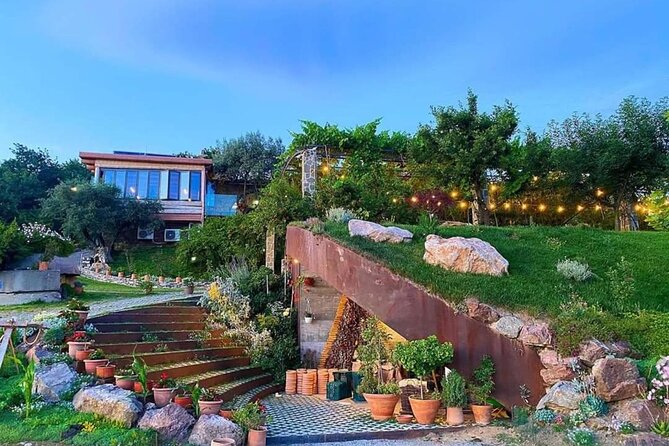
- Slow-food farm visit at Mrizi i Zanave, including a traditional lunch option and local product buying
Belgrade to Tirana: Why this Balkan route works
This tour is built for people who like variety and hate decision fatigue. One day you’re on fortress walls above two rivers. The next you’re in stone alleys shaped by empire trade routes. Then you hit UNESCO old towns, monastery frescoes, and a viticulture valley before ending in Tirana with a food-focused walk.
It’s also a smart “triangle” of styles. You get history-heavy cities, scenic stops that are great for photos, and at least two moments designed to slow you down: the agrotourism farm day and the Tirana culinary day with a local companion.
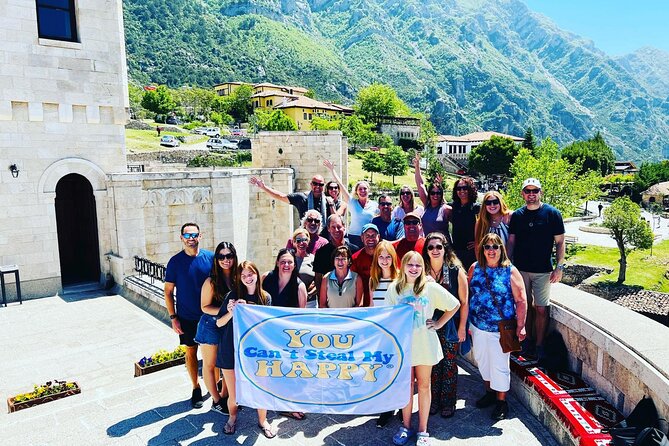
The small-group cap of 10 matters. You’ll feel the difference when the van is not packed, and when your guide can actually steer the pacing. Guides referenced by name in prior customer notes, like Juli, Ana, and Taulant, are part of why the trip keeps moving without feeling chaotic.
If this one is full, these cover much the same ground in Belgrade:
- From Belgrade: Novi Sad & Sremski Karlovci Full-Day Tour★ 4.7 · 1,068 reviews
- From Belgrade: Gems of Eastern Serbia Tour★ 5.0 · 427 reviews
- Northern Serbia: Sremski Karlovci and Novi Sad Full-Day Tour from Belgrade★ 5.0 · 425 reviews
Day 1 in Belgrade Fortress and Kalemegdan Park: get your bearings fast
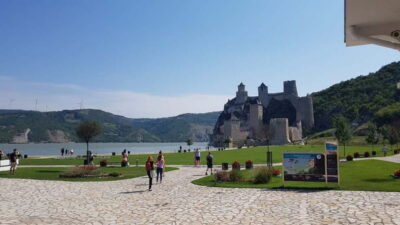
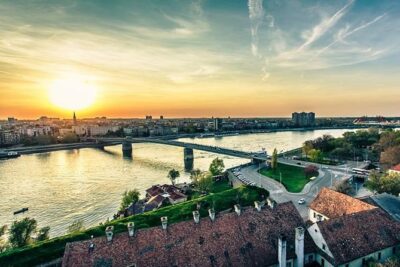
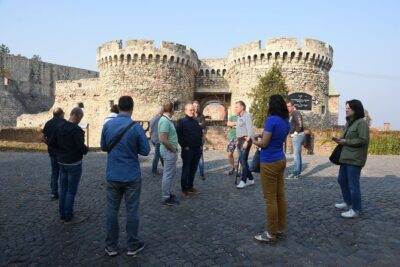
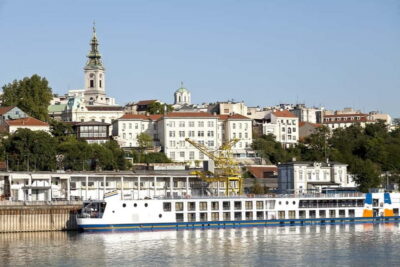
You start with a hotel pickup in Belgrade and begin at Belgrade Fortress and Kalemegdan Park. The setting is the first clue that this trip will be visual. The fortress sits at the confluence of the Danube and Sava, so even without reading a single sign, you get why empires fought over this spot.
From there, you walk into the Upper Town and see the Pobednik monument (dating to 1913) before drifting through the big green spaces of Kalemegdan. After that, the route continues through Knez Mihailova, Belgrade’s social hub, and ends near Republic Square.
Why this matters: the fortress and park give you a “map in your head.” By the time you leave Belgrade behind, you’re already understanding the city’s position, geography, and scale. That makes the rest of the Balkan journey feel less like random stops and more like one connected region.
Practical note: this is a walking day, but the pace is reasonable and the admission tickets for key sights listed here are free.
Into Bosnia: Zvornik pause and Sarajevo’s street level war story
After Belgrade, you drive toward Zvornik along the Drina River. This is less about monuments and more about a breather. You get about an hour for lunch and free time, which is exactly what you want mid-journey. The Drina River shows up again and again across the region, and this stop helps you recognize it as more than a line on a map.
Then you reach Sarajevo, the city that feels like different worlds stacked together. Even the outline of the days signals that you’ll be walking uneven terrain and seeing war damage reminders. Sarajevo’s tour covers origins of the city and the medieval Bosnian Kingdom story, plus both Ottoman and Austro-Hungarian sections.
You’ll notice the physical scars. Bullet holes and cannon marks are described as reminders of the Yugoslav War, and that’s not just mood setting. It grounds the whole city history in lived experience.
The day continues with Latin Bridge, tied to the start of World War I. You’ll also hear why the bridge’s name connects it to the Latin quarter during Ottoman times. If you like history that points to a specific location you can stand on, this is one of the strongest “place to story” connections on the whole trip.
A small reality check: Sarajevo is a heavier day. The streets and ruins are not difficult for everyone, but if you get tired easily, plan to slow down during the free moments.
Mostar day: Old Bazaar wandering and the bridge that defines the skyline
After Sarajevo, the route continues toward Mostar. Mostar is one of those Balkan towns where the architecture does the talking. You’ll explore the Old Bazaar with its colorful streets and lively atmosphere. The description of commemorative stones around town, including the Don’t Forget messages, is a reminder that the city’s identity is intertwined with memory.
You also visit the Old Bridge area in the heart of town. Mostar’s old bridge is not just a photo stop. It’s a central landmark that ties the city’s two sides together and helps you understand why so many travelers remember Mostar as a “walkable” place rather than a check-the-box one.
What I like about this approach: you get both structured stops and real wandering time in the afternoon. That means you can choose your tempo, whether you want to linger in crafts, look for coffee breaks, or simply keep walking until the streets start to feel familiar.
Montenegro UNESCO time: Kotor’s maze of old streets and Saint Luke’s church
Next you move into Kotor, UNESCO-listed, with a guided walk through the old town’s tight street system. The streets can feel chaotic at first, but you’ll learn that the maze-like layout helped confuse intruders in earlier centuries. Today it creates a very specific Kotor vibe: you round a corner, then suddenly a church plaque or doorway dates you back centuries.
You visit Saint Luke’s church, described as meaningful to locals because it represents unity. That’s a nice detail. It moves the stop from “cool building” to “why people care.”
You also get time to explore the old town on your own. That’s important, because Kotor is one of the places where you benefit from unplanned discoveries, even on a schedule this tight.
Worth putting on the shortlist while you plan Belgrade:
Budva and Sveti Stefan: beach-town contrast and quick coastline photos
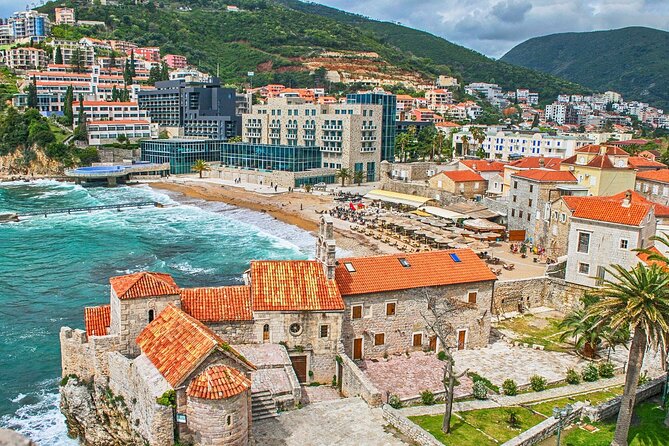
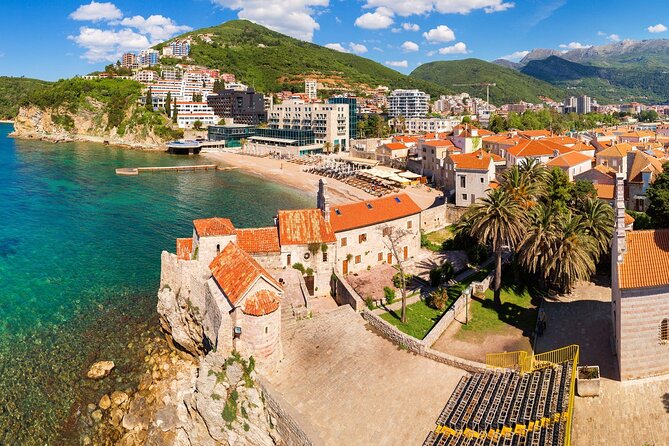
In Montenegro, Budva is split into old and new sections. You’ll see the old town center with sights like St. Ivan church and the small St. Mary church, plus medieval parts of the area you’ll walk through. The “new” side is more modern and commercial, which helps you understand why Montenegro can feel like two different destinations at once.
Then you stop near Sveti Stefan. It’s described as an old fishing town on a small island, now transformed into an exclusive residential resort. You can photograph the coastline view, but visiting the island itself is not possible anymore.
I treat this kind of stop as a useful reset. You get a strong visual anchor without needing a full half-day commitment.
Shkoder and Rozafa Castle: lake viewpoints and Venetian influence
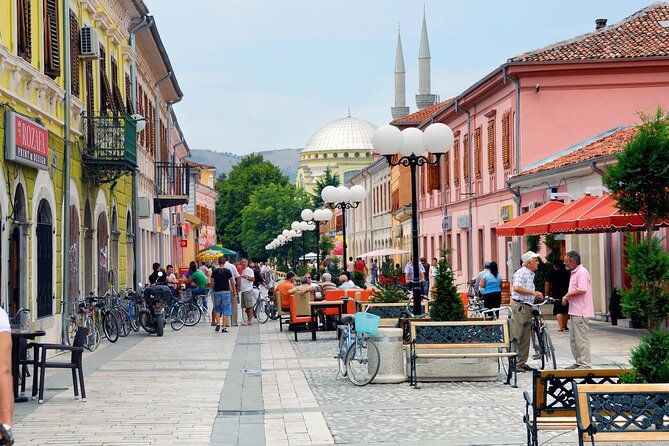
Crossing into Albania, the route heads to Shkoder, in north-western Albania and closely tied to the lake system in the area. Shkoder is framed as one of the oldest continuously inhabited towns in Albania, with history going back to at least the first millennium BCE.
You’ll visit Rozafa castle, noted for sweeping scenery over the lake and the rivers merging toward the Adriatic. You’ll also learn that the town’s architecture is influenced by Venice, which explains why some buildings feel different from what people expect in Albania.
If you travel in February, there’s mention of a carnival festival. The tour also notes that many Venetian masks are handmade in Shkoder. Even if you are not there in that season, it’s a good reminder that you’re seeing living craft, not just static old stone.
One practical point: castle views mean walking uphill. This isn’t all flat pavement days.
Mrizi i Zanave: the slow-food farm break that makes the sprint worth it
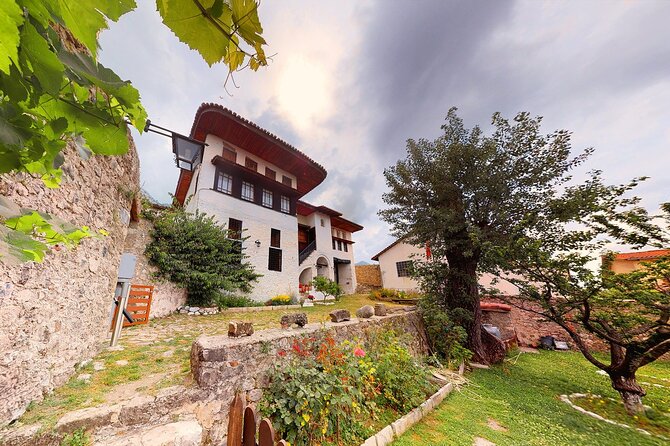
One of the most special parts of this overall Belgrade to Tirana route is the stop at Mrizi i Zanave – Restorant Agroturizëm. This is slow-food agro-tourism, and it’s designed as a change in pace, not just another sight.
You take a farm tour to understand how the business created jobs for more than 400 people in the surrounding area. You also learn that the farm collects, elaborates, and preserves regional bio fresh local products. There’s a practical “how they do it” angle here, not just a feel-good brochure.
Another interesting detail: the farm adapted some old communist buildings to serve as storage for locally made bio products. That kind of repurposing is common across the Balkans, and it’s one of those quiet stories you don’t get when you only stay in hotel-lobby travel mode.
You get free time for a traditional lunch and you can buy fresh produce products from the farm. Even if you don’t buy anything, this stop is still valuable because it gives you a real break from driving and a chance to taste regional food in context.
Kosovo stops around Prizren and the mosque-and-fortress combo
The route continues into Prizren, described as Kosovo’s cultural capital with religious tolerance and gastronomic delights. Prizren is also framed by nature and river crossings. The river runs through the old town and under multiple bridges, which makes it visually distinct fast.
You visit Sinan Pasha Mosque, noted for rich arabesque color and patterns. It’s short but meaningful, and it fits the day’s theme: each stop gives you a specific place to look at, not just a broad area.
Then you go up to Kalaja Fortress for a hilltop panorama of Prizren. Fortress viewpoints are where a fast route becomes memorable, because you can finally “zoom out” and understand the city’s layout.
Practical travel advice: after mosque and fortress, plan to pace yourself before more walking. This portion of the trip is not exhausting in a single hour way, but it can stack fatigue if you’re not mindful.
Gjakova, Decan, and Rahovec: bazaar, frescoes, and wine country timing
On the next day, you reach Gjakova and its oldest and largest bazaar in Kosovo. The bazaar was destroyed across the Balkan wars periods and rebuilt to its old state. This stop is a reminder that heritage in this region includes endurance, not just beauty.
You’ll have about an hour to enjoy a meal or browse. The bazaar is also tied to handmade crafts and traditional stores. If you like browsing for practical handmade souvenirs (not just magnets), this is one of the better segments for that.
From there, you go to the Monastery of Decan. It’s described as standing out with its white color. Orthodox monks still inhabit the monastery and make fresh organic food like cheeses. The UNESCO connection is also specific: the monastery became part of UNESCO in 2004 for its frescoes, which depict 14th-century life and the Palaeologan renaissance.
Rahovec follows, described as the viticulture capital of the Prizren area. There’s evidence of grape cultivation going back to Illyrian times, and vineyards sit at altitudes from about 350 to 520 meters. There’s also a wine festival in September.
Why this trio works: it gives you three ways to understand a region’s identity. Commerce and crafts in Gjakova. Art and religious life at Decan. And agriculture and seasonal celebration in Rahovec.
Kruja in Albania: the resistance town and its best shopping lane
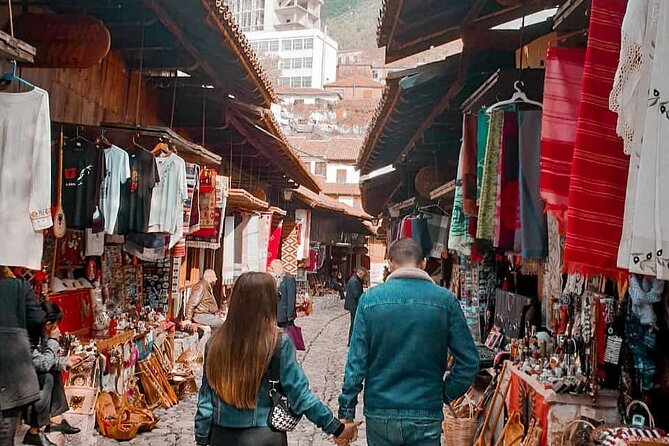
Then you head to Kruja, a symbol of Albanian resistance against Ottoman expansion during the XV century. Kruja is perched in rocky mountainous terrain around 560 meters above sea level, on the slopes of Sarisalltik Mountain. You feel that elevation in the way the town is built and in the way the streets climb.
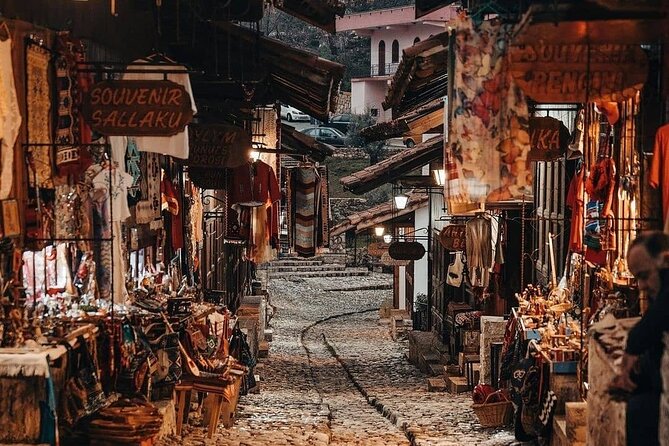
You visit Kruja’s Medieval Old Bazaar, described as one of the biggest and oldest bazaars in the Balkans. It’s a strong place to shop for souvenirs, from typical items to more unique handmade crafts like carpets and jewelry. If you want Albania to feel tactile, not just theoretical, this is where it happens.
Next comes Kruja Castle. It’s described as built in the 5th century A.D. and positioned on a hill for defense. Your tour leader takes you through hidden paths used by locals to leave the castle without being noticed during periods when enemies surrounded it.
You then have free time in Kruja for a traditional lunch and extra shopping or sightseeing. This is the most balanced “history plus free time” setup of the Albania portion.
Tirana with a local companion: byrek, coffee, markets, and Bunk’Art 2
Your last day is Tirana, and it’s not structured like a checklist tour. It is built around food and everyday city life, with a local companion joining you.
You start with a local introduction and then move to a small place locals know how to find. You try byrek and get a breakfast-style start. Byrek is described as dough with fillings like cheese, meat, or spinach.
Next is Çam bazaar, tied to the Çam community. You can buy goods ranging from clothes to kitchen equipment and bargain with sellers. This is where the tour tries to cut through generic tourist shopping.
After that, you meet your local companion again to skip tourist traps and focus on culinary highlights in local neighborhoods. You can savor a traditional dessert at an authentic pastry. Then you walk street markets where vendors sell fresh produce. The coffee culture segment is one of the most practical pieces of the day, because it ends with you tasting traditional Albanian coffee at a cozy café.
Then comes Pazari i Ri, with the so-called Bicycle bazaar selling everything from second-hand clothes to furniture. The day finishes with New Bazaar and a traditional Albanian lunch: qofte grilled and served with freshly baked bread. Vegetarians get freshly baked bread with Albanian Gjize (cottage cheese). You’ll also taste Albanian raki.
The final stop is BUNK’ART 2, a museum in a former nuclear bunker built for Enver Hoxha and close party members during the Cold War. It reopened to the public as a museum project in 2014, with a video museum exhibition about the communist army and daily life under the regime.
If you like history but want it presented in a way that you can feel, BUNK’ART 2 is a strong closing note.
Price and logistics: what $2,754.29 really buys
At $2,754.29 per person, this is not a budget throwaway. So what justifies it?
First, you get accommodation and breakfast for all overnights, plus transport provided by the company and a professional tour guide throughout. Second, the inclusions explicitly cover entry tickets for the sites that are visited, plus tourist taxes, road taxes, and petrol. Third, you have hotel pickup in Belgrade and hotel drop-off in Tirana.
The route is also tightly planned for a maximum group size of 10. That can be a value play compared to private touring across multiple borders and UNESCO cities, where costs can jump fast.
The main thing to budget separately is food beyond breakfast. Lunch, drinks, and snacks are not included. So if you eat like a normal human (not a salad-only robot), plan for daily lunch spending.
Also note: prices are calculated on double or twin room occupancy, and a single room costs 30 Euros extra per night per person. If you’re traveling solo, that changes the real total.
Who should book this Belgrade to Tirana tour
This tour makes sense if you:
- want 5 Balkan countries in 8 days without planning borders and timing yourself
- like history tied to real locations, including war-era reminders in Sarajevo
- enjoy food as part of culture, not just a side quest, especially the farm stop and the Tirana culinary walk
- don’t mind driving days and want the guide to handle the route
You might skip it if you:
- need lots of downtime every day
- hate uneven walking terrain
- prefer fewer cities and deeper stays in just one or two places
Should you book? My decision rule
I’d book this tour if your dream Balkan trip includes both big-city context and small moments you can taste and see, like Mrizi i Zanave’s slow-food approach and Tirana’s market-and-coffee day. The structure is strong, and the small-group size helps it feel guided rather than rushed.
I would pause if you’re the type who gets cranky from long van stretches, because the route is clearly designed for momentum. If you can handle that pace and you’re excited by a mix of UNESCO old towns, fortress views, monasteries, and bazaar life, this is a good value buy for the number of countries and included logistics you get.
FAQ
How long is the tour, and what are the start and end points?
The tour runs for 8 days approximately. It starts in Belgrade, Serbia, and ends in Tirana, Albania.
What is the group size?
The maximum group size is 10 travelers.
Is hotel pickup included?
Yes. The tour includes pickup at your hotel in Belgrade at the start, and it also includes hotel drop-off in Tirana.
What time does the tour start on the first day?
The start time is 8:00 am.
What is included in the price?
The tour includes accommodation and breakfast for all overnights, a professional tour guide, transport, entry tickets for the sites that will be visited, tourist taxes, road taxes, petrol, and breakfast (7).
Are site entry tickets included?
Yes. Entry tickets for the sites that will be visited are included, and some specific admissions are listed as included on certain stops.
Are lunch and drinks included?
No. Lunch, drinks, and snacks are not included.
Is a single room available?
Yes. Single room occupancy is possible for a surcharge of 30 Euros extra per night per person.
What happens on the Tirana day?
You travel with a local companion for a culinary focused experience, including byrek and Albanian coffee, market stops, a traditional lunch with qofte (and vegetarian gjize option), raki tasting, and a visit to BUNK’ART 2 (ticket included).
Are any UNESCO sites visited?
Yes. Kotor is listed as UNESCO world heritage in the plan, and Mostar is also described as a UNESCO site. Decan is also noted as UNESCO-listed.
Newly written up in Belgrade
- The best of Novi Sad walking tour
★ 5.0 · 1 review - Tara National Park, Mokra Gora and Zlatibor
★ 5.0 · 1 review - Private Belgrade Street Art Tour
★ 5.0 · 1 review - Zasavica Bike Tour
★ 5.0 · 1 review - Discover Belgrade’s most Photogenic Spots with a Local
★ 5.0 · 1 review - Topola: Royal Dynasty Half Day Tour from Belgrade
★ 5.0 · 1 review - Private Serbian Food Cooking Experience in Belgrade with Meal
★ 5.0 · 1 review
Tours, compared.
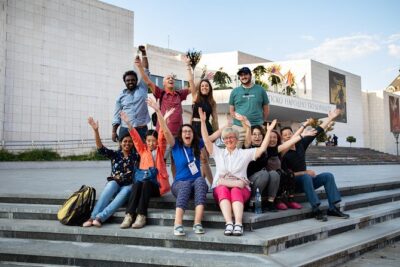
Sremski Karlovci and Novi Sad Full-Day Tour from Belgrade
Read our review →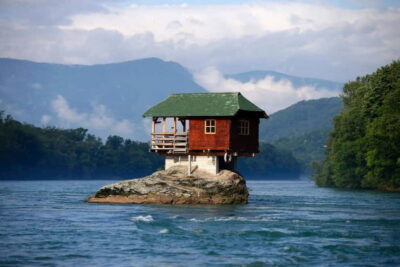
Western Serbia 1-Day Tour of the Key Sites from Belgrade
Read our review →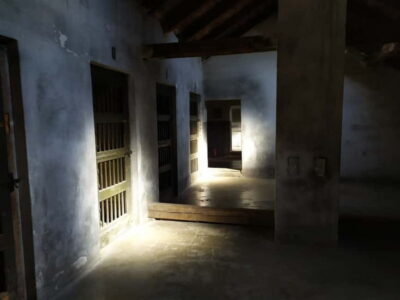
Day Tour to Nis, Serbia with tickets and pick-up
Read our review →