Reviewed · TOURS
Belgrade Big Tour: Top Attractions and Belgrade Neighborhoods
Belgrade in one day, minus the guesswork. This 7 to 8 hour guided circuit mixes hilltop views, Danube-side neighborhoods, postwar modern architecture, and the giant Church of Saint Sava, with hotel pickup and an English speaking guide.
I like that Saint Sava Temple admission is included, so you can spend time looking at the building instead of figuring out tickets. I also like the hands-on walking stops in places like Kalemegdan and Old Zemun, where the guide points out gates, churches, and viewpoints you would likely skip.
One possible drawback is the moderate walking and uneven cobblestones, plus some hill climbs. If you are not into steps and uneven ground, plan on taking your time and wearing supportive shoes.
In This Review
- Key things I’d plan around
- A Day That Covers Four Belgrade Styles in 7 to 8 Hours
- Kalemegdan Park and Belgrade Fortress: Gates, Churches, and the Sava-Danube Moment
- Pobednik and the Upper Town Walk: Sculptures, Clocks, and Fortress-to-Promenade Flow
- New Belgrade Architecture: From Socialist-Modern Big Bets to the Sava Center
- Zemun: Central-European Streets, Danube Fish, and the Old Town Feel
- Gardos Hill and the Millenary Monument: The View That Ties Everything Together
- Zemun Main City Square: Use Free Time Like a Local
- Dedinje, Topčider Hill, and the Red Star Rivalry Vibe
- Church of Saint Sava: The Dome, the Cross, and What Makes It Big
- Republic Square to Terazije: Royal Palaces, National Institutions, and Parliament Photos
- Price and Logistics: Is $72.59 Good Value?
- Who This Tour Fits Best, and Who Should Skip It
- Should You Book This Belgrade Big Tour?
Key things I’d plan around
- Fortress first, then the river views from Kalemegdan, including Orthodox sites inside the complex
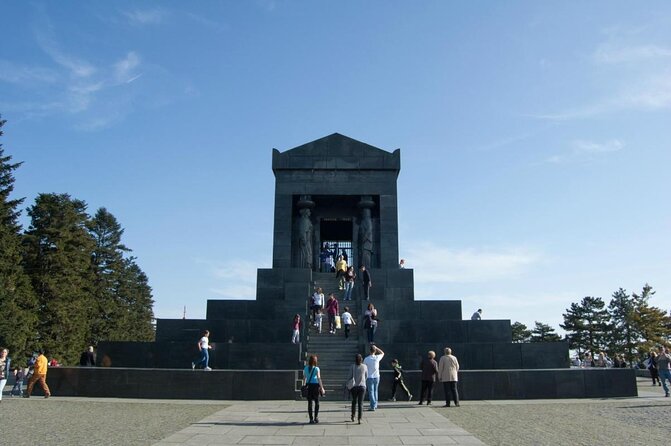
- Ivan Meštrović landmarks, from Pobednik to the Monument of Gratitude to France
- Zemun’s Danube promenade and cobblestone hill, including St. Nicholas Church and Gardos Hill
- New Belgrade architecture in context, from the Palace of Federation area to Sava Center
- Saint Sava Cathedral included, plus what to look for when you’re there
- Hotel pickup and small groups, with a maximum of 16 people on board
A Day That Covers Four Belgrade Styles in 7 to 8 Hours
This is the kind of tour that works when you have limited time and you want your Belgrade to make sense fast. You start with the city core at Kalemegdan, then move through the fortress viewpoints and the Sava side. After that, you shift gears to Zemun, which feels more Central European than what you might expect in Belgrade. Then you jump to New Belgrade for the socialist era and modern showpieces, finish with Dedinje mansions and football stadium vibes, and cap it with Saint Sava.
I also like how the pacing is built around travel time. You get enough “get off, look, walk a bit” blocks to learn the place, but you are not stuck walking the whole day in one continuous slog. That matters because the surfaces vary a lot, from smooth promenade paths to cobblestones on Gardos Hill.
If your goal is a quick orientation, this tour is a solid fit. If your goal is slow museum time and deep neighborhoods only, you may want a lighter plan instead.
If this one is full, these cover much the same ground in Belgrade:
- From Belgrade: Novi Sad & Sremski Karlovci Full-Day Tour★ 4.7 · 1,068 reviews
- From Belgrade: Gems of Eastern Serbia Tour★ 5.0 · 427 reviews
- Northern Serbia: Sremski Karlovci and Novi Sad Full-Day Tour from Belgrade★ 5.0 · 425 reviews
Kalemegdan Park and Belgrade Fortress: Gates, Churches, and the Sava-Danube Moment
Your day begins with hotel pickup in a van or minibus, and the first major stop is Kalemegdan Park and the Belgrade Fortress. This is the right first move. Kalemegdan is the city’s old green core, and the fortress gives you a visual history lesson in layers: Roman traces, medieval walls, and later fortification lines.
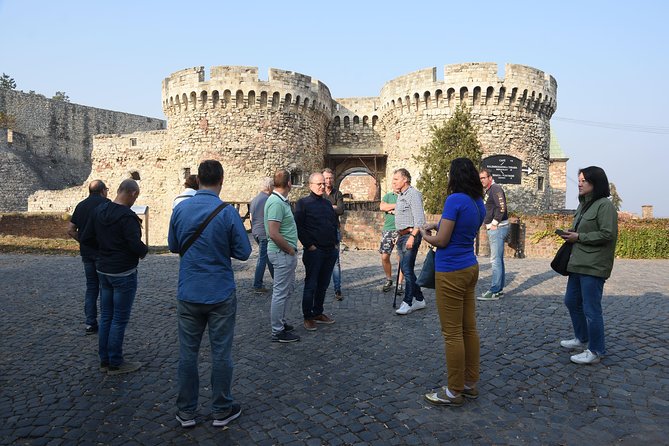
From Leopold’s Gate, you pass the remains of the Roman castrum of Singidunum. The medieval defense structures are the next layer, with stops at gates and towers like Zindan Gate, Despot’s Gate, and Jakšića Tower, dating to the 15th century. You do not just see them, you get help tying them to why this area mattered for controlling river routes.
Inside the fortress, you visit two Orthodox churches, which is a big part of the value for me. The Chapel of St Petka and Ružica Church (Virgin Mary Church) show you Belgrade’s spiritual architecture close up, not just from a distance.
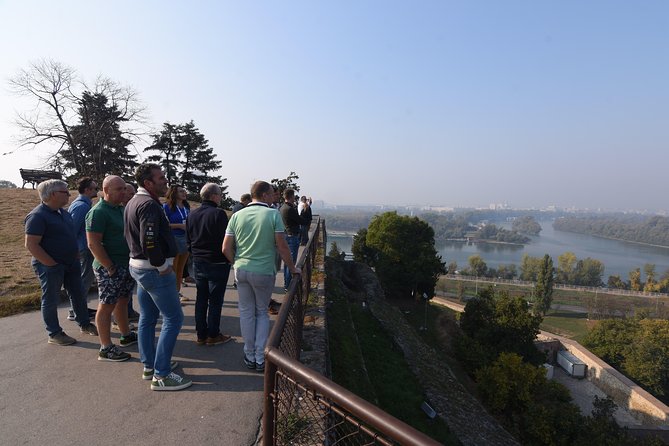
The payoff is the upper town view over the confluence of the Sava and Danube. Even if you think you already know what a “river view” looks like, this one feels special because you see how the geography shaped the city’s power and identity.
Practical note: this stop is often where the day starts with stairs and uneven ground. If you are traveling with mobility limits, bring up the walking level before you go.
Pobednik and the Upper Town Walk: Sculptures, Clocks, and Fortress-to-Promenade Flow
Next you move through the upper town area around Kalemegdan. Here you start seeing why Belgrade has so many “landmark by landmark” moments. The Pobednik monument, created by Ivan Meštrović, is one of those instantly recognizable pieces that many visitors miss if they rush.
As you walk, you also pass smaller-but-informative stops such as the Roman well, the King’s gate, and the Sava promenade. There are also Ottoman-era references in the mix, including the Damat Ali Pasha Tomb, plus more fortress-era features like Clock Gate and the Clock Tower.
A neat part of the experience is the way the route connects the fortress back to the city-side promenade feel. You go past the Military Museum area and through Istanbul’s gate, then you circle back toward Kalemegdan Park again before getting back into the vehicle.
If you like art and monuments tied to national storytelling, this section delivers. And if you have the right guide, it can be more than photos. People have praised guides by name here, like Aleksandar and Kostantin, for explaining what these markers meant to the people living around them.
New Belgrade Architecture: From Socialist-Modern Big Bets to the Sava Center
After the fortress-and-Danube section, the tour shifts to New Belgrade, and that change of scenery is a feature, not a bug. New Belgrade was built as a new part of the city after WWII and during the socialist regime, and the architecture reflects the era’s ambitions and style.
You pass by major sites tied to that period, including the Ex-Central Committee of the Communist Party, the Federal Executive Council area (also referred to as the Palace of Federation), and the Genex Tower, sometimes called the Western Gate of Belgrade. You also get the Sava Center in view, one of the big congress halls in the region.
One interesting detail you may hear while you’re there is that MoMA in New York devoted an exhibition called Toward a Concrete Utopia to New Belgrade architecture. Even if you are not an architecture nerd, this helps explain that the city’s postwar design is not only local, it has been interpreted internationally.
You’ll also hear how the area mixes brutalist-style forms with later business buildings from more recent decades. It is a different Belgrade face, less about medieval layers and more about state planning and modern identity.
As a fun, human detail near the end of this drive block, you pass the restaurant Novak, owned by Novak Đoković’s family, plus the Belgrade Arena. This is the city being itself, not just being historical.
Zemun: Central-European Streets, Danube Fish, and the Old Town Feel
Once you cross toward Zemun, Belgrade changes mood. Zemun’s old quarters have a Central European look, with cobblestone streets and an easygoing feel along the Danube River banks. This is exactly the kind of contrast that helps you understand Belgrade as a meeting point of cultures.
You start around Avijatičarski Trg, where you see a WWII heroes monument. The square is also framed by older structures like Zemun’s oldest elementary school building and the Air Force Ministry, described as a strong example of modernism in pre-war Yugoslav architecture.
Then you ride along Gospodska Street, where you can pick up a sense of the neighborhood’s “small city” identity. You may spot landmarks like the Post Office, Hotel Central, Town Museum, and the House with a Sundial.
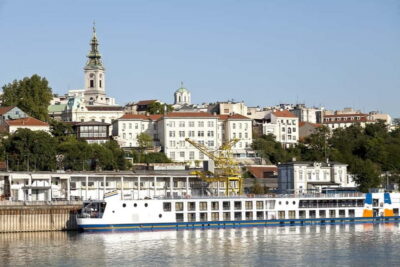
The tour switches to walking when you reach the Danube bank. On the Zemun Promenade, old plane trees create a shaded vibe, and the fish restaurant scene sits right along the water. You also pass the oldest Orthodox church of St. Nicholas, dating to the 17th century.
From here, you climb Gardos Hill, the heart of Old Zemun. The cobblestones and small houses create a strong Mediterranean to Middle European blending effect. Even if you love big city views, I think this is the stop you will remember as “the neighborhood you can actually imagine living in.”
Worth putting on the shortlist while you plan Belgrade:

Gardos Hill and the Millenary Monument: The View That Ties Everything Together
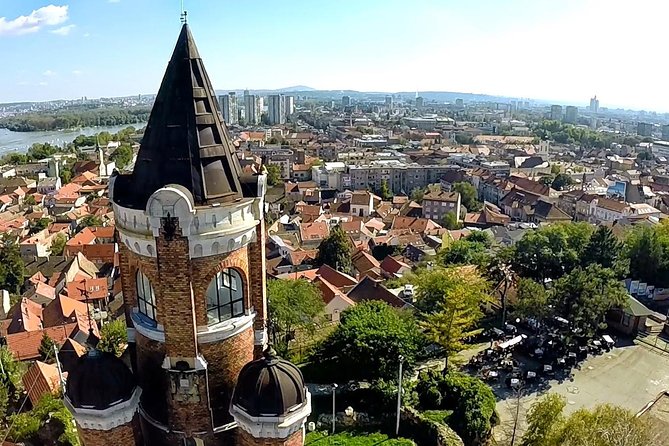
Gardos Hill is more than a climb. When you reach the top, you see the Zemun citadel remains alongside the Millenary Tower, Zemun’s central landmark.
The tower is described as a romantic construction in a mix of historical styles from the late 19th century, marking the southernmost point of the Austro-Hungarian Empire. That kind of detail matters because it shows why people built landmarks here. They were drawing borders with stone and skyline.
The best part is the view. From the tower you look down at Zemun Old Town, and you also get the bigger geography back into frame: the confluence of the two rivers and, across the water, the Belgrade Fortress. This is one of those moments where the earlier Kalemegdan section suddenly makes more sense.
One thing to plan for: the top may be windier and colder in the open. If you are visiting in shoulder season, bring a layer. If you hate stairs, this is not your worst enemy, but it is still a hill.
Zemun Main City Square: Use Free Time Like a Local
After you head down from Gardos Hill, you arrive at the Main City Square, where a daily market is located. The square is surrounded by older buildings, including the Bishop’s Office and the Roman Catholic Church of the Blessed Virgin from the 18th century.
This is your free time block, about 1 hour and 15 minutes, which is a great gift inside a tour that includes a lot of guided walking. Use it to reset your legs and get a real meal, not just a snack.
Here are practical options based on what the tour plan sets you up for:
- Sit somewhere with Danube views and try Danube fish
- Order burek, a famous local pastry
- Try chevapchici, small rolls of seasoned ground meat
My advice: pick one food thing and stick to it. If you try to sample everything, you will end up walking in circles around the square with a full stomach and sore feet.
If your guide is generous with pointers, ask where they would go for the most “Danube atmosphere” seat. Some guides have been singled out for being helpful on lunch planning, so it’s worth using that.
Dedinje, Topčider Hill, and the Red Star Rivalry Vibe
After the Zemun block, the tour heads across the Gazela Bridge toward Dedinje, Belgrade’s more luxurious residential area. The drive also includes Topčider Hill greenery and mansions set back from the road.
This segment often includes guide storytelling about what happened around these properties during the turbulent 20th century. That context helps you see why the architecture and layout feel the way they do, instead of only admiring expensive houses.
You’ll also see Rajko Mitić Stadium, home of Red Star Belgrade. If football matters to you at all, this is a strong cultural stop. Red Star is noted as the last club from Eastern or Southern Europe to win the prestigious Champions League, and you’ll also hear about Partizan Belgrade as the longtime rival, with its stadium across a small hill.
This portion is shorter than the fortress and Zemun sections, but it gives Belgrade personality. It reminds you the city is not only built from past monuments, it is also built from current life and pride.
Church of Saint Sava: The Dome, the Cross, and What Makes It Big
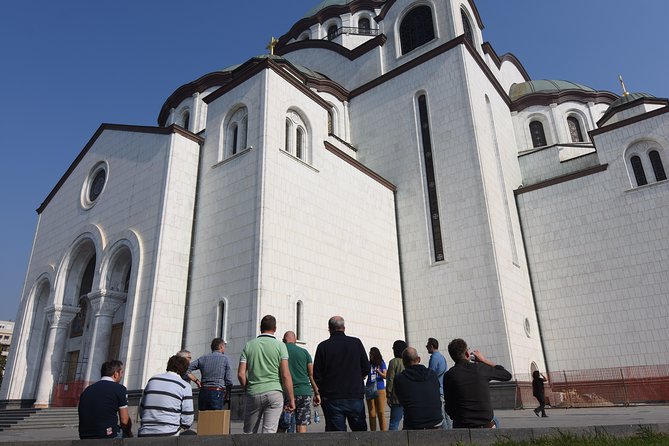
The highlight for many people on this route is the Church of Saint Sava in the Vračar area. It is one of Belgrade’s most prominent landmarks, and it is hard to miss once you start approaching because the enormous dome is visible from across the city.
What I like about this stop is that the tour gives you the building’s “why” before you start staring upward. Construction began in the 1930s on the site where occupying Ottoman forces burned the relics of St. Sava (1175 to 1236). The tour also frames St. Sava as founder and first archbishop of the independent Serbian Orthodox Church, and one of the major figures in Serbian history.
Architecturally, you’re told it is Serbian-Byzantine style, with 3,500 m² at ground level and another 1,500 m² in three galleries. At the highest point, the dome is 70 meters high, and the central gilded cross adds another 12 meters, giving the cathedral a total height of 82 meters.
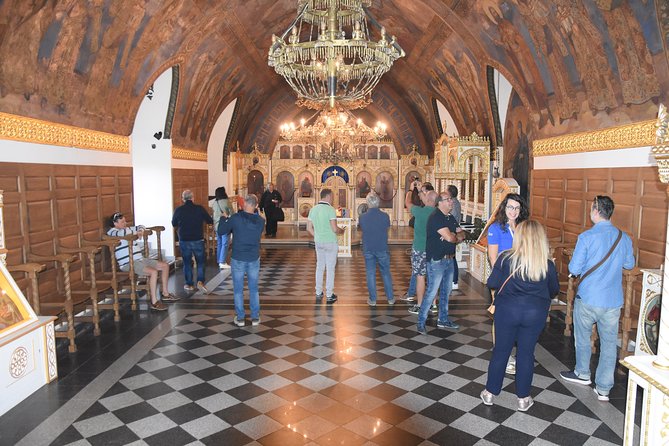
Admission fee is included in the tour price, so plan on giving yourself enough time inside to look at details, not just the size from outside.
A quick caution from real-world experience shared by some visitors: a few people have reported confusion over whether the temple fee was collected on-site. Since the tour includes the fee, you should still be ready to ask the guide what you need to pay, if anything, and keep an eye out for receipts if money changes hands.
Republic Square to Terazije: Royal Palaces, National Institutions, and Parliament Photos
After the cathedral, the tour turns into a “city power” walk-through using drives and short stops. You pass through areas like Slavija Square and then Nemanjina Street, where you can see state governmental institutions and pre-war architecture.
Then you reach Republic Square, described as the heart of the capital. You hear about key buildings surrounding the square, including the National Museum and the National Theatre and Opera buildings. You also get a short explanation of why Prince Mihailo matters in Serbia’s modern history.
From there, you continue toward Terazije Square, famous for a recognizable 19th-century white stone fountain and the Moskva Hotel. You also pass Nikola Pašić Square, which has a monument to the first Prime Minister of the Kingdom of Yugoslavia, and then you stop in front of the Parliament Building.
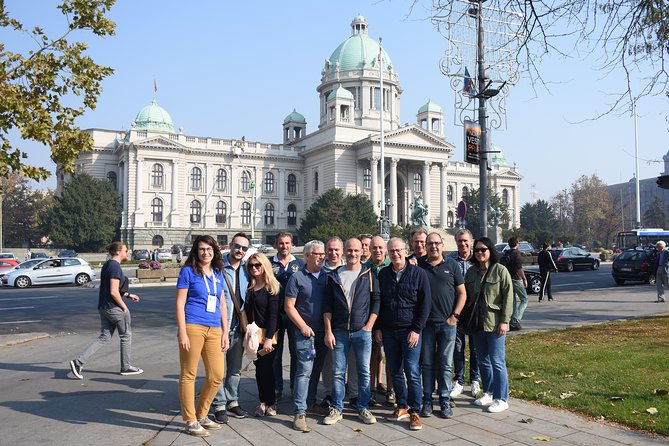
Your final photo stop is the House of the National Assembly of the Republic of Serbia. This is a great place to photograph the Old and New Royal Palaces and understand the stories of the two dynasties that ruled Serbia in the 19th and 20th centuries.
The tour ends there in the city center, and your guide typically gives suggestions for how to spend the rest of the afternoon.
Price and Logistics: Is $72.59 Good Value?
At $72.59 per person, the value comes from three things you actually feel during the day:
1) Hotel pickup and city transportation by air-conditioned van or minibus
2) A professional English-speaking guide who ties the stops together instead of only listing them
3) Saint Sava Temple admission included
That means you are paying for the “how to see Belgrade” part, not only the right buildings. For a first-time visit, that can be worth it because Belgrade spreads out a bit, and timing matters.
Logistics-wise, the tour starts at 9:30 am. Pickup is usually 15 to 30 minutes before departure for shared tours, and you get pickup details by email the day before, not before 6 pm. Pickup is possible from hotels, Airbnb, or pensions within 5 km of Republic Square. If your place is outside that radius, you need to contact the operator. Also, depending on pickup points and traffic, you might be asked to walk up to 7 to 8 minutes to the closest pickup stop.
One more practical thing: the tour involves moderate walking. Some visitors have flagged that getting in and out of higher vehicles can be tricky if you struggle with steps. Plan for it, and consider choosing private options if you need smoother vehicle access.
Who This Tour Fits Best, and Who Should Skip It
This tour fits you if:
- You are short on time and want a clear Belgrade orientation
- You like mixing eras, from Roman traces and medieval fortress walls to socialist modern architecture
- You enjoy guided storytelling while still getting real walking time in the best spots
It might not fit you if:
- You want mostly museums and long sits, because this is built for movement
- You need low walking and low steps, since Gardos Hill and fortress areas can be rough underfoot
- You really hate group pacing, because even when the vibe is relaxed, it is still timed to multiple stops
If you want to maximize satisfaction, pick a day with decent weather. One guide-led day can still work in rain, but the cobblestones in wet conditions are not fun.
Should You Book This Belgrade Big Tour?
I think this is an easy yes for most first-time Belgrade visitors. The reason is simple: you get a guided route that hits the city’s key “identity zones” in a single day, and you get temple admission handled so the cathedral visit stays smooth.
If you are the type who loves details, you will probably enjoy the fortress gate names and church stops, and you’ll appreciate how the Zemun segment turns into a neighborhood feel rather than another quick photo stop. Guides named in past experiences, like Aleksandar, Kostantin, Jelenca, Milita, Milan, and Dragana, have been praised for bringing history to life and keeping the day moving at a comfortable pace.
If you book, go in with the right mindset: this is a busy sampler, not a slow travel day. Bring good shoes, expect some hills, and use the Zemun free time to eat well instead of trying to squeeze in one more stop. If you do that, you will leave with a Belgrade that finally makes sense.
Newly written up in Belgrade
- Private Belgrade Street Art Tour
★ 5.0 · 1 review - The best of Novi Sad walking tour
★ 5.0 · 1 review - Tara National Park, Mokra Gora and Zlatibor
★ 5.0 · 1 review - Zasavica Bike Tour
★ 5.0 · 1 review - Discover Belgrade’s most Photogenic Spots with a Local
★ 5.0 · 1 review - Topola: Royal Dynasty Half Day Tour from Belgrade
★ 5.0 · 1 review - Private Serbian Food Cooking Experience in Belgrade with Meal
★ 5.0 · 1 review
Tours, compared.
Sremski Karlovci and Novi Sad Full-Day Tour from Belgrade
Read our review →
Western Serbia 1-Day Tour of the Key Sites from Belgrade
Read our review →
Day Tour to Nis, Serbia with tickets and pick-up
Read our review →