
Reviewed · SEGWAY & SCOOTER RIDES
E-Scooter Tour of Belgrade
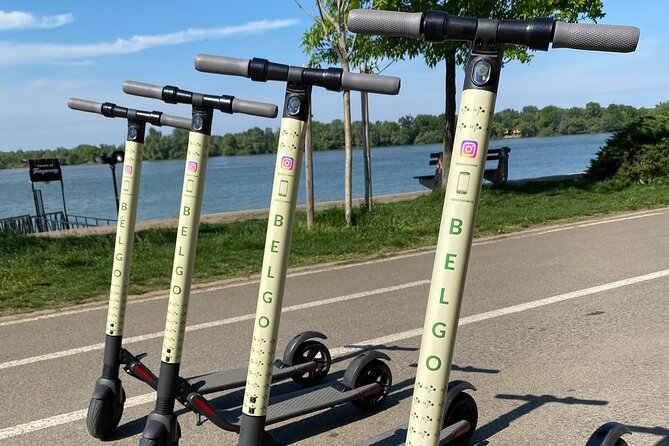
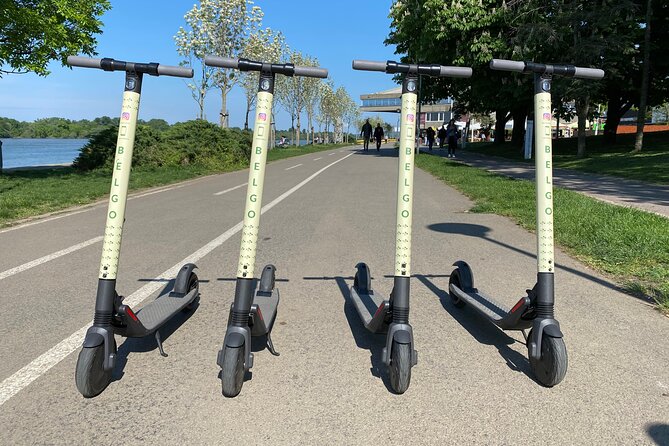
Glide into Belgrade fast, no fuss. I love the private feel and the chance to cover big sights in a tight window, and I love the quick safety tutorial that helps you ride confidently after a short briefing. One possible drawback to keep in mind: like any small guided service, last minute changes can happen, so build in a little schedule slack if you can.
You meet at Terazije 20, in the city center, and you end back where you started, which makes planning easy. The route strings together major landmarks such as the Temple of Saint Sava, plus historic streets and the fortress area, so you see Belgrade’s different faces without burning your whole day on transfers.
In This Review
- Key things I’d plan around before you go
- Why a Belgrade E-Scooter Tour Is a Smart Time Saver
- Meeting at Terazije, getting oriented, and feeling steady on the scooter
- The Assembly of the Republic and Pioneer Park, a quick center-of-city anchor
- Vračar Plateau and the Temple of Saint Sava, scale that hits you fast
- The city center municipality stop, why a “local” detour matters
- Dorcol, the neighborhood with stories in its street corners
- Knez Mihailova, a car-free main street right beside Terazije
- Belgrade Fortress, the city’s origin point in one big setting
- Pobednik, the landmark you recognize before you even know its story
- Price and what $59.99 is really buying you
- Who should book this scooter tour (and who should think twice)
- Should you book the E-Scooter Tour of Belgrade?
- FAQ
- What is the duration of the E-Scooter Tour of Belgrade?
- How much does the tour cost?
- Where does the tour start and end?
- What time does the tour start?
- Is the tour private?
- What language is the tour offered in?
- How do I get my ticket?
- Is there a cancellation option if plans change?
- Can most people participate even if they are not experienced with scooters?
Key things I’d plan around before you go
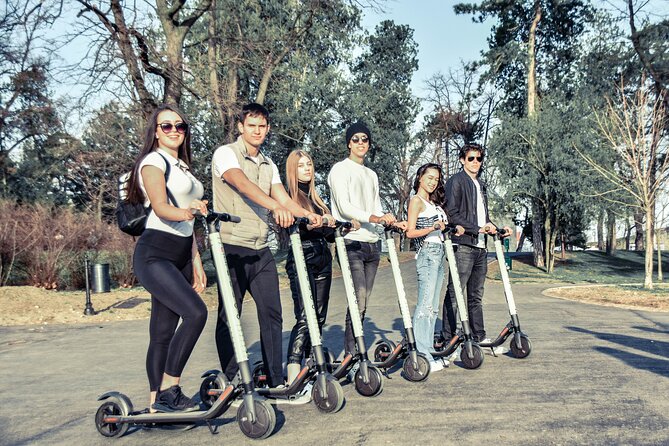
- Private group ride means you do not get stuck waiting for other people’s pace
- Short scooter safety briefing helps most first timers feel comfortable
- Terazije to Vračar to the fortress keeps the route logical, not backtracking
- Temple of Saint Sava on the Vračar plateau gives you one of the city’s most dramatic church settings
- Dorcol + Knez Mihailova mixes neighborhood stories with a car-free pedestrian main street
- Belgrade Fortress and Pobednik lets you connect the city’s ancient roots to a landmark by Ivan Meštrović
Why a Belgrade E-Scooter Tour Is a Smart Time Saver
Belgrade is a city of layers. You have grand monuments, old quarters, and then those busy central streets where locals actually spend time. A scooter tour is a practical way to string it together in about 2 to 3 hours, especially if you only have one afternoon or you do not want to spend it walking uphill and across long gaps.
The big value is that you get motion without rushing the stops. You are not just passing by. You get time at each place to look around, take photos, and absorb context from your guide. That matters because Belgrade’s highlights are not always obvious at a glance, especially around religious landmarks and fortress viewpoints.
I also like that this is a private tour, which usually means the guide can adapt. If you want a bit more time at a stop, you are less likely to get cut off when someone else is slow or wants extra photos.
More segway and e-scooter rides:
- Belgrade Segway Tour★ 5.0 · 84 reviews
- E-Scooter CRAFT BEER and BREWERY Tour★ 5.0 · 37 reviews
- E-Scooter Zemun Tour★ 5.0 · 26 reviews
Meeting at Terazije, getting oriented, and feeling steady on the scooter
Your tour starts at Terazije 20 and the tour finishes back at the same meeting point. That round-trip setup is underrated. You can plan dinner after, and you do not need to worry about how you will get back to your hotel.
The tour begins at 4:00 pm. Late afternoon is often when the air feels kinder and you can see the city in softer light, especially on stone buildings and viewpoints. If you are the type who likes to do one big block of sightseeing and then cool down, this start time fits well.
Before you ride far, you get a safety tutorial. I’d treat that like it is part of the experience, not a formality. Listen closely, ask questions while everything is still calm, and do a couple of slow practice movements if the guide suggests it. The goal is simple: get you comfortable enough that the ride becomes smooth, not stressful.
Practical tip: wear closed-toe shoes you can walk in. Even on a scooter tour, you will still spend time standing, looking, and snapping photos. Comfortable shoes also make it easier to hop on and off smoothly.
The Assembly of the Republic and Pioneer Park, a quick center-of-city anchor
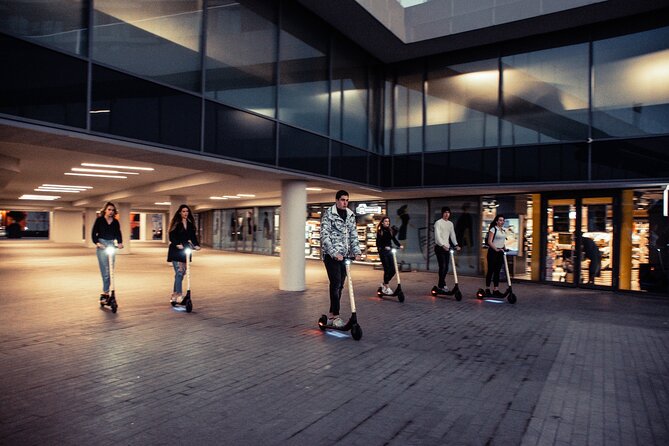
The tour’s first major stop puts you in the heart of Belgrade, at the Assembly of the Republic of Serbia, located next to Pioneer Park. This is one of those places that can feel more functional than scenic, but it is a great anchor point for orientation.
Why this stop works early: it helps you understand where the city’s “main thread” runs. From the center, it is easier to make sense of how neighborhoods connect, where the busiest pedestrian streets sit, and how routes toward bigger monuments flow.
If you like seeing how a city is organized, you’ll appreciate that this stop is not just a random photo spot. It’s a living center, where civic Serbia shows up in plain sight.
Vračar Plateau and the Temple of Saint Sava, scale that hits you fast
Next comes one of Belgrade’s most recognizable religious landmarks, the Temple of Saint Sava. It sits on the Vračar plateau and is dedicated to Saint Sava, the founder of the Serbian Orthodox Church. The temple is designed as the bishopric seat and main cathedral of the Serbian Orthodox Church, and it is built on the presumed location of St. Sava’s grave.
Here is what makes the stop meaningful for your understanding of Serbia, not just your camera roll. This church is one of the largest Orthodox churches in the Balkans, so it is built to be monumental. When you stand near it, you feel the intention, the idea that faith and national identity share the same stage.
A practical consideration: large churches often mean rules for what you can wear and when you can enter certain areas. The tour description does not list details, so follow the guide’s direction on the spot and be ready to adjust quickly if needed. Even if you spend most of your time outside, the setting and scale make this a strong highlight.
If you care about architecture, you’ll likely enjoy how the temple’s purpose and symbolism connect back to medieval Serbian history through the figure of Saint Sava.
The city center municipality stop, why a “local” detour matters
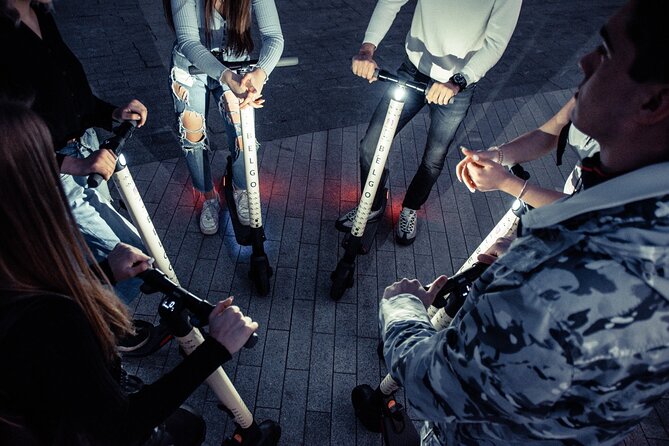
After the major church, the route includes a stop at one of Belgrade’s oldest and most beautiful municipalities, right in the city center. The key word here is municipality. This is not just a landmark. It is an urban piece of the city’s everyday structure.
I like stops like this because they break up the big monumental moments. They also give you a sense of the city’s continuity, how Belgrade’s older fabric still shapes what you see today.
One consideration: because the tour description keeps this stop more general than the others, you might want to ask your guide what makes this municipality special beyond the view. A good guide can translate the “why” behind a place fast.
Worth putting on the shortlist while you plan Belgrade:
Dorcol, the neighborhood with stories in its street corners
Then comes Dorcol, often described as Belgrade’s most famous neighborhood. It is known for famous Serbian personalities who came from here, and for the fact that books and songs have been written about Dorcol.
There is also a bold piece of local lore highlighted during the visit: the tour points to Dorcol as the place where the first cafe in Europe was founded. Even if you approach that detail like a story you will want to remember rather than a trivia fact you must verify, the larger takeaway is still useful. Dorcol is tied to social life, conversation, and a cafe culture that feels woven into the neighborhood identity.
This is the kind of stop that feels best if you slow down for a moment. Look at the street rhythm and imagine the neighborhood as a stage for writers, musicians, and public life. A scooter gets you there quickly, but this is a place you want to actually look.
If you’re traveling with someone who loves culture beyond monuments, Dorcol is one of the best bets on the route.
Knez Mihailova, a car-free main street right beside Terazije
From there, you roll to Knez Mihailova, Belgrade’s main street. It runs right next to Terazije, and the key detail is practical: there is a pedestrian zone along the whole street, so it is not possible to pass by car.
That car-free setup changes the vibe. You get a calmer feeling, even though this is a central street. It is easier to pause, take photos, and walk a few steps without worrying about traffic.
Knez Mihailova also works well as a transition. After the monumental feel of major landmarks and the emotional weight of religious architecture, you shift into street-level Belgrade: storefronts, people passing by, and the sense that the city runs on the everyday.
If you plan to shop for small gifts, this is often where you can look without needing a separate detour.
Belgrade Fortress, the city’s origin point in one big setting
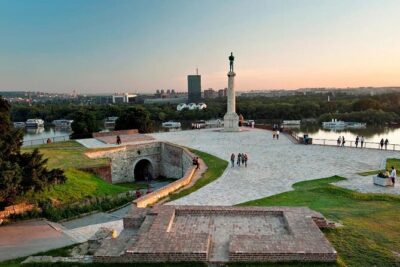
Now you enter the Belgrade Fortress, a city fortress around which today’s Belgrade developed. It was built at the beginning of the 1st century, which gives the whole area a different kind of gravity than modern streets.
This is also where the city’s “meeting energy” concentrates. The fortress is a place where many Belgraders and tourists gather. That means you see Belgrade not just as a museum, but as a lived-in place where people come for views, walks, and photos.
A scooter tour is a strong way to reach this area without making it a whole day of transit. You get the big visual payoff without the effort cost that a longer walk from the center would involve.
If you like history, treat this as your “big picture” stop. Everything else earlier feels like a lead-in, and the fortress becomes the physical reminder that Belgrade has been contested, rebuilt, and reshaped for centuries.
Pobednik, the landmark you recognize before you even know its story
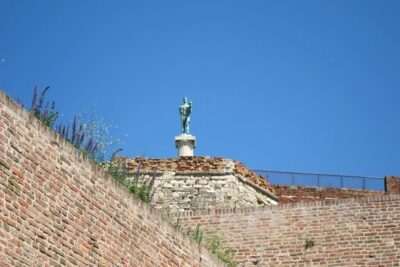
In the Upper Town, the tour highlights Pobednik, a monument built to commemorate Serbia’s victory over the Ottoman and Austro-Hungarian Empire during the Balkan Wars and the First World War.
This monument was cast in 1913 and erected in 1928, and it stands 14 meters high. It is one of the most famous works of sculptor Ivan Meštrović, and it is described as both one of the city’s most visited attractions and its most recognizable landmark.
What I like about making Pobednik a stop is that it is not abstract. It gives you a concrete, human-scale anchor for 20th century history. Even if you do not read every plaque, the monument connects time periods in a way that feels tangible.
Practical advice: give yourself a moment to step back and take in the whole structure before focusing on details. Monuments of this type are designed to be read from a distance as much as up close.
Price and what $59.99 is really buying you
The tour costs $59.99 per person, lasts 2 to 3 hours, and you ride an e-scooter through a route that would take much longer on foot. For me, that is the heart of the value.
If you were to recreate this by yourself, you would likely spend extra time figuring out routes, backtracking between central streets and hillside landmarks, and then paying for separate transport. Here, you get the route planning handled, and you get an actual guide to connect the “what” with the “why.”
There is also value in the private format. When you are paying per person, you want your time to feel efficient, not generic. Private tours typically mean you ask questions, and you spend less time waiting at each stop.
One more useful clue: this kind of tour tends to be booked ahead. The average booking window is about 55 days in advance, which suggests it is a popular way to see the city efficiently. If your travel dates are fixed, book earlier rather than later.
Who should book this scooter tour (and who should think twice)
This tour is a great fit if you want a high-impact afternoon and you enjoy the mix of big landmarks and street-level neighborhoods. It also makes sense if you are comfortable with the idea that part of the fun is learning a scooter routine quickly, then letting motion do the heavy lifting.
It is also a good choice for people who like to travel efficiently without turning sightseeing into a checklist. The stops chosen here feel designed to show Belgrade in contrast: civic center, major religious monument, a social neighborhood, a pedestrian shopping street, and the fortress complex.
Who should think twice? If your schedule is extremely tight or you cannot tolerate last-minute changes, keep a little buffer time. A scooter tour is flexible by design, but any guided service can run into human issues. Build in a plan B for that day.
Should you book the E-Scooter Tour of Belgrade?
If you want Belgrade highlights in a single block of time, I think this is worth serious consideration. The combination of a private group, a guided route through central sights, and the scooter factor makes it a smart way to compress a lot of Belgrade into a short window without feeling like you are sprinting.
I would book it if you:
- want Temple of Saint Sava, Dorcol, Knez Mihailova, and the fortress in one go
- like street-level context as much as monumental photos
- can handle a short safety tutorial and enjoy riding
I would double-check before booking if:
- you need strict timing with no wiggle room
- you are picky about guide language, since the tour is offered in English but you should confirm what you will receive when you book
FAQ
What is the duration of the E-Scooter Tour of Belgrade?
It runs for about 2 to 3 hours.
How much does the tour cost?
The price is $59.99 per person.
Where does the tour start and end?
It starts at Terazije 20, Beograd 11000, Serbia and ends back at the meeting point.
What time does the tour start?
The start time is 4:00 pm.
Is the tour private?
Yes. It is a private tour/activity, and only your group participates.
What language is the tour offered in?
The tour is offered in English.
How do I get my ticket?
You get a mobile ticket.
Is there a cancellation option if plans change?
Yes. You can cancel for a full refund if you cancel up to 24 hours in advance of the experience start time.
Can most people participate even if they are not experienced with scooters?
The tour notes that most travelers can participate, and it includes a short safety tutorial to help you ride confidently.
Newly written up in Belgrade
- Private Belgrade Street Art Tour
★ 5.0 · 1 review - The best of Novi Sad walking tour
★ 5.0 · 1 review - Tara National Park, Mokra Gora and Zlatibor
★ 5.0 · 1 review - Zasavica Bike Tour
★ 5.0 · 1 review - Discover Belgrade’s most Photogenic Spots with a Local
★ 5.0 · 1 review - Topola: Royal Dynasty Half Day Tour from Belgrade
★ 5.0 · 1 review - Private Serbian Food Cooking Experience in Belgrade with Meal
★ 5.0 · 1 review
Segway & Scooter Rides, compared.
Belgrade Layover Private tour + E-Scooter Sighteeing
Read our review →
More Serbia tours of this kind