
Reviewed · NOVI SAD TRIPS FROM BELGRADE
From Novi Sad: Sremski Karlovci and Krusedol Monastery Tour
Sremski Karlovci feels like a day trip from a different century. On this guided ride from Novi Sad, you’ll walk Baroque streets, meet world-famous Serbian wine history, and climb into the spiritual and scenic world of Fruška Gora. I especially like how the tour links everyday town sights with big stories, from old churches to the Russian emigre community.
Two standouts for me were the guided stroll past Karlovci landmarks like the Four Lion Fountain and the chance to visit important monasteries like Krušedol Monastery. The Bermet tasting also adds a real taste of the region, not just photos.
One consideration: this is a lot to fit into a 3 to 5 hour window, so if you want long free time in each place, you might find the pace a bit tight.
In This Review
- Key things to know before you go
- Entering Sremski Karlovci from Novi Sad in a Škoda Superb
- Chapel of Peace, the town square, and the round-table story
- Bermet tasting and why this Serbian wine has an international legend
- The Baron Wrangel monument and the White Russian refugee story
- Fruška Gora, the oldest national park, and the ride into nature
- Krušedol Monastery: Serbian Orthodox heritage on Fruška Gora
- Grgeteg Monastery: Baroque church, iconostasis, and protective status
- Forteresse de Vrdnik and Beli majdan: history and a nature break
- About the guide experience, and why adaptation matters in real weather
- Price and value: what $81 gets you for a 3 to 5 hour day
- Who this tour suits best, and who might prefer a different plan
- Tips to get the most out of the day
- Should you book this tour?
- FAQ
- How long is the tour?
- Where does the tour start?
- What is included in the price?
- Are meals included?
- Which languages are the guides available in?
- What monasteries and landmarks are visited?
- What should I wear and bring?
- Is smoking allowed during the tour?
- Is the group private?
Key things to know before you go
- Private guided group with a live English or Russian guide, so questions actually get answered
- Pickup in Novi Sad in a grey Škoda Superb, with a clear meeting point at your booking address
- Bermet tasting tied to a story that stretches far beyond Serbia
- Two major monasteries in one outing, plus extra Fruška Gora stops depending on the route
- Comfort and weather planning matter, since you’ll do multiple short walks and photo stops
Entering Sremski Karlovci from Novi Sad in a Škoda Superb
The easiest way to understand Sremski Karlovci is to start outside the town. Your trip begins with pickup in Novi Sad in a modern Škoda Superb, which keeps the start stress-free and gets you onto the road quickly. The vehicle ride also matters here, because this part of Vojvodina and Fruška Gora is not something you want to stitch together on your own with short connections.
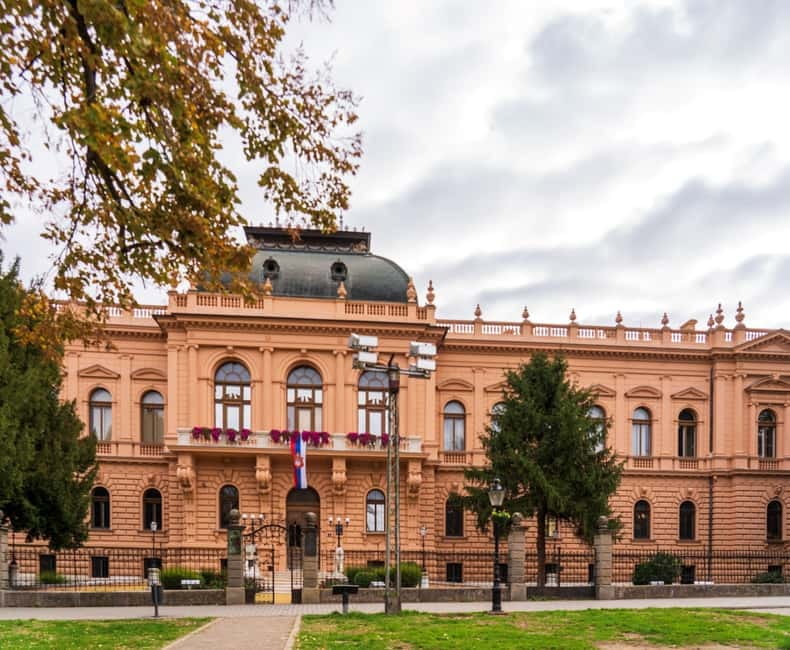
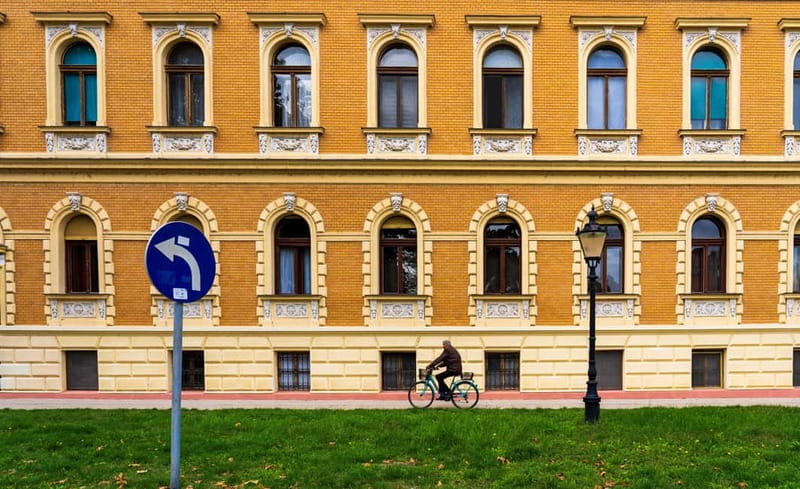
Once you’re in town, you’ll see why Sremski Karlovci is often described as calm and walkable. Expect quiet streets with small houses, historic churches, elegant palaces, and gardens that make it feel lived-in, not staged. The guided approach helps you sort out what you’re seeing, especially when churches and civic buildings look similar until you know the key names.
I also like that the tour is designed as a half-day plan, not a full-day marathon. You get the major highlights without feeling like you’ve been on a bus all afternoon.
More Novi Sad days out of Belgrade:
- From Belgrade: Novi Sad & Sremski Karlovci Full-Day Tour★ 4.7 · 1,068 reviews
- Northern Serbia: Sremski Karlovci and Novi Sad Full-Day Tour from Belgrade★ 5.0 · 425 reviews
- From Belgrade: Novi Sad and Sremski Karlovci Tour★ 4.8 · 267 reviews
Chapel of Peace, the town square, and the round-table story
The tour’s first real “aha” stop is the Chapel of Peace, where you learn why this place matters far beyond its walls. You’ll hear how negotiations were tied to the expression round table, which is a fun bit of word-history that makes your visit more than a photo stop.
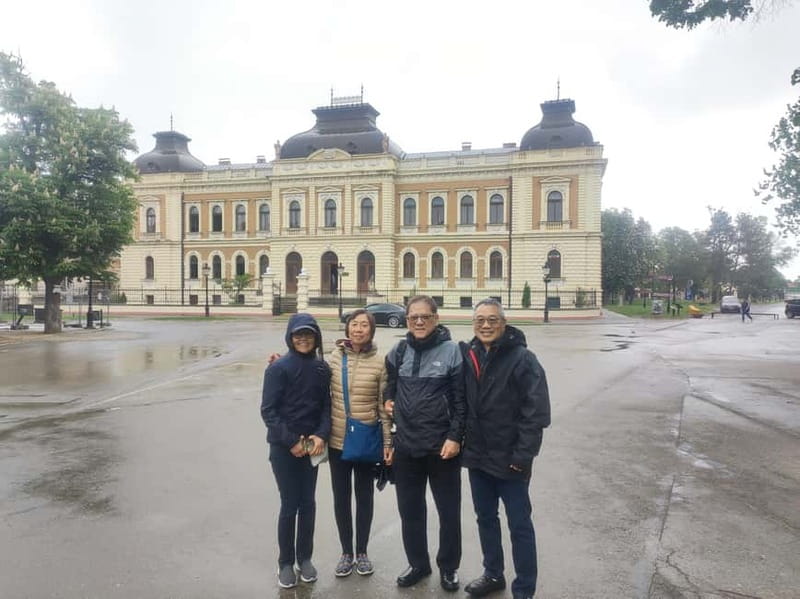
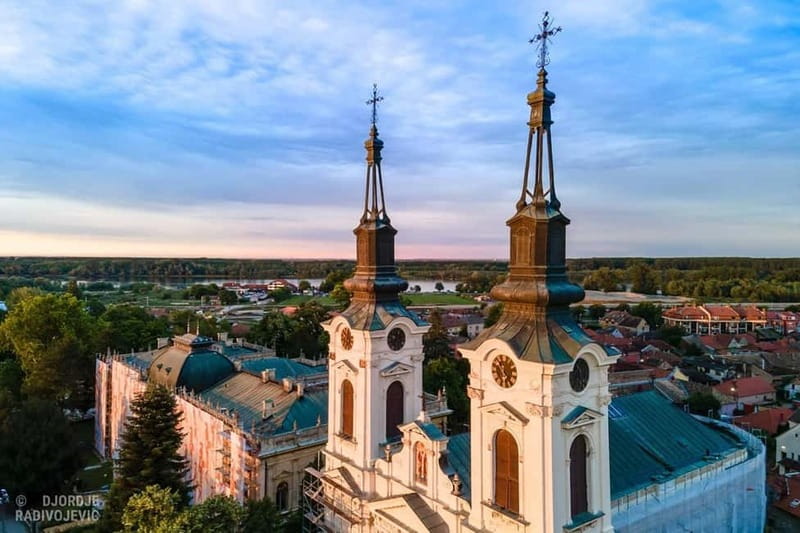
Then you shift into the heart of the town. Your walk includes the main square and key sights such as the Four Lion Fountain, the Karlovci Gymnasium, the Town Hall, and major churches including the Roman Catholic Church and the Serbian Orthodox Church of St. Nicholas. Even if you’re not a baroque architecture expert, the guide’s explanation helps you see the patterns: the way civic buildings and churches show up side-by-side and how the town’s identity formed around religion, education, and local power.
If you enjoy quick, focused urban walking, this section is the sweet spot. You’re moving, you’re seeing, and the guide keeps linking each building to the bigger story.
One small practical note: the walking is short but frequent. I’d wear shoes you’re comfortable with for uneven sidewalks, since this is an older town.
Bermet tasting and why this Serbian wine has an international legend
Now for the part many people remember first: Bermet. You’ll taste this famous Serbian wine during the guided program, and the history behind it is the kind of detail that makes the town feel connected to world events.
The tour shares that Bermet even made it to the Titanic. Whether you’re a wine person or not, that connection changes how you think about a local drink. It’s no longer just a regional specialty. It becomes a clue to how trade, culture, and status traveled through the Austro-Hungarian orbit and beyond.
This is also a nice pacing break between sightseeing. Wine tasting tends to slow you down in the best way, giving your brain a rest from architecture and names while still staying part of the story.
If you prefer to keep it low-key, you can usually taste without turning it into a drinking session. That’s the smart approach if you’re still going to be walking later in the afternoon.
The Baron Wrangel monument and the White Russian refugee story
Sremski Karlovci carries a different layer too, and the tour doesn’t skip it. You’ll pay tribute at the monument of Baron Pyotr Nikolayevich Wrangel. In 1922 he arrived as the leader of White Russian refugees in the Kingdom of Serbs, Croats, and Slovenes. By 1924, he had founded the Russian All-Military Union in Sremski Karlovci, a civilian organization meant to preserve the Russian military spirit for a future struggle against Bolshevism.
It’s a heavy topic, but I appreciate that the tour presents it clearly and keeps it tied to the place you’re standing. This is exactly the kind of local history that changes how you see a town. Instead of thinking it’s only baroque buildings and gardens, you realize it also absorbed people, wars, and political turns.
The bonus here is emotional balance. You’re not stuck only with wartime narratives, because the itinerary continues into monasteries and the calm, spiritual feel of Fruška Gora.
Fruška Gora, the oldest national park, and the ride into nature
After town, you start climbing into the context that makes all those churches make sense. The tour frames Fruška Gora as Serbia’s oldest national park and shares the idea that the mountain once stood as an island in the prehistoric Pannonian Sea. Even if you don’t remember the geology later, that mental image helps you understand why the region feels both rugged and sheltered.
This is the point where the tour shifts tone. You’ll move from baroque town landmarks into open views, forested slopes, and monastery grounds where the air itself feels calmer. If you like “place context” in your sightseeing, this segment helps a lot.
I found it useful that the guide ties nature to culture. In places like this, monasteries aren’t just pretty buildings. They act like anchors, giving meaning to where people built, prayed, and retreated.
Worth putting on the shortlist while you plan Belgrade:
Krušedol Monastery: Serbian Orthodox heritage on Fruška Gora
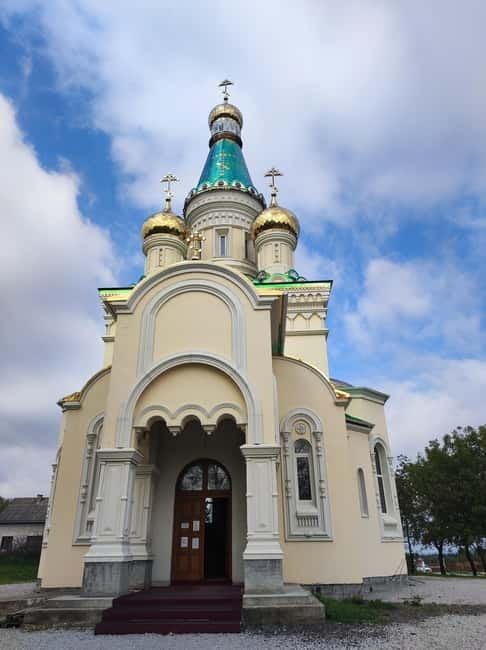
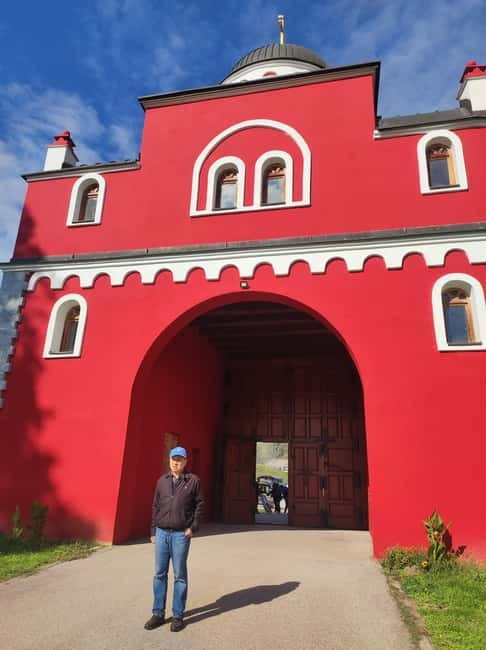
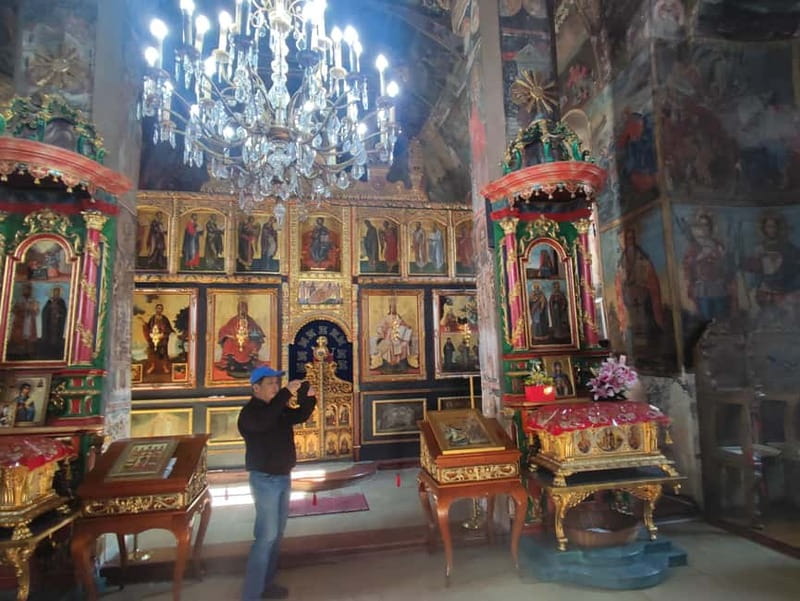
Your next major spiritual stop is Krušedol Monastery. This is the most significant sacred site of Fruška Gora on the itinerary, and it’s not a small claim. Founded between 1509 and 1514 by Saint Maksim Branković, Metropolitan of Belgrade and Srem, and his mother, Saint Angelina of Serbia, Krušedol is described as a cornerstone of Serbian Orthodox heritage on the Holy Mountain of Serbia.
You’ll get a guided visit here, and the timing is short, so it’s important to pay attention during the introduction. A place like Krušedol can be overwhelming if you arrive cold, but a guide helps you understand what you’re looking at and why it mattered at the time.
Even within a brief visit, this monastery tends to land emotionally. It feels older than it looks, because it’s tied to founders and a legacy that has lasted for centuries.
If you want a quiet pause in the middle of a busy half-day, this stop does it.
Grgeteg Monastery: Baroque church, iconostasis, and protective status
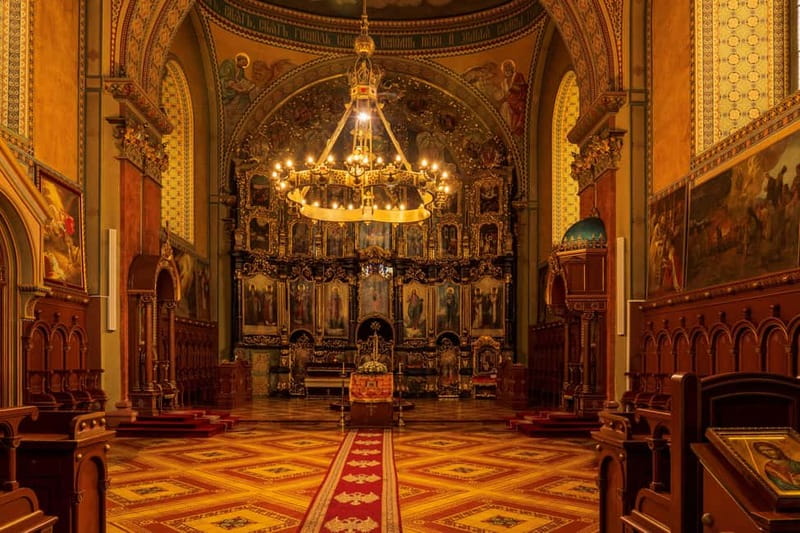
Then you move to Grgeteg Monastery. The tour describes its beginnings in 1471 with Despot Vuk Grgurević, known as Zmaj Ognjeni Vuk. After the Great Migration of the Serbs, it was renewed in 1708. The present Baroque church dates around 1770, and restoration work is credited to architect Hermann Bollé around 1898.
Inside, you’ll learn about a remarkable iconostasis painted by Uroš Predić in 1902. This kind of artistic detail matters because it shows how Orthodox heritage isn’t frozen in time. It gets repaired, renewed, and re-illustrated by major artists.
The tour includes a guided visit of about 30 minutes here, plus a photo stop feel. That’s enough to understand the key facts and get a sense of the place, but it’s not enough for a long, slow sit-down visit. If you’re the type who likes to linger in religious spaces, you’ll still enjoy it, but you may want to plan extra time on another day.
Forteresse de Vrdnik and Beli majdan: history and a nature break
The itinerary continues with two Fruška Gora related stops that shift the tone again, away from strictly religious sites.
You’ll visit Forteresse de Vrdnik with a guided walk of about an hour. This adds a fortress feel to the day, giving you a different angle on the region’s past. Instead of only focusing on spiritual life, you get a stronger sense of defense, control, and how geography shaped settlement.
Next is Beli majdan, another guided visit of about an hour. While the exact details of what you’ll see here aren’t spelled out beyond the guided time, the placement after Vrdnik makes sense: you get one kind of historical structure, then you move to another area on Fruška Gora that broadens the story. For me, these two stops are what turn this from a “two monasteries and a town” outing into a fuller half-day experience of the whole region.
A practical note: if weather shifts, these outdoor or scenic stops can change how much you enjoy them. The guide you get matters, and the good news is that this tour’s guides are adaptable.
About the guide experience, and why adaptation matters in real weather
The tour runs with live guides in English and Russian, and I like that it’s a private group. In a private setting, the guide can adjust in the moment. In one recent experience, Vladimir led the tour and handled rain by reshaping the schedule to still hit the key highlights. That kind of flexibility is not a small deal. It can be the difference between an afternoon you enjoy and an afternoon you rush through.
Vladimir also stood out for how much context he gave. The explanations were detailed enough to make buildings make sense, and the pace felt friendly rather than scripted. That matters most when you’re dealing with multiple churches and monuments, because you need the thread that connects them.
If you want a guide who talks like a person, not a lecture, you’re more likely to enjoy this format.
Price and value: what $81 gets you for a 3 to 5 hour day
At about $81 per person, this tour looks like a bargain compared to what you’d pay if you hired separate transport and private guiding for just one monastery. You’re getting guided time in Sremski Karlovci, visits to Krušedol and Grgeteg, transportation from Novi Sad, and additional Fruška Gora stops.
You should still evaluate what you personally care about. If you only want one monastery and lots of free time, this might feel like too much. But if you want a structured “highlights tour” with real explanations, the value is strong.
Also, the tasting element is part of what you’re paying for. Bermet is one of those regional experiences that’s hard to replicate on your own without knowing where to go and what to ask.
The duration helps here too. You’ll spend a half-day on a route that would take longer to plan yourself, especially in areas with limited public connections.
Who this tour suits best, and who might prefer a different plan
This tour is a great match for you if you:
- Want a guided introduction to Sremski Karlovci and Fruška Gora in one trip
- Like mixing town walking with monastery visits
- Prefer someone else to handle routing, timing, and the key historical context
It might be less ideal if you:
- Want lots of independent exploration time inside each site
- Have very limited mobility, since you’ll do multiple short walks and photo stops
One more fit note: this is also a strong option for people who enjoy history but don’t want a heavy lecture. The story beats are there, but they’re tied to what you’re seeing.
Tips to get the most out of the day
You’ll get the best experience if you prepare for walking and weather. I recommend:
- Comfortable walking shoes for uneven or old pavements
- A camera since you’ll stop often for photos in both town and on Fruška Gora
- Check the weather forecast and dress accordingly, especially for outdoor fortress and nature sections
- Skip smoking in the vehicle, since it isn’t allowed
Finally, keep your expectations realistic. This is a highlights route. If you treat it like that, you’ll come away with clear mental pictures and not just a memory of names.
Should you book this tour?
I think you should book it if you’re staying in Novi Sad and want a guided, cost-effective way to connect baroque town life with Serbian Orthodox heritage and Fruška Gora scenery. The combination of Sremski Karlovci landmarks, Bermet tasting, and two major monasteries gives you variety without the chaos of planning each stop.
If you care most about one thing, like deep monastery time, you might want a slower alternative. But for most visitors, this route hits the sweet spot between value, context, and seeing the region efficiently.
If you want a lively, flexible guide and a solid overview of the area in a half-day, this is an easy yes.
FAQ
How long is the tour?
The duration is listed as 3 to 5 hours.
Where does the tour start?
The tour starts with pickup in Novi Sad.
What is included in the price?
The included items are a guided tour of Sremski Karlovci, a visit to Krušedol Monastery, and transportation.
Are meals included?
Meals are not included.
Which languages are the guides available in?
The live tour guide is available in English and Russian.
What monasteries and landmarks are visited?
You’ll visit Krušedol Monastery and Grgeteg Monastery, and you’ll also see major landmarks in Sremski Karlovci. The itinerary also includes Forteresse de Vrdnik and Beli majdan.
What should I wear and bring?
Wear comfortable walking shoes, and bring a camera for scenic views.
Is smoking allowed during the tour?
Smoking in the vehicle is not allowed.
Is the group private?
Yes, it’s listed as a private group.
Newly written up in Belgrade
- Private Belgrade Street Art Tour
★ 5.0 · 1 review - The best of Novi Sad walking tour
★ 5.0 · 1 review - Tara National Park, Mokra Gora and Zlatibor
★ 5.0 · 1 review - Discover Belgrade’s most Photogenic Spots with a Local
★ 5.0 · 1 review - Zasavica Bike Tour
★ 5.0 · 1 review - Private Serbian Food Cooking Experience in Belgrade with Meal
★ 5.0 · 1 review - Topola: Royal Dynasty Half Day Tour from Belgrade
★ 5.0 · 1 review
Novi Sad Trips from Belgrade, compared.
Sremski Karlovci and Novi Sad Full-Day Tour from Belgrade
Read our review →
Walking Tour city center and Petrovaradin Fortress
Read our review →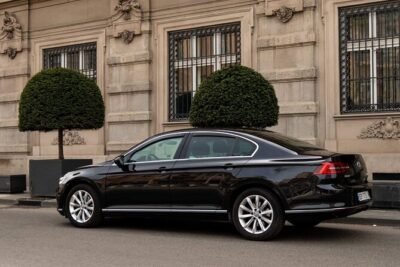
Private transfer from Belgrade or Belgrade Airport to Novi Sad
Read our review →
Private Day Tour to Fruska Gora Monasteries, Sremski Karlovci and Novi Sad
Read our review →
Private Novi Sad, Titanic wine tasting and Farmer’s House
Read our review →More Serbia tours of this kind