
Reviewed · BELGRADE
From Belgrade: Studenica monastery & Zica monastery
Monasteries in the mountains, far from Belgrade noise. I like how this trip pairs UNESCO Studenica with Žiča, so you get both peak medieval Serbian art and the story of royal coronations in one focused day. The route also includes scenic stops that help you understand why these monasteries were built where they were, in a rugged, forested valley world.
What makes it work is the human touch of the tour guide. Past groups have specifically praised guides like Jovana, Milos, and Stefan for clear explanations and personal warmth, which matters when you want more than a quick look at old stones. The one drawback is simple: it is a long day. You are looking at about 12 hours total, with multiple hours on the van, and it runs rain or shine.
In This Review
- Key highlights at a glance
- Medieval Serbia beyond Belgrade: why this day trip feels different
- The long van ride, explained: timing and what you should do with it
- Žiča Monastery: coronation power and the feeling of royal continuity
- A practical heads-up for Žiča
- Kraljevo lunch break and the 10-minute viewpoint that earns its place
- Studenica Monastery: UNESCO art, Byzantium influence, and spiritual quiet
- What might surprise you at Studenica
- A small drawback to keep in mind
- Maglič and the Ibar gorge: the scenery you notice more once you learn why
- The guides, group size, and pacing: how comfort affects what you learn
- Price and value: is $152 per person fair?
- What to bring and the church rules you must follow
- Who this trip fits best (and who might want a different plan)
- Should you book this Belgrade to Žiča and Studenica day trip?
- FAQ
- How long is the trip from Belgrade to these monasteries?
- Where does the tour start and end?
- Which monasteries are visited?
- Is lunch included?
- What time is set aside for each monastery?
- Are there photo stops during the day?
- How large is the group?
- Will there be a guide, and what language?
- What should I wear to visit the monasteries?
- Is photography restricted?
Key highlights at a glance
- UNESCO Studenica: A late-12th-century monastery tied to Serbia’s spiritual and artistic “Valley of the Kings”
- Žiča coronations: Step inside the coronation church tied to medieval Serbian royalty
- Serbia’s Orthodox art focus: Highlights include 13th and 14th century Byzantine painting collections
- Royal state context: You’ll connect the monasteries to the Nemanjić dynasty and the medieval Serbian state
- Ibar gorge views and Maglič: Photo stops and roadside overlooks add real scenery to the day
- Small group feel: Limited to 10 people, with a live English guide and hotel pickup and drop-off
Medieval Serbia beyond Belgrade: why this day trip feels different
Most Belgrade days stay in the city. This one pushes you out into Raška District, where the medieval Serbian state took shape and where Orthodox faith and royal power were closely linked. I like that the tour does not treat the monasteries like isolated landmarks. You get the bigger picture, from the Nemanjić Royal family to the churches and frescoes they helped define.
Two parts make the day especially satisfying. First, Studenica is UNESCO-protected and centered on some of Serbia’s most significant Orthodox art, including 13th and 14th century Byzantine painting. Second, Žiča brings the story of kings and coronations into a place you can actually walk through. One site leans art-forward. The other leans ceremony and dynasties. Put together, they give your brain a fuller map of what medieval Serbia was trying to communicate.
If this one is full, these cover much the same ground in Belgrade:
- From Belgrade: Novi Sad & Sremski Karlovci Full-Day Tour★ 4.7 · 1,068 reviews
- From Belgrade: Gems of Eastern Serbia Tour★ 5.0 · 427 reviews
- Northern Serbia: Sremski Karlovci and Novi Sad Full-Day Tour from Belgrade★ 5.0 · 425 reviews
The long van ride, explained: timing and what you should do with it
This tour is built around a full day, not a half-day sprint. After pickup in Belgrade, you spend about 2.5 hours on the van before reaching Žiča. Then you have an additional stretch of travel later, about 3.33 hours back to Belgrade. The total day clocks in at 12 hours, so you want to think of it as a countryside excursion with two anchor stops.
For planning your energy, this matters more than it sounds. Your best strategy is to treat the ride as part of the experience. Use the first drive to settle in and get oriented, because once you start walking around the monasteries, the guide’s explanations will start clicking into place. If you are the type who gets restless in cars, you might want to mentally plan for short breaks, which the schedule does include later in the day.
Also note the tour runs rain or shine. That is not a small detail in Serbia’s inland weather. If skies open up, you will still be moving between stops, and you will still be stepping into churches with rules about clothing and photography.
Žiča Monastery: coronation power and the feeling of royal continuity
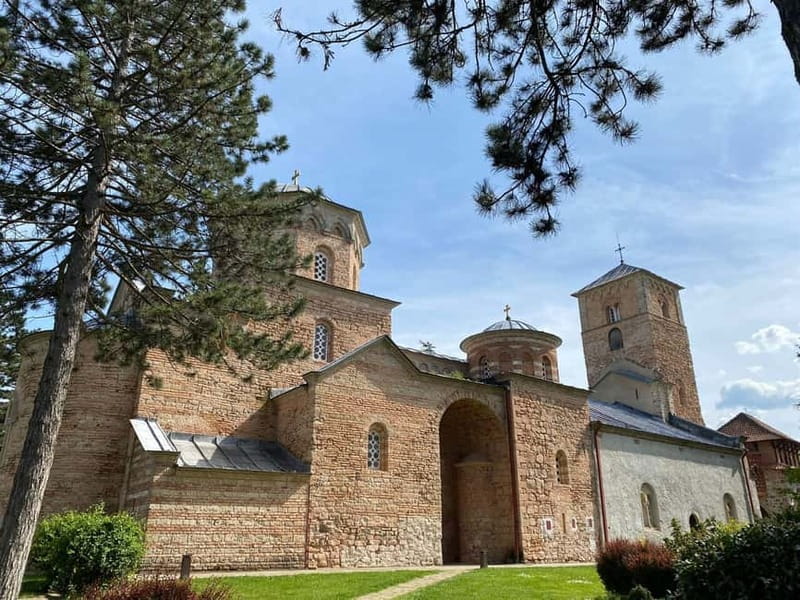
Žiča is where medieval Serbian royalty becomes physical, not just an idea in a book. The schedule gives you a photo stop and guided tour with time to walk around, roughly 1.5 hours on site. That is enough time to look closely, absorb the setting, and hear how Žiča connects different royal dynasties and centuries.
The big reason Žiča matters is its coronation church. This is described as the place where seven kings were crowned, linking authority across eras. That kind of detail changes how you experience architecture. You start noticing how a building is built for ceremony, and how sacred spaces were used to legitimize rule.
What I also like is how the tour frames Žiča alongside the medieval state story. You meet the Nemanjić Royal family as the founders of the medieval Serbian state and builders of Serbia’s spiritual wealth. That framing keeps Žiča from feeling like a random detour. Instead, it feels like a political and religious center that helped shape identity for generations.
A practical heads-up for Žiča
It is a walking and visiting stop. Wear comfortable shoes, because you will be moving enough to want grip underfoot. The tour also follows a strict church rule: no sleeveless shirts. If you are traveling in summer heat, plan to bring a light layer that still counts as covered.
Kraljevo lunch break and the 10-minute viewpoint that earns its place
Between the two big monasteries, there is a break time in Kraljevo with about 1 hour for lunch and free time. Since food and drinks are not included, this is your built-in moment to eat. It is also your chance to reset your pace. Two medieval sites back-to-back sounds wonderful on paper, but a timed pause keeps it enjoyable in real life.
After that, there is a quick viewpoint photo stop for about 10 minutes. Short stops can feel pointless on tours, but here it is tied to the scenery and geography you are passing through. From the road, you are guided toward what you can see in the wider valley world, including views connected to the Ibar gorge.
Even that brief stop helps you connect what you are seeing in the monasteries to the land itself. These sites were not built in flat convenience. They were placed where they could command sightlines and withstand the kind of instability that medieval regions faced.
Worth putting on the shortlist while you plan Belgrade:

Studenica Monastery: UNESCO art, Byzantium influence, and spiritual quiet
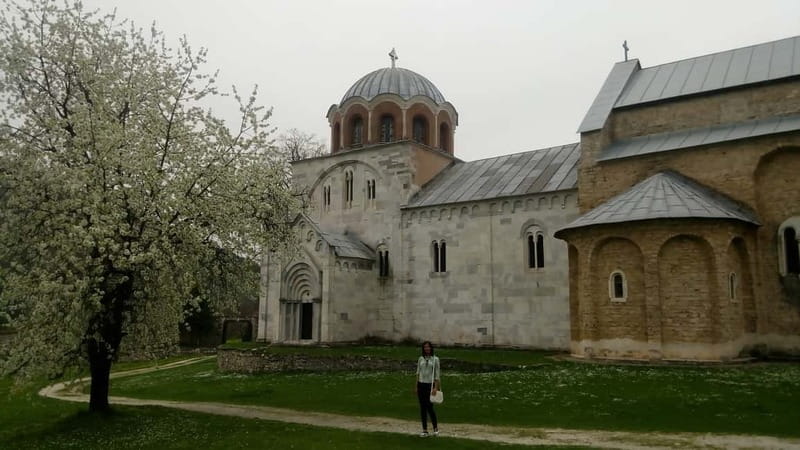
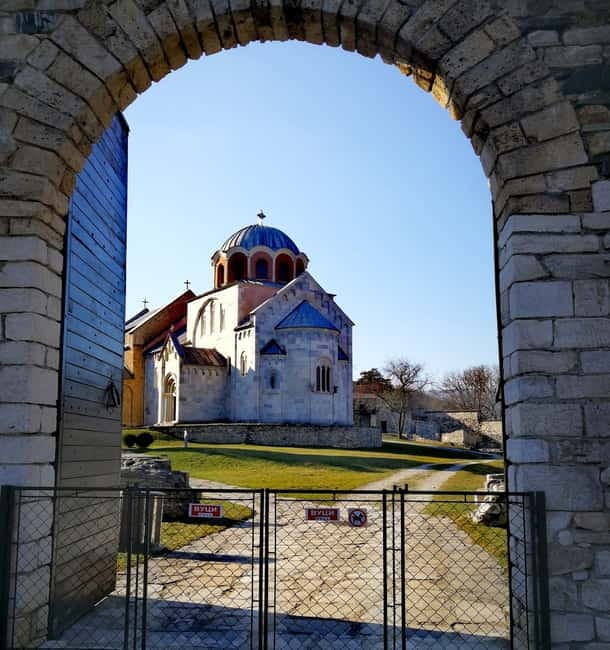
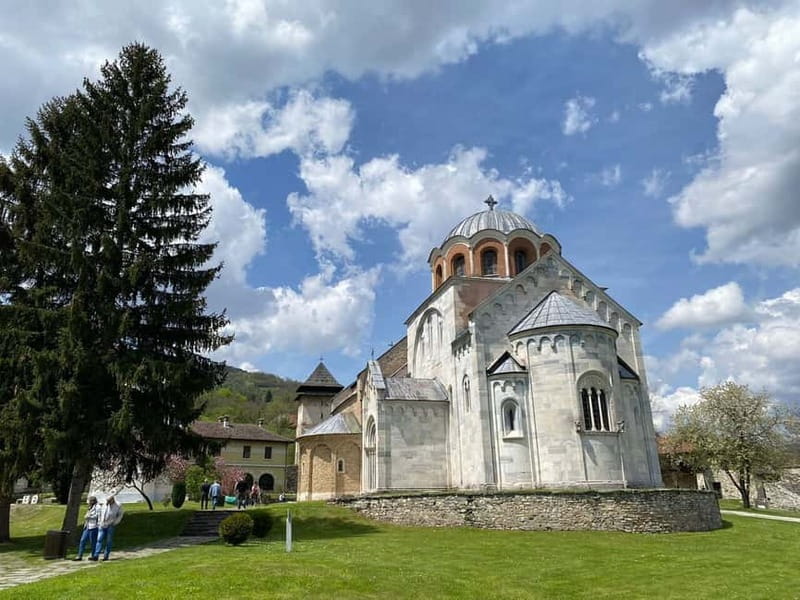
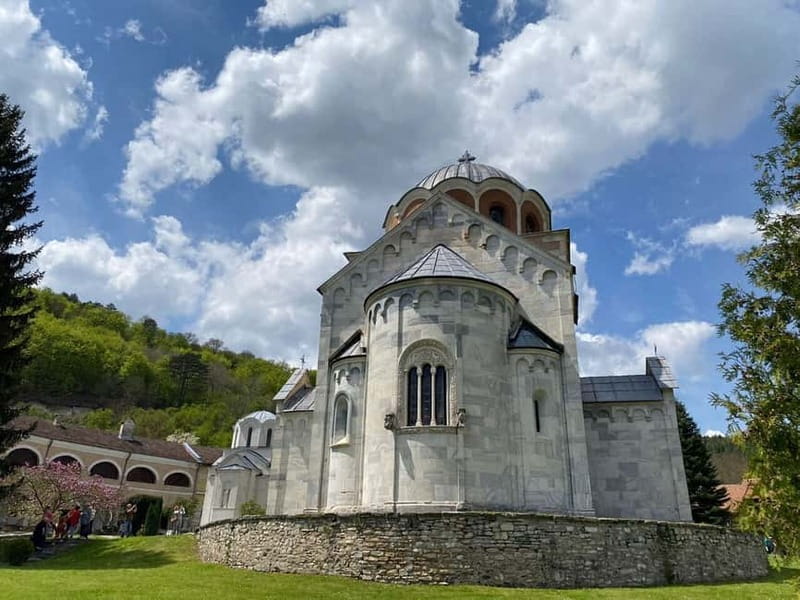
Studenica is the emotional center of the day. You get a photo stop and a guided tour of about 2 hours here, which is the right length for a site like this. It is established in the late 12th century and is part of the Serbian sanctuaries known as the Valley of the Kings. The tour also calls Studenica the largest and richest of Serbia’s Orthodox monasteries, with collections of 13th and 14th century Byzantine painting.
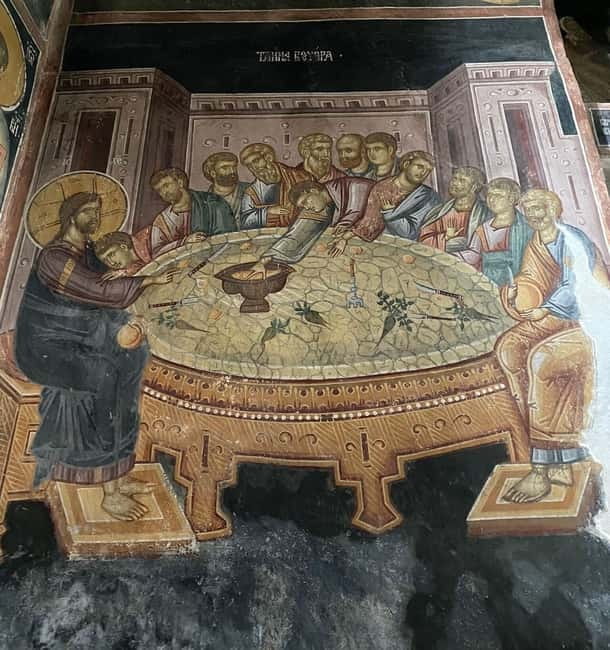
If you care about art history, this is where your attention should slow down. Byzantine painting is not just decoration. It is visual theology. In many Orthodox settings, images are meant to teach, to frame worship, and to carry meaning across time. When the guide connects those artworks to the monastery’s role in Serbian spiritual life, the paintings become part of the message, not just something old on a wall.
Studenica also brings a sense of scale that is easier to feel than to describe. The monastery is described as UNESCO-protected, and when you are standing among the buildings, that status becomes practical. You understand that the site is meant to be preserved because it is important, not because it is convenient for tourists.
What might surprise you at Studenica
The monasteries are presented as peaceful and serene places. Even when you are with a group, you can feel that this is a space designed for quiet reflection. That is a good contrast if you have already spent time in busier city sights. For me, the value here is not only what you see, but the change in tempo.
A small drawback to keep in mind
Two hours on site is generous, but it still means you will not have an unlimited wandering day. If you want to linger at every corner, you will need to balance your own pace with the guided explanation. The good news is that the tour is structured, so you can follow the story without feeling like you missed the key scenes.
Maglič and the Ibar gorge: the scenery you notice more once you learn why
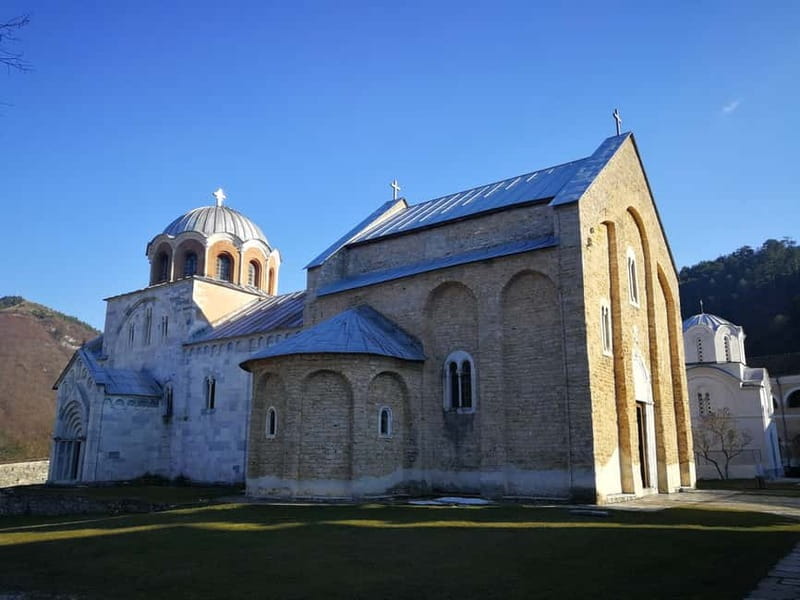
One of the clever touches in the day is that the scenery is not treated as wallpaper. As you travel, you get mention of what you can see from the road, including the hills of Maglič, described as one of the most well-preserved fortifications of medieval Serbia, dating from the 13th century. Even if you do not stop there for a full visit, the idea sticks, because it gives your brain a reason for what you are looking at.
You also enjoy views of the Ibar gorge. That matters because the monasteries sit in a geography that feels rugged and defensive. When you understand the land, the monasteries do not look like random religious buildings. They look like part of a strategy and a worldview.
The guides, group size, and pacing: how comfort affects what you learn
This is a small group, limited to 10 participants, with a live English guide. That size is a sweet spot for a day like this. You are close enough that you can ask questions, and not so crowded that the guide has to talk only to the front row.
The standout praise you should pay attention to is how the guides are described: personal warmth, careful explanations, and a pace that feels manageable. Guides like Jovana and Milos are repeatedly noted for knowledge plus warmth, and Stefan is praised for helpful explanations and being a joy to be around. Even if your guide is different, the format aims for the same thing: you walk away understanding what you saw, not just where it is on a map.
Pacing is also built into the schedule. After Žiča you have time to stretch and eat in Kraljevo. After the long Studenica visit, the trip back gives you time to decompress in the van. This matters on a 12-hour day. If the schedule were tighter, it might feel like a checklist. Instead, it has breathing room.
Price and value: is $152 per person fair?
The price is $152 per person for about 12 hours. That number is easier to judge when you look at what’s included. You get hotel pickup and drop-off, private transportation, and a professional tour guide. You are also getting guided time at both monasteries, plus photo stops and the viewpoint moment.
What you do not get is food and drinks, but the schedule includes a lunch break in Kraljevo, which is where you can handle meals on your terms. In other words, you are paying for transportation and interpretation, not a pre-set restaurant plan.
For value, the key question is what you want. If you are comfortable with self-driving and you already know the monastery story, you could theoretically assemble your own route. But if you want to understand Nemanjić dynasty connections, Byzantine painting context, and coronation-church meaning without doing research on the fly, paying for a guided day starts to make sense quickly.
Also, the long drive time from Belgrade is real. Tours like this earn their keep by managing the flow, so you do not lose precious daylight navigating and guessing timing.
What to bring and the church rules you must follow
This is where you can avoid awkward moments. The tour specifically asks you to wear comfortable shoes. That is non-negotiable for monastery walking.
Clothing rules are also clear: no sleeveless shirts. If you plan to wear a tank top, swap it for a shirt that covers your shoulders before you go. Inside churches, this matters.
For photography, flash photography is not allowed. Bring a camera or phone if you want pictures, just keep flash off.
Finally, remember it runs rain or shine. You might want rain protection in your bag even if the forecast looks friendly.
Who this trip fits best (and who might want a different plan)
This tour is a great fit if you want a structured day that gives you both art and royal history. It suits you if you like Orthodox religious heritage and you appreciate context, meaning you want to know who the Nemanjić family were and why coronations happened in Žiča.
It is also a good choice if you are in Belgrade for a limited time and you want to see beyond the city without the stress of logistics. Hotel pickup and drop-off take care of the hardest part.
It might feel like too much if you prefer slow travel and long unscheduled wandering. The day is scheduled. You will move from stop to stop and get guided time, not open-ended exploration.
Should you book this Belgrade to Žiča and Studenica day trip?
I would book it if you want the best “medieval Serbia in one day” mix, especially if Studenica’s UNESCO art is on your wish list and Žiča’s coronation church sounds compelling. The small group format and praised guide style make it more than just a drive-by.
Skip it, or consider a different option, if you hate long road days or you need extra downtime for meals and wandering. With a 12-hour schedule and driving time built in, this is for people who enjoy a full, story-driven day.
If that sounds like you, this is a strong use of your time. You leave Belgrade, you learn why these monasteries were important, and you come back with a clearer picture of Serbia’s medieval spiritual and royal world.
FAQ
How long is the trip from Belgrade to these monasteries?
The duration is 12 hours.
Where does the tour start and end?
It includes hotel pickup and drop-off in Belgrade, and you arrive back in Belgrade at the end.
Which monasteries are visited?
You visit Žiča Monastery and Studenica Monastery.
Is lunch included?
No. Food and drinks are not included, though there is a break time in Kraljevo that includes lunch and free time.
What time is set aside for each monastery?
Žiča has about 1.5 hours including visit and guided tour time. Studenica has about 2 hours including visit and guided tour time.
Are there photo stops during the day?
Yes. There is a photo stop at Žiča, a photo stop at a viewpoint, and a photo stop at Studenica.
How large is the group?
It is a small group limited to 10 participants.
Will there be a guide, and what language?
Yes. There is a live tour guide in English.
What should I wear to visit the monasteries?
Wear comfortable shoes. Sleeveless shirts are not allowed.
Is photography restricted?
Flash photography is not allowed. The tour also runs rain or shine.
Newly written up in Belgrade
- The best of Novi Sad walking tour
★ 5.0 · 1 review - Tara National Park, Mokra Gora and Zlatibor
★ 5.0 · 1 review - Private Belgrade Street Art Tour
★ 5.0 · 1 review - Zasavica Bike Tour
★ 5.0 · 1 review - Discover Belgrade’s most Photogenic Spots with a Local
★ 5.0 · 1 review - Topola: Royal Dynasty Half Day Tour from Belgrade
★ 5.0 · 1 review - Private Serbian Food Cooking Experience in Belgrade with Meal
★ 5.0 · 1 review