
Reviewed · GOLUBAC FORTRESS TOURS
Danube fortresses and Roman archeological park
Danube fortresses, Roman ruins, and one odd fossil day. This outing connects Smederevo Fortress to Viminacium Archaeological Park, then finishes with Golubac at the Iron Gates, where walls were built to control the river and traffic passing through Djerdap Gorge. If you like history you can picture, this is one of those days where the sites explain themselves fast.
You’ll feel the trade-off, though: it is a long 9-hour day with multiple stops, so you have to be okay with short guided visits and a bit of bus time to move between them. The good news is it stays small, limited to 7 people, so questions and photo stops are easier to manage.
In This Review
- Key Highlights You Will Actually Remember
- Why This Danube Day Trip Works So Well From Belgrade
- First Stop: Smederevo Fortress and Serbia’s 15th-Century Power Bid
- Viminacium Archaeological Park: Roman Moesia Superior in Plain View
- Constantine, Emperors, and the Reason This Park Feels Personal
- Golubac Fortress at the Iron Gates: The River as a Defensive Weapon
- Timing, Pacing, and Photo Stops You Can Plan For
- What You Pay: Price, Value, and Small-Group Practicalities
- Who This Tour Suits Best
- Should You Book This Danube Fortresses and Viminacium Day Trip?
- FAQ
- How long is the tour?
- Where does the tour start and is pickup included?
- What is the group size?
- Is the guide available in English?
- Which attractions are included in the visit?
- How long do I spend at each main site?
- What is the price per person?
- Is free cancellation available?
- Can I reserve and pay later?
Key Highlights You Will Actually Remember
- Smederevo Fortress as a fast-built 15th-century capital moment, at the confluence of the Jezava and Danube
- Viminacium’s Roman province spotlight, Moesia Superior, with the bust of Constantine the Great
- Roman emperor connections shown on-site, including Constantine plus 17 more Roman emperors born in Serbia
- A mosaic floor you can study up close, not just glance at
- A paleontological park featuring a mammoth skeleton, found 27 meters deep, about one million years old
- Golubac Fortress at the Iron Gates entry, a 14th-century stronghold that controlled navigation through Djerdap Gorge
Why This Danube Day Trip Works So Well From Belgrade
This tour is built around one simple idea: the Danube is the storyline. You start in Belgrade, ride out to medieval Serbia, then step into Roman Moesia, and end at a fortress positioned where the river narrows and travel becomes strategic. You are not hunting information alone. An English-speaking guide keeps you oriented and helps you connect what you see to why it mattered.
I like the mix because it is not only “look at old stones.” You get Roman details at Viminacium that make the empire feel local, then you switch gears to fortification design at Smederevo and Golubac, where the geography tells you why these walls were built where they are. It is also a small group, limited to 7, so the pace feels human, not rushed in a herd.
More Golubac and Iron Gate days:
- From Belgrade: Golubac Fortress and Iron Gate Gorge Tour★ 4.8 · 271 reviews
- From Belgrade: Golubac Fortress & Iron Gate Danube Gorge★ 4.8 · 185 reviews
- Along the Danube: Golubac Fortress & Iron Gate Gorge day trip from Belgrade★ 4.5 · 185 reviews
First Stop: Smederevo Fortress and Serbia’s 15th-Century Power Bid
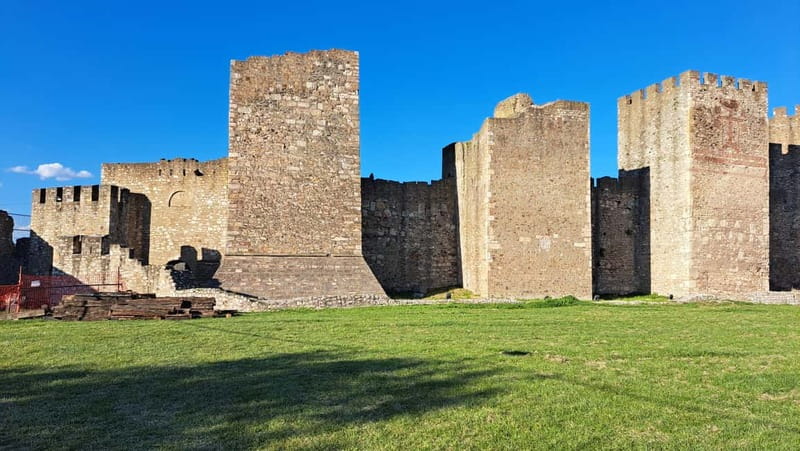
Smederevo is where the day’s tone turns from scenic river travel to political theater. The fortress was made in the 15th century, when Smederevo became Serbia’s capital, and it was built in a very short period of time. That speed matters. When you stand at the fortress, you are not just looking at ruins. You are looking at a government that needed walls now, not later.
The location adds instant context: the fortress sits at the confluence of the Jezava and Danube rivers. That is exactly where you would place defensive power and control movement by water. You also learn it was built on the orders of Serbian Despot Djuradj Brankovic, which gives you a clear name to attach to what you are seeing, instead of vague “someone built it” history.
Your visit here is guided and fairly focused, with about 45 minutes on-site. That is enough time to do three things well:
1) understand the fortress layout and purpose,
2) take photos that show the river setting,
3) get the big context without losing the day.
The main consideration is time. Forty-five minutes sounds short because it is. If you love slow museum-style exploration, you may wish you had more. But for a day trip packed with three major sites, this timing keeps the experience balanced.
Viminacium Archaeological Park: Roman Moesia Superior in Plain View
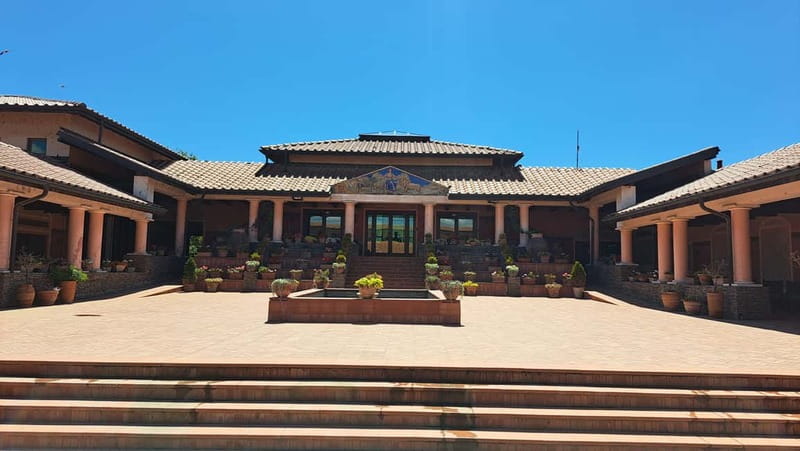
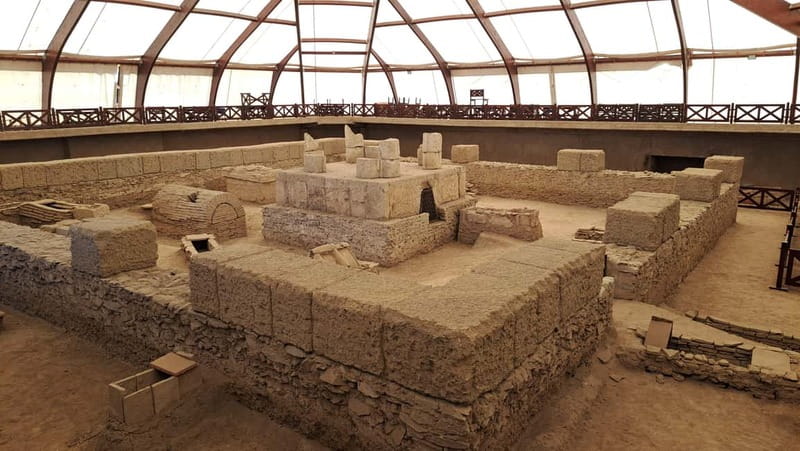
Then you shift from medieval fortifications to Roman daily life. Viminacium was once the capital of the Roman province of Moesia Superior, and the park is set up so you can see that importance without needing advanced archaeology training. You get a guided visit and a walk that helps you move through the space with purpose rather than guessing where to look.
Two highlights tend to hook people right away. First is the bust of Constantine the Great, which anchors the park in a major Roman figure tied to broader history. Second is the display that includes Constantine plus 17 more Roman emperors born in Serbia. That detail is not just trivia. It reframes the region from “Roman remains somewhere in Europe” to “Roman leadership with roots here.”
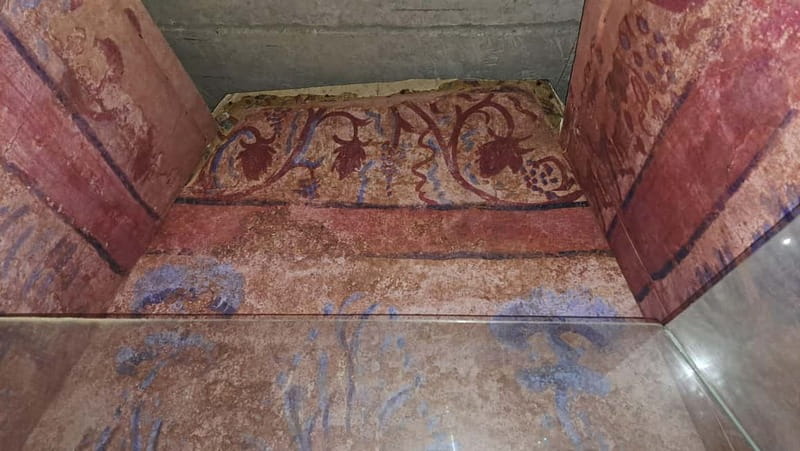
And then there is the mosaic decorated floor. Roman mosaics often get treated like background decoration, but this one is presented as a special attraction. You get time to look, and that matters because the patterns help you understand that the Romans were not only building roads and armies. They were also building rooms meant for daily status and comfort.
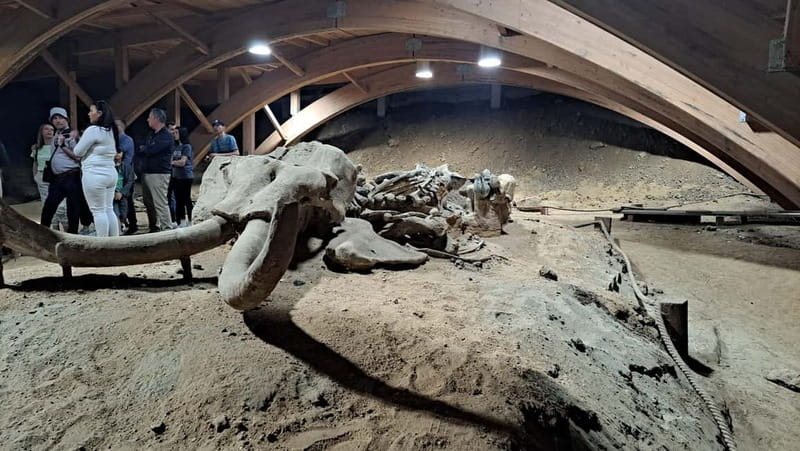
I also love that Viminacium includes a paleontological park, because it breaks the expectation that archaeology days only mean people. The mammoth skeleton found at a depth of 27 meters, about one million years old, is the kind of fact that makes you stop and look twice. It is a reminder that the ground under you has been changing for ages, long before either Rome or medieval Serbia.
Your guided portion is about 1.5 hours on-site. That is a workable amount of time for Viminacium because you want enough minutes to connect the Roman context, then you still want time to linger around the mosaic and the paleontology area.
Constantine, Emperors, and the Reason This Park Feels Personal
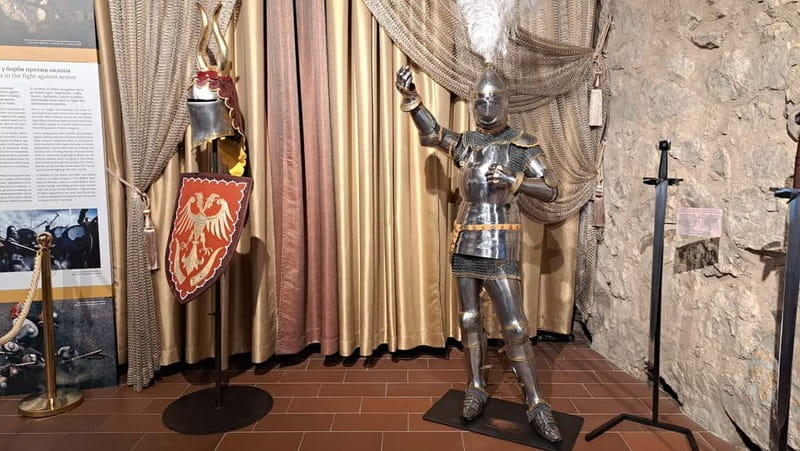
There are a lot of Roman sites across Europe, but Viminacium has a specific emotional advantage: it ties Roman power to local origin in a concrete way. When you see the bust of Constantine the Great and then learn that there are 17 additional Roman emperors born in Serbia, the story becomes less distant. You are not only touring the empire. You are touring a place that fed into it.
This is where an English-speaking guide earns their fee. They help you interpret what you see so it does not turn into a checklist. Instead of only naming artifacts, you understand how a provincial capital worked, why it mattered, and why so many high-profile figures link back to this region.
If you are the type who likes photos with meaning, this stop is also photo-friendly. A guided route helps you hit the key visuals instead of wandering until you find something cool by accident.
The only drawback here is mental load. You are going from Serbian medieval defense into Roman imperial context in the same day. If you are easily overwhelmed by “too much history, too fast,” pace yourself. Take a few minutes during the walk, drink water, and let the information settle. The guide’s pace is helpful, but you still control how fast you absorb.
Golubac Fortress at the Iron Gates: The River as a Defensive Weapon
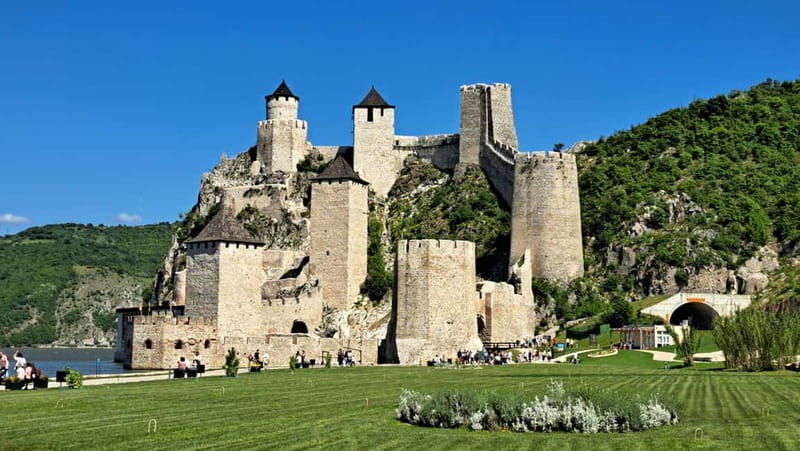
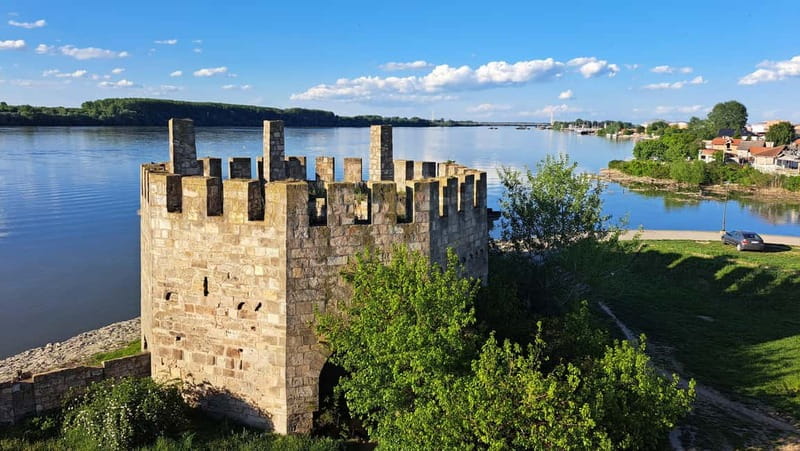
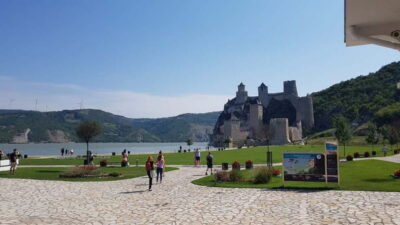
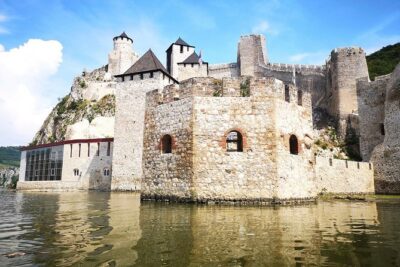
After Viminacium, the day’s focus shifts from empire to survival. Golubac Fortress is built on a rock at the entrance to the Iron Gates, and that alone explains why this place became a stronghold. The fortress is in a strategic position where the Danube, about 6 kilometers wide, enters the narrow passage through Djerdap Gorge. That narrowing turns navigation into a bottleneck, and bottlenecks are where strong walls matter.
Golubac was built in the 14th century and, historically, it was under the rule of Hungarians, Serbs, Turks, and Austrians. That list matters because it tells you the fortress was desirable, not incidental. Several powers fought to control it, which fits what you see when you stand near the defensive walls. This is not just a scenic ruin. It is a military machine in stone form.
One claim that really stuck with me while thinking about the site is that the fortress has never been overrun. Even if you approach that statement with a historian’s caution, the takeaway is clear: the position and fortification choices were effective. And when you look at strong walls built to handle the terrain, you understand why.
You get about 2 hours on this stop, plus additional break and free time totaling around 1.5 hours. That split is useful. The guided part helps you understand the defensive logic and the timeline, and the free time gives you space to walk at your own pace, take panoramic photos, and settle into the view.
If you plan to do anything extra, this is the place. Use your free time to explore viewpoints around the fortress and watch how the gorge setting shapes the entire scene. It is one of those “geography explains everything” moments.
Worth putting on the shortlist while you plan Belgrade:
Timing, Pacing, and Photo Stops You Can Plan For
This tour runs for 9 hours, and the schedule is built to keep moving without turning into a sprint. You have coaching time between stops, including about 1 hour from Belgrade to the Smederevo area, then another 1 hour onward to Viminacium. The ride to Golubac is about 75 minutes, and the return to Belgrade takes about 2.5 hours.
That means you should pack for a full day, not a short outing:
- Comfortable shoes for walking at Viminacium and around Golubac
- A light layer, since you are outdoors for fortress and walk segments
- Water, especially if you tend to get dehydrated in heat
For photos, the guided visits come with built-in photo stops, which helps you capture the fortress setting without guessing. Still, arrive ready to take a few test shots quickly. At Golubac especially, the views are part of the story, so you want to capture the river and gorge context, not only close-up stone textures.
What You Pay: Price, Value, and Small-Group Practicalities
The price is $223 per person for a 9-hour day. That number can look steep at first glance until you map it to what’s included. You get transportation by coach, an English-speaking guide, and entrance fees to the attractions visited. You are also picked up in front of your apartment or hotel in Belgrade, which removes one of the most annoying parts of day trips: the “get yourself there” puzzle.
The small group, limited to 7 participants, is a real value piece, not a marketing line. With fewer people, the guide can slow down for questions, and you are less likely to feel like you are being rushed through photo moments. It also tends to help on buses, where you can hear instructions and keep track of the schedule.
If your goal is to see Smederevo, Viminacium, and Golubac in a single day with guided interpretation, this is the kind of package that saves time and effort. If you prefer to linger at one site for hours, you might feel the time constraints. But as a “big hits” day with context, it is good value.
Who This Tour Suits Best
I think this one fits best if you enjoy:
- Old-world sites that connect to real geography, especially river control and strategic positioning
- Roman history explained through specific finds, like the Constantine bust and emperor list
- A day trip that does not take all day in one museum room
It also suits you if you want an English guide and smooth logistics from Belgrade. With pick-up and entrances included, you can focus on the sites, not planning.
If you are a hardcore archaeology enthusiast who wants to read every label and spend an entire afternoon at mosaics and excavation areas, you may want a slower option focused only on Viminacium. Likewise, if you dislike early starts and long transit, the 9-hour format might feel tiring. Still, the pacing is structured to keep you engaged rather than stranded.
Should You Book This Danube Fortresses and Viminacium Day Trip?
Book it if you want a guided, small-group day that covers Roman emperors, a mosaic floor, a mammoth skeleton fossil, and two major Danube fortresses without you having to piece together tickets and routes. This is especially appealing if you like history that you can link to terrain, not just names and dates.
Skip it if you prefer slow travel, long site stays, or you want to focus deeply on only one attraction. In that case, you might feel short-changed by the guided time allocations. For most people, though, this is an efficient way to get three meaningful chapters of the Danube story in one day.
FAQ
How long is the tour?
The tour lasts 9 hours.
Where does the tour start and is pickup included?
The tour includes pickup in Belgrade, in front of your apartment or hotel, and then departs by coach.
What is the group size?
This is a small group limited to 7 participants.
Is the guide available in English?
Yes, the tour includes an English-speaking guide.
Which attractions are included in the visit?
You visit Smederevo Fortress, Viminacium archaeological park, and Golubac Fortress, with entrance included for the attractions mentioned.
How long do I spend at each main site?
Smederevo Fortress is about 45 minutes. Viminacium is about 1.5 hours. Golubac Fortress includes about 2 hours, plus additional break and free time.
What is the price per person?
The price is listed as $223 per person.
Is free cancellation available?
Yes, you can cancel up to 24 hours in advance for a full refund.
Can I reserve and pay later?
Yes, you can reserve now and pay later, meaning you do not pay anything today.
Newly written up in Belgrade
- Private Belgrade Street Art Tour
★ 5.0 · 1 review - The best of Novi Sad walking tour
★ 5.0 · 1 review - Tara National Park, Mokra Gora and Zlatibor
★ 5.0 · 1 review - Zasavica Bike Tour
★ 5.0 · 1 review - Discover Belgrade’s most Photogenic Spots with a Local
★ 5.0 · 1 review - Topola: Royal Dynasty Half Day Tour from Belgrade
★ 5.0 · 1 review - Private Serbian Food Cooking Experience in Belgrade with Meal
★ 5.0 · 1 review
Golubac Fortress Tours, compared.
Along the Danube: Golubac Fortress & Iron Gate Gorge day trip from Belgrade
Read our review →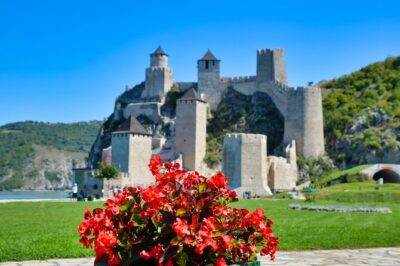
Iron Gate NP Tour with 1-hour speedboat ride + 2 viewpoints
Read our review →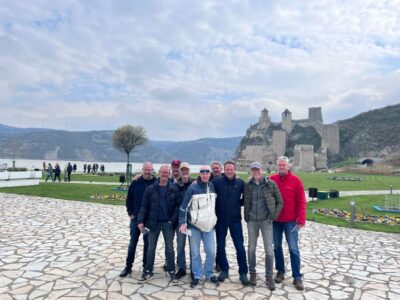
Iron Gate Park, Speedboat Ride, and 2 Viewpoints
Read our review →
Golubac Fortress w/Iron Gate Speed Boat & Rakija Distillery tour
Read our review →
Iron Gate Tour: Golubac Fortress, Lepenski Vir+National Park
Read our review →More Serbia tours of this kind