
Reviewed · BELGRADE
Belgrade: The White Emigration in Serbia in the Wake of the Russian Revolution
Russian exiles left fingerprints everywhere.
In Belgrade, the story of the White Emigration after the Russian Revolution turns into real streets, real buildings, and real people you can still visit. This 3 hour walking tour follows the trail of Russian refugees who arrived in the Kingdom of Serbs, Croats and Slovenes, and asks the big questions: why here, what does Serbia have to do with it, and what does that mean for the city today.
I especially liked the way the guide connects history to architecture, so you notice Russian influence in parks, institutions, and palaces instead of just hearing dates. I also loved the human tone of the walk, where you get emotional context and practical details, guided by Julja’s clear, confident answers to nuanced questions. One thing to consider: the pace and topic are both serious, so bring comfy shoes and be ready for a heavier historical thread more than a casual sightseeing loop.
In This Review
- Key takeaways before you book
- A Russian Revolution Refugee Story You Can Walk Off
- St. Mark Orthodox Church and a 3 Hour Plan That Makes Sense
- Holy Trinity Church and Baron Wrangel’s Burial
- The Serbian Parliament Park: Russian Architectural Footprints in Plain Sight
- Royal Palace and the Monument to Nicholas II
- Hotel Moskva Coffee Break and Cakes Named for Belgrade’s Past
- National Theatre: Russian Performers, Scenic Work, and Choir Mood
- The Serbian Academy of Science and Art: Emigrant Scientists and What Exile Costs
- Nemanjina Square: Gavrilo Princip, World War I, and a Century of Links
- Price, Time, and Who This Walk Fits Best
- Should You Book the White Emigration in Serbia Walk?
- FAQ
- How long is the Belgrade Russian emigration walking tour?
- Where does the tour start and end?
- Is this tour private?
- What is included in the price?
- What is not included?
- Are tickets or admission fees needed for the stops?
- Does the tour use a mobile ticket?
- Is group pricing available?
- Is free cancellation available?
Key takeaways before you book
- A focused 3 hour route that keeps the story moving, stop to stop
- Seven meaningful sites, including Baron Wrangel’s burial church and the Hotel Moskva break
- Serbian institutions and royal links shown through a Russian lens, especially around Nicholas II
- Art and culture stops, from the National Theatre’s Russian work to music and choirs in Serbia
- Science and exile themes, including the fate of emigrant scientists at the Academy area
- A guide-led experience with Julja praised for clarity, depth, and answering questions well
A Russian Revolution Refugee Story You Can Walk Off
After the Bolshevik Revolution, between 1 to 2 million people left Russia over roughly three years. In the mix were up to 100,000 people who ended up in the Kingdom of Serbs, Croats and Slovenes, and that kind of arrival is never minor, especially for a smaller country trying to stay stable.
What makes this tour click is that it does not treat emigration like a distant concept. It treats it like a visible force. You start asking why most Russian emigrants settled in Belgrade, why documents like Nansen passports show up in the story again today, and how Serbia took on a complicated situation: hosting a fully trained, and even partially weaponised army of another country, without letting it overthrow anyone, conquer territory, or starve to death. Those are not just textbook questions. They are the kind of questions that shaped real decisions and real lives.
The tour’s best trick is simple: it pairs that big political background with places you can actually stand in. You walk past sites tied to the monarchy, state institutions, culture, and education. You come away with a clearer sense of how a city absorbs an influx, and how that absorption can look like architecture, art, and names on signs.
If this one is full, these cover much the same ground in Belgrade:
- From Belgrade: Novi Sad & Sremski Karlovci Full-Day Tour★ 4.7 · 1,068 reviews
- From Belgrade: Gems of Eastern Serbia Tour★ 5.0 · 427 reviews
- Northern Serbia: Sremski Karlovci and Novi Sad Full-Day Tour from Belgrade★ 5.0 · 425 reviews
St. Mark Orthodox Church and a 3 Hour Plan That Makes Sense
You begin at St. Mark Orthodox Church on Bulevar kralja Aleksandra 17. The tour ends back at the same spot, which is handy when you are trying to fit it into a day already crowded with other stops.
It is designed as a private tour, meaning only your group participates. That matters here because the story has layers, and a private format keeps the conversation from feeling rushed. You also get a mobile ticket, and the price is listed as $173.64 per person, with group discounts mentioned in the tour features.
Value check: this is not a short photo walk. It is a 3 hour walking tour with a guide and a sequence of connected sites, including places where you pause, learn, and look closely. Admission for the listed stops is noted as free, and the only clearly stated exclusions are alcoholic beverages and snacks. So you are paying mainly for time, interpretation, and the connections the guide draws between the Russian presence and Belgrade’s look and institutions.
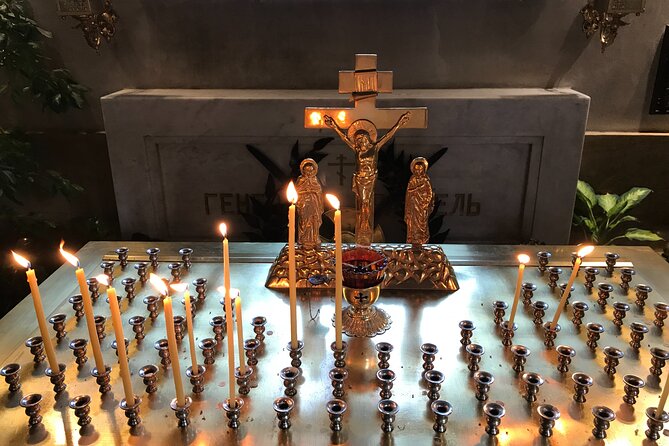
Holy Trinity Church and Baron Wrangel’s Burial
The first stop is Holy Trinity Church, where you walk to the Russian church tied to Baron Wrangel, buried here. Even if you only know the headline version of the White Army, that grave gives the story weight. This is not abstract migration. It is endings, losses, and people who did not just flee, they left much behind.
What I like about starting here is that it frames everything that follows. After this, every later reference to architecture, royal connections, theatres, or the university area feels less like a random tour of landmarks and more like an attempt to understand what Belgrade became for people in exile.
Practical note: the stop lists admission free, so you are not juggling ticket logistics. You can focus on the guide’s explanation and on the emotion of the place, which sets the tone for the rest of the walk.
The Serbian Parliament Park: Russian Architectural Footprints in Plain Sight
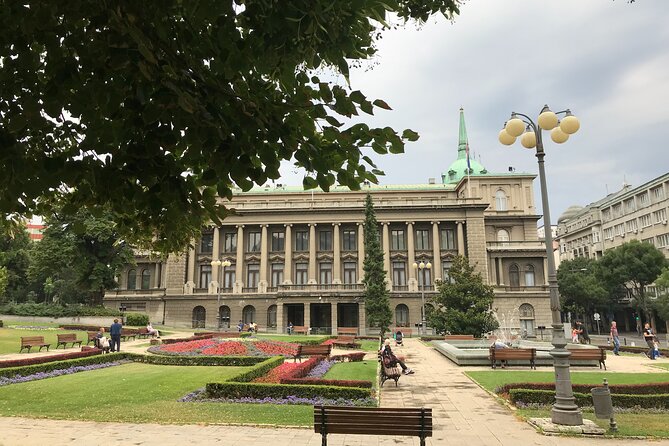
Next, you head to the House of the National Assembly of the Republic of Serbia. The stop is built around a specific idea: while walking through a formerly royal park, you look for a Russian footprint in Belgrade’s architecture.
This is one of my favorite kinds of history tours because it trains your eye. You are not just told that Russian architects contributed. You walk in the same urban space where those contributions would have been visible in daily life, around key state buildings and official functions. The tour also points to nearby examples such as the Serbian Parliament and the buildings associated with the post office, the General Staff, and ministries.
The likely drawback: if you prefer history only through stories and speeches, the architecture focus might feel more observational than you expect. But if you like watching cities build themselves in layers, this stop is a strong payoff. You will probably start spotting patterns without trying.
Admission here is also noted as free, so you keep momentum and spend less time on logistics.
Royal Palace and the Monument to Nicholas II
From there, you pass by the Royal Palaces and the monument to Nicholas II. This section shifts from architecture to relationships between dynasties. The tour treats the Nicholas II presence not as a museum object but as a conversation with the past, linking two political worlds.
What makes this stop useful for you is how it supports the bigger question the tour raises: what did it mean for Serbia to host Russian refugees, and how did royal and political ties shape public life. When you see the palace area and then the Nicholas II marker, the historical relationship stops feeling like trivia and starts feeling like part of Belgrade’s identity.
Also, this is a good breather stop. You are still learning, but the viewing is straightforward. You look, you connect, you move on.
Admission for this stop is marked as free, so again the learning time stays centered on the guide and the city.
Worth putting on the shortlist while you plan Belgrade:
Hotel Moskva Coffee Break and Cakes Named for Belgrade’s Past
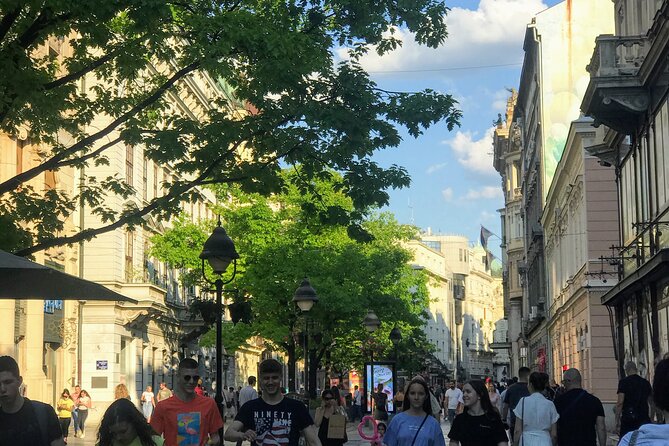
Now for a lighter moment, but still tied to the theme. The tour takes you to Hotel Moskva, on a street that used to be filled with craft workshops and is now taken over by designers. That contrast is the point. Cities change. Shops evolve. But the story of who shaped the city can remain in names, recipes, and the way buildings hold memory.
Inside the hotel, you have a coffee and can try the Moskva and Aurora cakes, prepared according to a half-century-old recipe. This is not just a snack break. It is a small, edible reminder that cultural influence does not only survive in monuments. It survives in habits and food.
A practical consideration: snacks are listed as not included in the tour’s exclusions, but the itinerary explicitly includes the coffee and the chance to try those cakes. Still, you might want to plan your day like a walking tour with a sweet stop, not like a full meal.
If you like food stops that connect to the theme you are learning, you will appreciate this part. If you hate sugar or do not want any break, you might feel a little stuck. But the timing is short.
National Theatre: Russian Performers, Scenic Work, and Choir Mood
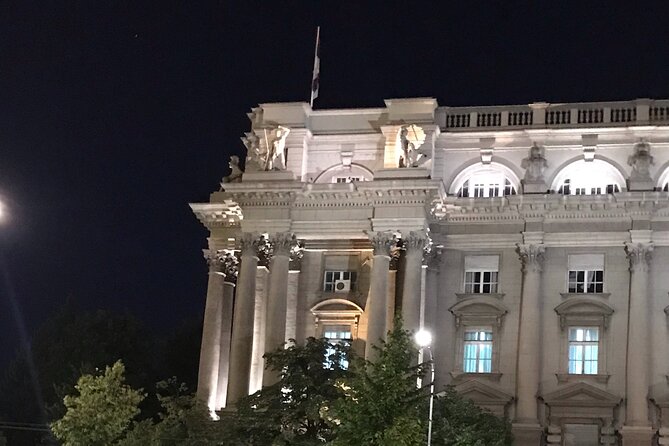
The tour heads to the National Theatre, where Russian ballerinas performed, and where scenic designers, choreographers, and directors worked. For me, this is where the Russian legacy stops being only a political or architectural story.
The National Theatre stop also covers how music and street traditions can carry cultural memory. You learn about street songs and you get advice on who to remember with kind words whenever you hear a choir singing in Serbia.
That last detail might sound like a small tip, but it is the kind of thing that makes future walks through Serbia feel more personal. You begin hearing cultural references in the sound of the city, not only in plaques.
The stop is marked as admission free and timed briefly, around 15 minutes. That makes it a “hit and move” moment, not a long theatre visit. If you want a deeper performance experience, you would need an extra plan, but for a themed walk, this works well.
The Serbian Academy of Science and Art: Emigrant Scientists and What Exile Costs
Next is the area near the Serbian Academy of Science and Art, with the tour also pointing out Belgrade University and the Academy. Here, the theme shifts again, from buildings and performances to people who carried knowledge across borders.
The tour discusses the fate of emigrant scientists, which is exactly the kind of angle that helps you understand exile as more than displacement. When scholars and researchers arrive, they bring skills, institutions, and ways of thinking. The question becomes not only where they went, but what their work could become in a new country.
What I liked most is that this stop balances the dramatic political elements earlier in the walk. Not every story in exile is about armies or royalty. Some are about laboratories, classrooms, publications, and long-term influence.
Admission for this part is marked free, and the timing is around 30 minutes, giving you enough space to hear the explanation without feeling rushed.
Nemanjina Square: Gavrilo Princip, World War I, and a Century of Links
The final stop is Nemanjina, where you visit the Gavrilo Princip square. This is a reminder that Belgrade sits in the center of world history and that big events ripple outward.
Here, the tour connects the role of the First World War and how that incident shaped world history. Then you add back your Russian emigration lens, because the tour also wants you to understand how people in exile would have moved through a city shaped by prior shocks.
The stop is also timed around 30 minutes and is presented as a chance to visit places Russian emigrants would have visited a century ago, places that still stand today and remain open for you now.
Potential consideration: if you are tired after a full walk, this is a heavy topic to finish with. It helps if you are ready for a final synthesis. If not, consider taking a few minutes of quiet right before this stop, so your brain can absorb the historical connection cleanly.
Price, Time, and Who This Walk Fits Best
At $173.64 per person for about 3 hours, this tour is priced like a guided, interpretation-heavy experience. You are not paying only for access to sights, since admission is marked as free at each listed stop. You are paying for the guide to connect the Russian Emigration story to Belgrade’s architecture, institutions, and culture in a way that makes you see the city differently.
Who tends to enjoy it most:
- You like thematic walking tours, not random landmark checklists.
- You want context on why Belgrade became a key destination for Russian refugees.
- You enjoy arts and culture stories tied to real places.
- You want a guide who answers questions and keeps details coherent.
One reason it works well is the guide: Julja is specifically praised for knowing Serbian history with nuance and for responding to questions. You also get a sense of emotion and depth in the storytelling, which turns the walk into something that lingers after you leave the last square.
Who might pause before booking:
- If you want a light, purely scenic walk, this is not that. It is serious history with emotional weight.
- If you dislike walking for about 3 hours, you might find the rhythm demanding.
Should You Book the White Emigration in Serbia Walk?
I think you should book this tour if you want Belgrade with a lens. Not just what the city looks like, but why it looks that way, and how Russian emigration shaped institutions, cultural life, and even the kind of names and memories that survive.
The strongest reasons to choose it are:
- You get a guide-led narrative that connects multiple themes, from monarchy to science to theatre.
- The route is practical and walkable, starting and ending at the same point.
- The pacing mixes heavy topics with human moments, like the Hotel Moskva coffee break and cakes.
- Julja is a highlight, with praise for deep knowledge and clear answers.
If you are short on time, decide based on your taste. If you like cultural history and you can handle a serious storyline, this walk is a smart use of a few hours in Belgrade. If you prefer only casual sightseeing, you may want a different tour style first and save this for later.
FAQ
How long is the Belgrade Russian emigration walking tour?
It lasts about 3 hours.
Where does the tour start and end?
It starts at St. Mark Orthodox Church, Bulevar kralja Aleksandra 17, Belograd, Serbia and ends back at the same meeting point.
Is this tour private?
Yes, it is a private tour/activity. Only your group will participate.
What is included in the price?
The tour includes a guide.
What is not included?
Alcoholic beverages and snacks are not included.
Are tickets or admission fees needed for the stops?
Admission for the listed stops is marked as free.
Does the tour use a mobile ticket?
Yes, it includes a mobile ticket.
Is group pricing available?
Group discounts are listed as a feature.
Is free cancellation available?
Yes, free cancellation is available up to 24 hours in advance for a full refund.
Newly written up in Belgrade
- Private Belgrade Street Art Tour
★ 5.0 · 1 review - The best of Novi Sad walking tour
★ 5.0 · 1 review - Tara National Park, Mokra Gora and Zlatibor
★ 5.0 · 1 review - Discover Belgrade’s most Photogenic Spots with a Local
★ 5.0 · 1 review - Zasavica Bike Tour
★ 5.0 · 1 review - Private Serbian Food Cooking Experience in Belgrade with Meal
★ 5.0 · 1 review - Topola: Royal Dynasty Half Day Tour from Belgrade
★ 5.0 · 1 review